

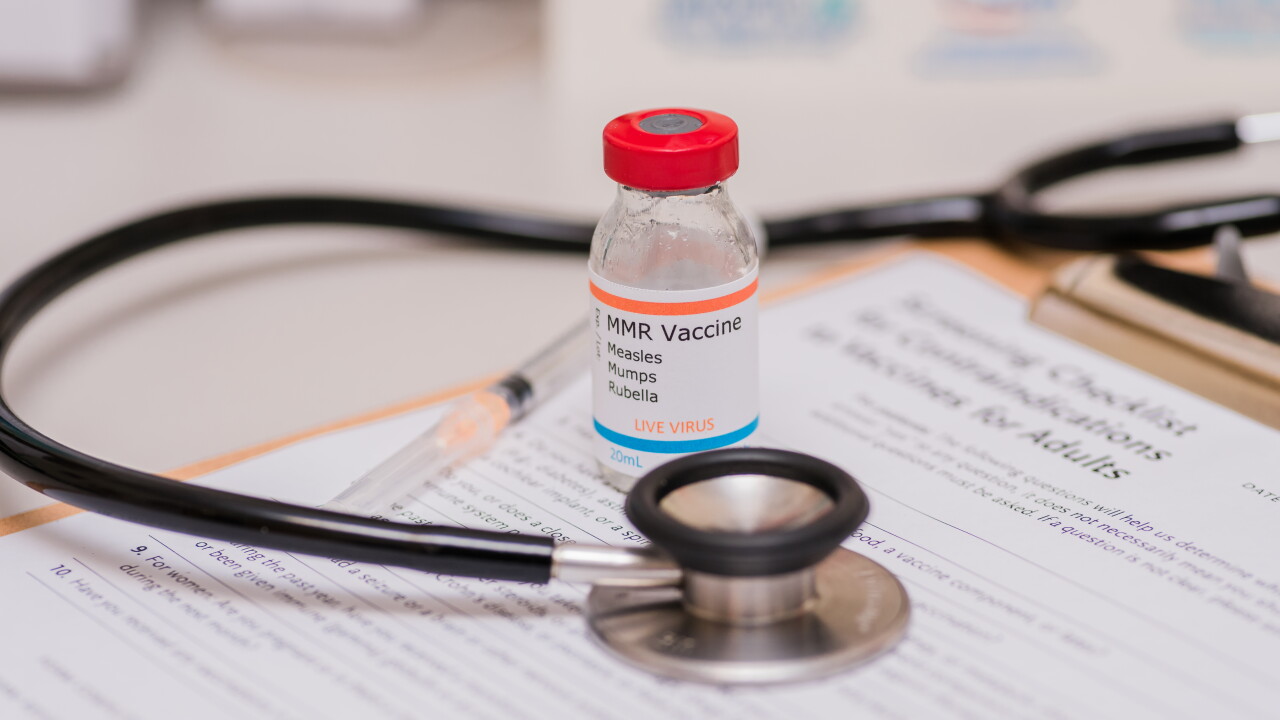


The U.S. could be days away from losing its status as a measles-free nation, as a panel of experts from the Pan American Health Organization considers whether the country has lost its measles elimination status.
The U.S. achieved measles elimination in 2000, meaning the virus was no longer spreading continuously within the country and outbreaks typically occurred after cases were brought in from abroad.
According to the Centers for Disease Control and Prevention, 5,182 measles cases have been confirmed so far in 2026. In 2025, the U.S. recorded more than 2,200 measles cases, the highest number since the early 1990s.
Only 4% of cases this year have been among people known to be vaccinated.
Dr. Amesh A. Adalja, a senior scholar at the Johns Hopkins University Center for Health Security, said the resurgence is not due to changes in the measles virus or a failure of the measles, mumps and rubella vaccine, known as the MMR vaccine, but to falling vaccination rates and increasing vaccine hesitancy.
“The difference is really symbolic in the sense that this was something that had been controlled for 25 years and now we've lost control of it,” he said. “It would signify that measles is here to stay, that it's become an endemic disease.”
Adalja said declining vaccination rates may be tied to increased vaccine hesitancy.
“That's really emblematic how there's been this turn away from science, this return to a lower standard of living. And that's what I think losing elimination means,” he said. “It means that we no longer want to control measles anymore.”
Adalja said the Pan American Health Organization will look at more than the sheer number of cases. Experts will examine whether there has been continuous transmission of the virus for more than 12 months, including whether outbreaks are linked.
RELATED STORY | Trump wants MMR split into 3 shots, other vaccines given at separate visits
The problem is not limited to the U.S. Canada lost its measles elimination status last year, and Mexico could also lose its elimination status.
Many of the same factors at play in the U.S. are contributing to a resurgence of measles globally, Adalja said. He pointed to the role Health and Human Services Secretary Robert F. Kennedy Jr. has played in vaccine skepticism.
Although Kennedy has said he does not consider himself anti-vaccine, he has frequently expressed skepticism about the safety and effectiveness of routine vaccinations. Kennedy has also said he supports the MMR vaccine as a way to prevent measles.
“CDC’s MMR recommendation remains unchanged. I have repeatedly stated that MMR vaccination is the most effective way to prevent measles infection,” he said.
But during his 2024 presidential campaign, Kennedy raised concerns about the measles vaccine.
“The problem with the measles vaccine is it's a leaky vaccine,” he told CBC News. “For a larger percentage of people who get that vaccine, it will wane with old age.”
RELATED STORY | Pennsylvania reports first measles deaths in 35 years
Adalja said such skepticism has reached a wide audience.
“I would say that you can't just look at RFK Jr. in his tenure as HHS secretary,” he said. “You have to think, who was RFK Jr. before he was HHS secretary? And we know that he has been spreading disinformation about the MMR vaccine long before he was actually put into the highest federal health position by President Trump.”
Adalja said concerns about declining vaccination rates extend beyond measles. Falling vaccination rates could also lead to increases in whooping cough, chickenpox, hepatitis B and certain bacterial infections, he said.
Children are routinely vaccinated against measles between 12 and 15 months of age, with a second dose recommended between ages 4 and 6. Infants as young as 6 months may receive the vaccine if they are considered at increased risk.
According to the Centers for Disease Control and Prevention, measles can cause serious complications, including:
- Pneumonia
- Brain damage
- Blindness
- Deafness
- Diarrhea
- Premature birth or low birth weight in babies born to unvaccinated women who contract measles during pregnancy
- Loss of immune protection against other diseases
