

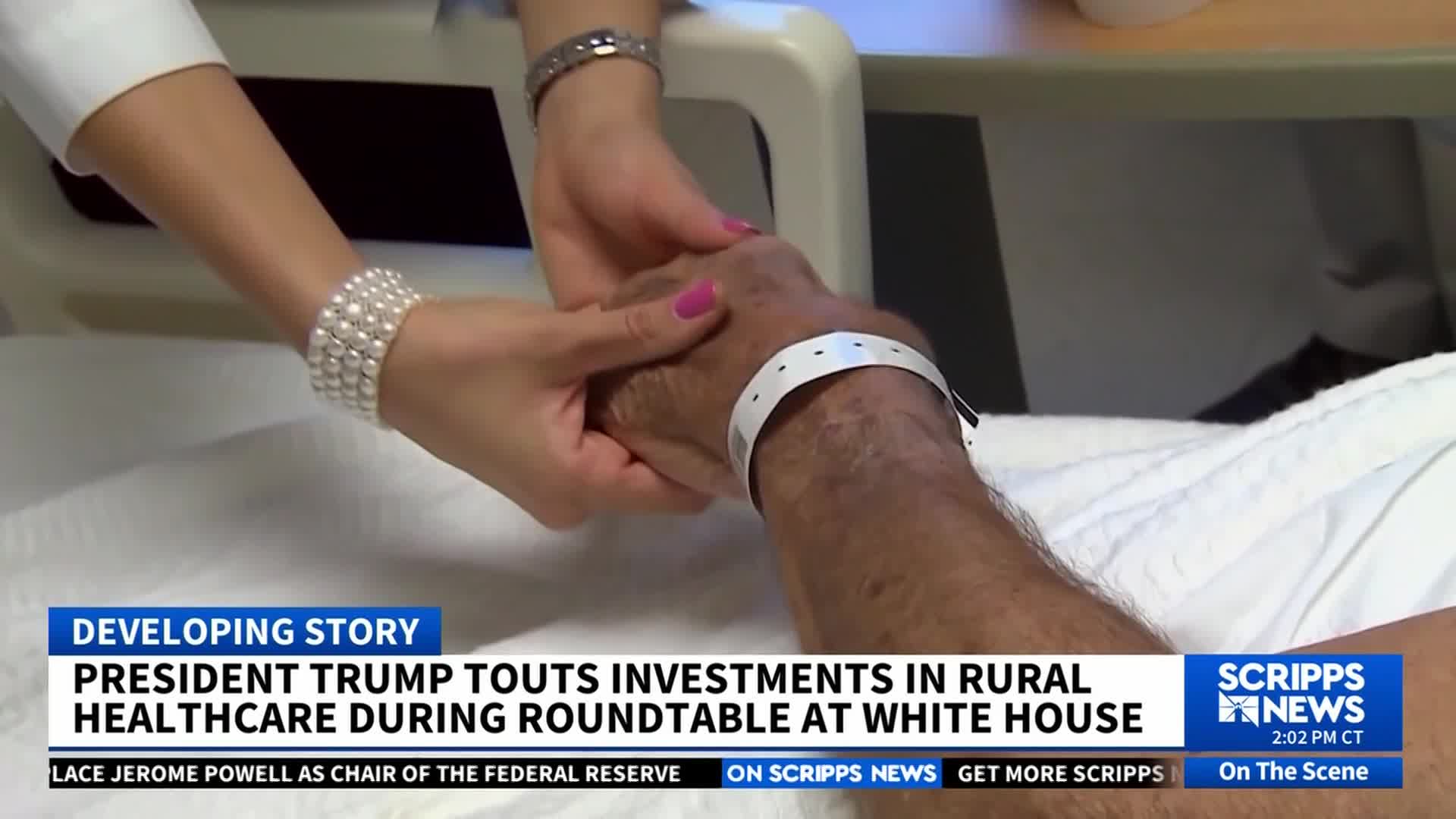


President Donald Trump on Friday touted the health care framework he released a day earlier as “tremendous,” promising it would lead to significant reductions in costs for American consumers.
But pharmaceutical manufacturers and health insurers see it differently – as most Americans remain worried about the expiration of expanded government subsidies that helped offset consumers’ insurance premium payments for plans bought on the Affordable Care Act marketplaces.
Trump’s proposal, which did not include any legislative text or timeline for enactment and did not appear to be formally endorsed by Congressional GOP leaders, includes a grab bag of initiatives intended to lower Americans’ prescription drug and insurance premium costs.
IN CASE YOU MISSED IT | House passes bill to extend ACA subsidies, but it is not likely to survive the Senate
Among the ideas were: redirecting funding previously used to offset insurance premium costs directly into Americans’ health savings accounts; codifying Trump’s push to cut U.S. drug prices by linking them to lower drug costs’ abroad; restoring the ACA’s cost-sharing reduction program; and instituting “maximum price transparency” by requiring insurers and medical providers to make more information publicly available.
"The big insurance companies lose, and the people of our country win," Trump said in a video announcing the plan.
Indeed, many industry groups quickly came out strongly against the plan - suggesting it would do little to alleviate Americans’ cost concerns and could instead stifle innovation.
“Imposing broad-based price controls does nothing to address insurance barriers and would instead threaten access to breakthrough treatments and undermine critical investments that strengthen the U.S. economy,” Alex Schriver, a top official with the pharmaceutical industry group PhRMA, said in a statement to Scripps News. “Importing those same flawed policies into the U.S. would undermine our leadership at a time when China is poised to surpass us in medicine development.”
IN CASE YOU MISSED IT | More Americans turn to cash-only doctors as health care costs rise
“Legislation that codifies most favored nation drug pricing isn’t necessary,” echoed a spokesperson for Eli Lilly and Company, one of the largest U.S-based pharmaceutical manufacturers. “The Administration already successfully negotiated unique voluntary agreements with pharmaceutical manufacturers.”
Some health insurers and trade groups representing them were supportive in public statements: a spokesperson for CVS Health Care told Scripps News the company “share[s] the President’s goal to make health care more affordable and are committed to continue doing our part,” while an official with America's Health Insurance Plans (AHIP), a political advocacy and trade association of health insurance companies, also signaled support.
“Health plans welcome ideas to bring down the unaffordable prices drugmakers charge Americans and to empower consumers to make the best health care decisions for themselves and their families,” AHIP spokesman Chris Bond told Scripps News in a statement.
David Merritt, a senior official with the Blue Cross Blue Shield Association (BCBSA) – the largest private insurer in the U.S. when considering combined commercial markets – said it’s “encouraging that President Trump’s plan includes a focus on the root causes driving up health care premiums, like drug prices.”
“We look forward to continuing to work with Congress and the Administration to deliver more information, more choices and lower costs for the American people,” Merritt concluded.
Yet a BCBSA official who declined to speak on the record signaled opposition to the notion of redirecting subsidies to consumers.
“100% of the enhanced premium tax credit goes directly to the consumer,” the official said.
Though White House officials have stressed that they see the proposal as worthy of bipartisan backing, it received the typical partisan response in Congress: most Democrats panned it while Republicans signaled support.
“Every American should be asking themselves a simple question: are you paying more for your health care than you were a year ago?,” Sen. Ron Wyden (D-Oreg.) posed. “The answer ought to tell you everything you need to know about the Trump-Republican health care agenda.”
And though a White House official said the Trump administration didn’t believe pursuing the proposal through the budget reconciliation process - which only requires a simple majority to pass in the Senate, instead of the usual 60 votes - would be necessary, House Republican leaders said they were prepared to do just that.
“Our framework for a second reconciliation bill includes many of these historic reforms, because that's how we're going to secure real wins for the people who sent us here,” Republican Study Committee (RSC) Chairman Rep. August Pfluger (R-Texas) said in a statement.
Asked whether this proposal closed the door on negotiations to extend those enhanced ACA subsidies, a White House official noted it “does not specifically address those bipartisan congressional negotiations that are going on.”
Sen. Lisa Murkowski (R-Alaska), who’s at times broken with GOP leadership, told reporters Thursday she’s “not giving up” on a potential deal to extend the subsidies.
"I don't think it is too late to try to salvage something," Murkowski said.
