


The average size of the world's monitored wildlife populations has fallen 73% since 1970, according to a new report from the World Wildlife Fund, and there is no sign yet that the decline is slowing on a global scale.
The group is pairing that number with a different message this year. The 2026 Living Planet Report, subtitled "The Science of Hope," argues that a growing list of species comebacks proves conservation works when it is sustained, and that the same approach can be turned on the industries driving the losses.
"Nature underpins our economies and provides us with food, water, clean air, medicine. It's our life support system," Kirsten Schuijt, director general of WWF International, told reporters at a briefing ahead of the report's release.
The 73% figure comes from the Living Planet Index, produced by the Zoological Society of London. This edition tracks 35,803 populations of 5,790 species of mammals, birds, fish, reptiles and amphibians from 1970 to 2022.
It does not mean the world has 73% fewer wild animals. The index measures the average change in the size of the populations being tracked, which works out to an average decline of 2.5% a year. About half of those populations are stable or growing, but the declines among the rest are steep enough to drag the average down sharply.
Habitat loss and degradation are the most commonly reported threats, followed by overexploitation, climate change, pollution, invasive species and disease.
Andrew Terry, chief conservation officer at ZSL, said the index works as an early warning signal that the ecosystems supporting those species are degrading. Those ecosystems are the same ones people rely on for water, pollination and a stable climate.
But in the vein of a hopeful perspective, the report points to four cases where decades of coordinated work reversed a decline.
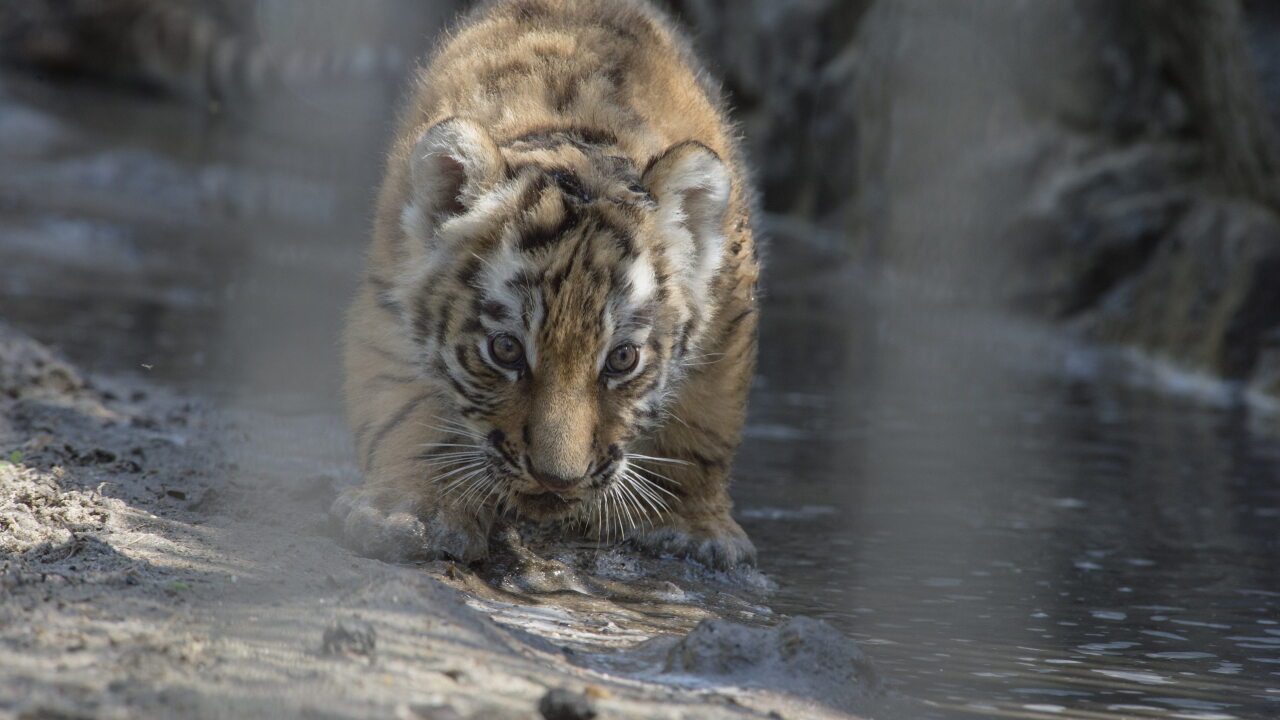
Tigers: About 3,200 wild tigers remained in 2010. By 2025 the population had grown to roughly 5,700.
Green sea turtles: In 2025 the species became the first marine turtle moved from "endangered" to "least concern" on the IUCN Red List, after 50 years of work across some 80 nesting countries.
Bluefin tuna: Atlantic and Pacific populations were collapsing after decades of overfishing. Neither is now considered overfished.
Elephants in southern Africa: African savannah elephants remain endangered overall, but some populations are growing where local communities lead land management.
RELATED STORY | World's most endangered tigers born in Greece as zoos build a safety net
Ximena Barrera, WWF's head of wildlife policy, said the turtle recovery came from specific steps: protecting nesting beaches, cutting artificial light along coastlines and getting fishing fleets to adopt gear that lets turtles escape. Recoveries have been strongest in the Mediterranean, Hawaii, Brazil and the Caribbean. She cautioned that the new status is not a finish line.
"Least concern doesn't mean no concern," Barrera said, as those wins have not been enough to move the global number.
"Not enough change is happening to bend the global index, but enough to show us that we know what we're doing, conservation works, and we need to keep at it," said Dr. Rebecca Shaw, WWF's chief scientist and the report's lead author.
The report says conservation alone cannot reverse the trend because three systems are doing most of the damage.
Burning fossil fuels drives the climate change now affecting every ecosystem. Agriculture is the single largest cause of habitat loss. And in 2023, the report says, about $7.3 trillion flowed into activities that harm nature, compared with $220 billion for activities that protect or restore it.
The authors, working with researchers at the University of Exeter, argue these systems can hit "positive tipping points," where a shift becomes cheaper and starts reinforcing itself. They say energy has already crossed one. Solar is now the cheapest source of new electricity in most countries, and electric vehicles made up 24% of new car sales worldwide in 2024. Food and finance are at an earlier stage.
"Large complex systems can be resistant to change. But none of this requires technology or approaches that do not exist," Shaw said.
Schuijt acknowledged that the report's framing is deliberate. The index has been published for about three decades, and she said repeating the same grim number risks leaving people feeling that nothing they do matters.
RELATED STORY | 2 giant pandas from China will soon arrive at Atlanta's zoo, Xi says
"While the window for a different future seems to be narrowing, it remains open," said Daudi Sumba, chief conservation officer at WWF International.
The report lands weeks before two United Nations summits. The biodiversity conference, COP17, runs Oct. 19 to 30 in Yerevan, Armenia. The climate conference, COP31, follows Nov. 9 to 20 in Antalya, Turkey.
Governments have already agreed to 2030 targets under the Kunming-Montreal Global Biodiversity Framework and the Paris Agreement. WWF says progress is well short of what those targets require and is urging governments to focus on carrying out existing commitments, including scaling up renewable energy, ending harmful subsidies and halting deforestation.
