

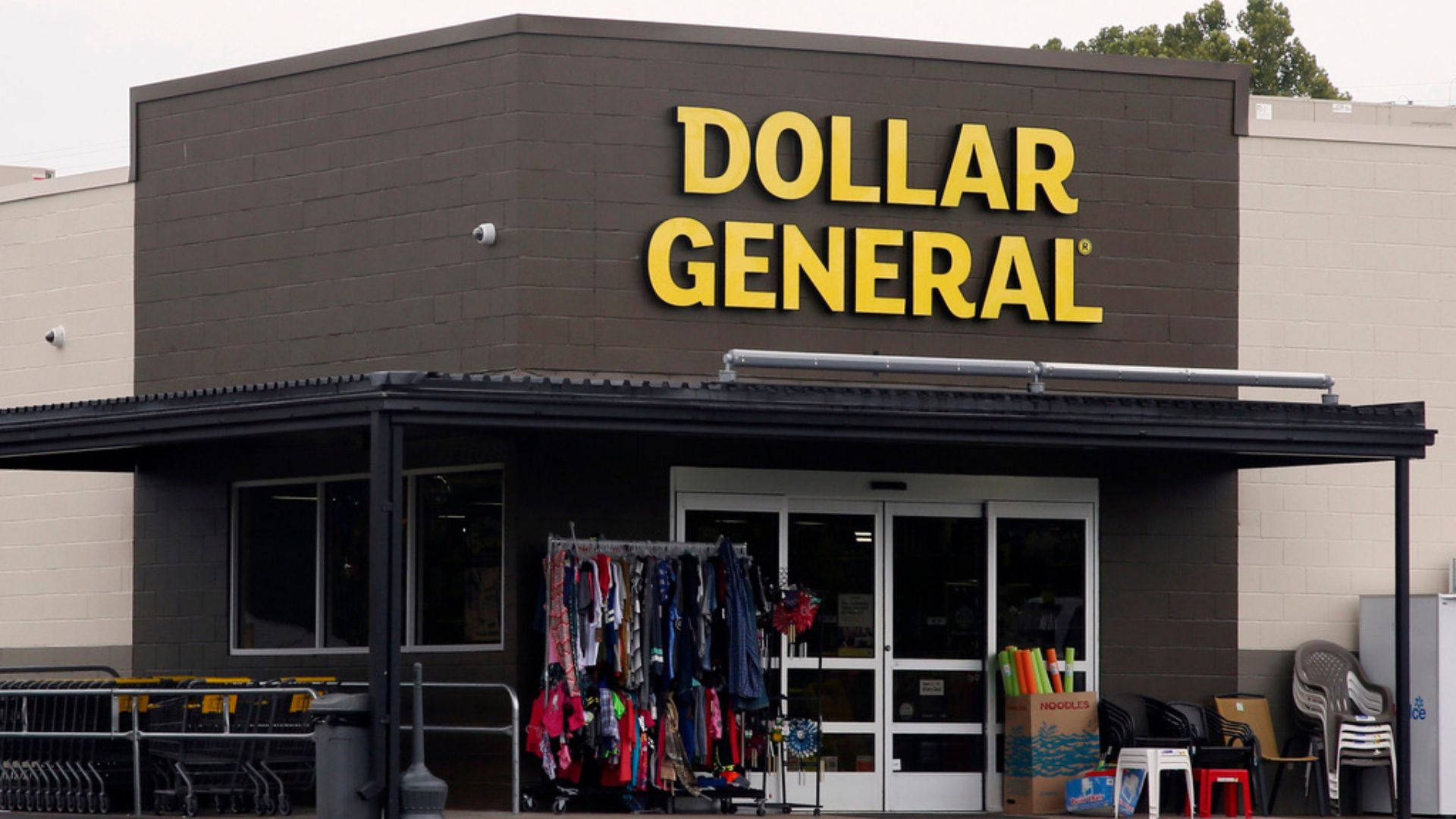


Federal regulators and 20 states allege the discount chain routinely charged shoppers more than the prices on the shelves. Here's what that means for your wallet — and what to do if it happened to you.
You pick up an item marked $1.25, walk to the register, and pay $1.75. That gap — small enough to miss, large enough to add up — is at the center of a major new federal lawsuit against one of America's most popular discount chains.
The Federal Trade Commission, joined by 20 states, has sued Dollar General Corp., alleging the company systematically charged customers more at checkout than prices shown on shelves, tags, and advertisements. Regulators say they received more than 29,000 complaints about the practice between January 2023 and March 2026.
- 20 — States Suing
- 29,000+ — Complaints Filed
How Well Do You Know Your Consumer Rights?
Four questions. Most shoppers get at least one wrong.
The FTC lawsuit says Dollar General received more than 29,000 pricing complaints. What time span does that cover?
- One year (2024–2025) — Not quite. The complaint window spans more than three years — January 2023 through March 2026. That's a sustained pattern, not a brief spike.
- Three years (Jan 2023 – Mar 2026) — Correct. Over three years and more than 29,000 complaints — regulators say that pattern is exactly why they moved to court.
- Six months in 2025 — Much longer. The 29,000+ complaints were recorded between January 2023 and March 2026 — a span the FTC called systemic, not temporary.
- Since Dollar General's founding — The specific window cited in the lawsuit runs from January 2023 to March 2026 — three-plus years of documented complaints.
Besides the new FTC lawsuit, Dollar General has faced prior financial penalties. Which of these is accurate?
- A $12 million fine for alleged workplace safety violations — Correct. Dollar General agreed to pay a $12 million fine to settle alleged workplace safety violations — a separate enforcement action from the current pricing lawsuit.
- A $50 million fine for environmental violations — That figure is not from this case. Dollar General's documented prior penalty was $12 million for alleged workplace safety violations.
- A $3 million fine for false advertising — Not this one. The prior penalty on record is $12 million tied to alleged workplace safety violations, not advertising claims.
- No prior penalties — this is the first action — Actually, Dollar General has faced prior enforcement. It agreed to pay a $12 million fine for alleged workplace safety violations, and more than $800,000 for a separate alleged overcharging case.
What specific relief are the FTC and states asking the court to order?
- A permanent ban on Dollar General operating in the U.S. — That's not what was requested. Regulators are asking for restitution, civil penalties, profit recovery, and a permanent court order barring deceptive pricing — not a business shutdown.
- Restitution for customers, civil penalties, profit recovery, and a permanent pricing ban — Exactly right. The FTC and states are seeking money back for affected customers, civil penalties, clawback of profits gained through the alleged practices, and a court order permanently prohibiting deceptive pricing.
- A mandatory price freeze for two years — No price freeze was requested. The lawsuit seeks restitution, civil penalties, profit recovery, and a permanent prohibition on deceptive pricing practices.
- A public apology and store closures in affected states — Not what the lawsuit demands. Regulators are pursuing financial remedies — restitution, civil penalties, profit recovery — and a permanent court order against deceptive pricing.
The FTC's consumer protection chief described the alleged harm as falling hardest on which group?
- Rural shoppers without alternative stores nearby — While access is a real concern with dollar stores, FTC director Christopher Mufarrige specifically described the harm hitting 'communities and consumers who are already struggling to make their paychecks last.'
- Communities and consumers already struggling to make their paychecks last — Precisely. Christopher Mufarrige, director of the FTC's Bureau of Consumer Protection, used those exact words — pointing to the disproportionate financial impact on lower-income shoppers.
- Small business owners who stock Dollar General products — The FTC's stated concern was for individual consumers — specifically those 'struggling to make their paychecks last,' per director Christopher Mufarrige.
- Elderly shoppers on fixed incomes — The lawsuit's language is broader: FTC director Christopher Mufarrige called out 'communities and consumers who are already struggling to make their paychecks last' — pointing to lower-income shoppers broadly.
Dollar General has betrayed the trust of millions of American consumers and imposed significant financial harm on communities and consumers who are already struggling to make their paychecks lastChristopher Mufarrige, director of the FTC's Bureau of Consumer Protection
For millions of Americans, Dollar General is the closest store — sometimes the only store within easy reach. The chain built its business serving shoppers who need their dollars to stretch. That's precisely why regulators say the alleged overcharging is so serious: the customers most harmed are often the least equipped to absorb unexpected charges at the register.
According to the FTC, Dollar General received more than 29,000 complaints about pricing discrepancies in just over three years. Regulators allege the company was aware of the problem and failed to adequately fix it — even after prior enforcement actions resulted in financial penalties.
Dollar General's Enforcement History
- Jan 2023 — Complaint window opens
- Prior action — Dollar General agrees to pay $800,000+ for allegedly overcharging patrons in an earlier case
- Prior action — Dollar General pays $12 million fine to settle alleged workplace safety violations
- Mar 2026 — 29,000+ pricing complaints on record
- 2026 — FTC and 20 states file federal lawsuit seeking restitution, civil penalties, and a permanent pricing ban
What's True, What's Missing, and What Comes Next
Dollar General has publicly denied the FTC's allegations.
Verdict: false
As of this reporting, Dollar General has not publicly responded to the lawsuit. No denial or statement has been issued.
This is the first time Dollar General has faced pricing-related enforcement.
Verdict: false
Dollar General previously paid more than $800,000 to settle a separate alleged overcharging case, according to prior reporting.
The FTC and states are seeking money back for customers, not just fines.
Verdict: true
The lawsuit specifically asks for monetary restitution for affected customers, civil penalties, and recovery of profits gained through the alleged practices.
The FTC is only asking for financial penalties — not a change in Dollar General's business practices.
Verdict: false
Regulators are also asking a federal court to permanently prohibit Dollar General from engaging in deceptive pricing practices going forward.
The FTC's lawsuit targets something deceptively simple: the gap between the price on the shelf and the price charged at the register. That gap, regulators allege, happened repeatedly and across enough locations to generate more than 29,000 complaints in three years. At a time when inflation has stretched household budgets — the Consumer Price Index for all urban consumers reached 336.94 in September 2026, according to the Bureau of Labor Statistics — even small overcharges on everyday purchases compound quickly for families shopping on tight margins.
What makes this case notable is the breadth of the coalition behind it. Twenty states joined the federal agency, signaling that this is not a narrow regulatory complaint but a coordinated national enforcement push. The lawsuit asks a federal court not only to compensate harmed customers but to permanently bar Dollar General from the pricing practices at the center of the allegations.
What To Do If You Think You Were Overcharged
- Save your receipts — Compare register receipts to shelf prices or advertised amounts. A discrepancy between the two is the core of any pricing complaint.
- Document the shelf price — Take a photo of the shelf tag at the time of purchase if you notice a discrepancy before you leave the store. Date-stamped photos are strong evidence.
- Report to the FTC — The Federal Trade Commission accepts consumer complaints at ReportFraud.ftc.gov. Reports help regulators build enforcement cases like the one now filed against Dollar General.
- Contact your state attorney general — Twenty state attorneys general joined this lawsuit. Your state's consumer protection office may have its own complaint portal for pricing disputes.
- Watch for restitution updates — If the FTC prevails, affected customers may be eligible for refunds. Keep an eye on official FTC announcements for how to claim relief.
Take Action
- File a Complaint with the FTC: If you believe you were charged more than the posted price at Dollar General, you can report it to federal regulators.
- Follow the Lawsuit: The FTC and 20 states are seeking restitution for affected customers, civil penalties, and a permanent court order against deceptive pricing.
Dollar General's Prior Enforcement Record
The current FTC lawsuit is not Dollar General's first brush with regulators. The company previously agreed to pay more than $800,000 to settle allegations that it overcharged patrons in a separate earlier case.
Dollar General also agreed to pay a $12 million fine to settle alleged workplace safety violations — a separate enforcement action unrelated to pricing. Together, these prior actions form a documented pattern that the FTC and states cite as evidence the company has repeatedly failed to address compliance problems despite financial penalties.
Dollar General has not publicly responded to the current federal lawsuit.
Whether the FTC prevails in court remains to be determined. But the scale of this enforcement action — 20 states, a federal agency, and a request for a permanent court prohibition — signals that regulators view the alleged conduct as something more than an accidental pricing error. For the customers who filed more than 29,000 complaints over three years, the lawsuit represents a long-awaited acknowledgment that the discrepancies they noticed at checkout were real, documented, and worth fighting.
Dollar General has not publicly responded to the lawsuit.
