



ELIZABETH CITY, N.C. — For the first time, we are hearing from the donor who gave one of her kidneys in a transplant that's been life-changing for a local woman. This is the story of Katisha Vertrees News 3 has been following through on for some time now — but up until now, the donor hadn't gone public.
It was News 3's Jennifer Lewis who first introduced us to Katisha in December of 2023. She was 28 years old, by then her kidneys had already stopped working.
"I went to my mom, and she took me to the hospital, and I remember them taking my blood pressure and it was like 170 over 100, and they said I had stage 3 kidney disease and lupus," Vertrees said. "I have to connect every night for eight hours. So, I come home from work, do my routine and connect to dialysis for eight hours."
Watch our first story when we first introduced you to Katisha Vertrees
Lupus is an autoimmune disease in which the body's immune system mistakenly attacks healthy tissue. One of the complications of lupus is kidney disease. Over the past two years News 3 has followed her journey —who with the help of her husband, Taylor — turned to social media for help raising awareness about their desperate search.
"I was like, Tisha, this is the only way we're probably going to be able to grab traction. I mean, we're gonna have to put your life on the main screen, essentially. And so, I started making posts every day."
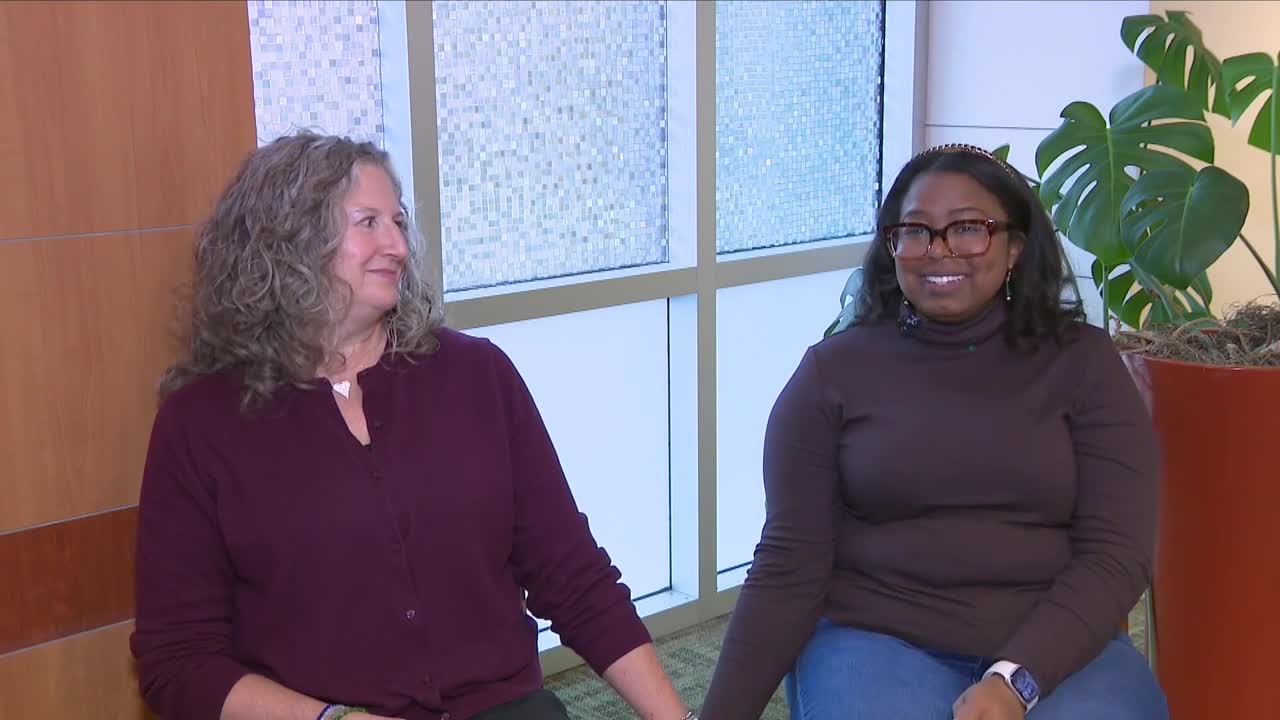
It worked! They found a match. That was a year ago — weeks before Christmas. For the first time, we're getting to meet the donor, Margie Smith. I asked her, how did she spot the post? Was she just scrolling on social media?
"It wasn't something I was searching for or anything. It just popped up. And I read the story, and it broke my heart."
News 3's Blaine Stewart followed up in December of 2024 after her transplant surgery, including video of the actual procedure
Especially the part in the post that mentioned in 2022, the couple was expecting their first child. The pregnancy sent Katisha into end-stage kidney failure, making a manageable diagnosis dire. Sadly, she suffered a miscarriage at just 15 weeks.
The only way Katisha could ever lead a normal life is with a kidney transplant. That really touched Margie's heart.
"The part about her being pregnant and not being able to carry the baby to term and not being able, they were young couple, recently married, I was tearing up and almost crying," Smith said. "And I'm not a big crier."
The same day she read the post, she applied to see if she could be a donor. It was a lengthy process, but she was a perfect match.
It was Dr. Duncan Yoder, kidney transplant surgical director Sentara Health, who performed the operation.
"Katisha had such a great outcome because somebody was willing to donate for her, and those are the most successful transplants," Yoder said. "When you have a living donor, those outcomes, those kidneys, those transplants, they last the longest."
I asked, why is that?
"Well, a couple reasons, usually it's a very healthy donor. And then secondly, usually you minimize the amount of time that the kidneys outside of the body, and so you get the kidney reimplanted into the recipient very quickly. And it's almost like an elective procedure at that point, as opposed to, you know, your middle of the night transplant from a deceased donor that might come whenever. And so when it's a more controlled setting from a living donor, the outcomes are just better."
Initially, Katisha didn't know who the donor was; she was hoping it wasn't going to stay that way
"I just wanted to meet who would save my life," Katisha said.
She described what it was like, when they finally met.
Katisha launches effort to help other patients find donors
"Wonderful! I mean, she's a great person, and I feel like I just grew a sister. I was just really, really excited to meet her. I just wanted to know like, about her, like, why and how she decided to go through this."
Margie says there were a number of reasons she felt compelled to help Katisha.
"Being a mom of two daughters who are close in age to her, I kind of felt that—- I hope somebody out there, if my daughters needed something, would at least apply and see if they could be a donor. And so I donated."
Meeting them was one thing. But why did Margie decide to do this interview?
"I wasn't even thinking about going public, like that never entered my mind because I wasn't, I didn't do this for any publicity," Margie said. "But when Katisha was so involved with trying to find other people to get living donors, I wanted to help with that. And so when she mentioned this interview and asked if I would do it, I said, 'Yes', I would love if our story can help other people get donors as well."
And Margie says for people sitting on the fence about being a living donor, "Yes, it is a major surgery.... the recovery isn't that bad. And once your recovery period is over, you're you're back to normal, you're back to everything. But in the end, not only do you save a life, you gain family. And it really is one of the most meaningful things I think I've ever done."
Meanwhile this Christmas season, Katisha continues to celebrate this life-changing gift.
"Grateful, I made it to a year. Grateful I got to meet Margie. I get to spend another Christmas here. Last Christmas is really special because I got my transplant, and now this one's even more special because it's been a year and I'm still here."
Another gift is on the way. Because pregnancy can be hard on your kidneys, Katisha and her husband Taylor are now are in the process of adopting. They've been matched with a mom who's expecting a boy due in May.
Click here to learn about Sentara's Kidney Transplant Services
