

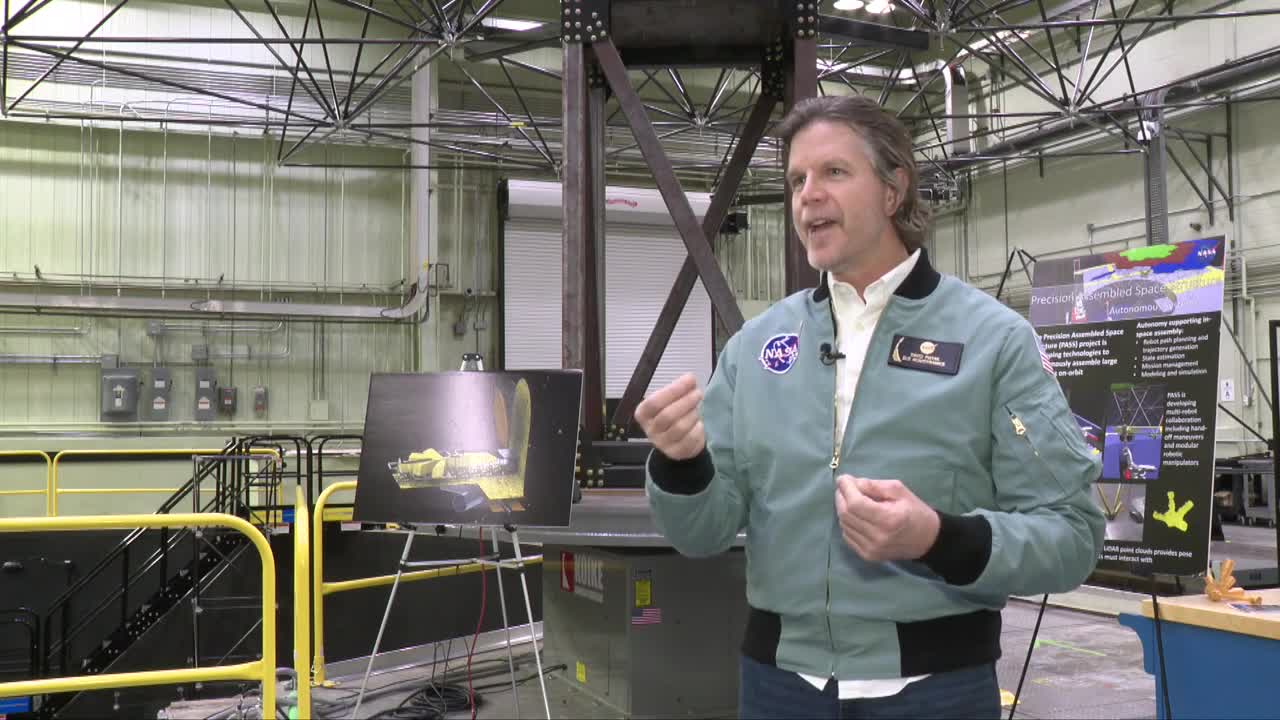


HAMPTON, Va. — As NASA makes final preparations for the launch of the Artemis II mission, some of your neighbors who work at NASA's Langley Research Center in Hampton are talking about their roles in the mission.
As of February 3, The Artemis II moon rocket remained on the launch pad after a hydrogen leak was discovered during a pre-launch test February 1-2.
Watch: Langley scientists eager for NASA's Artemis II astronaut announcement
“We learned a lesson again of how small hydrogen is," said aerospace engineer Dave Piatak.
Piatak was involved in Monday’s test.
“I do transonic and supersonic, supersonic wind tunnel testing to understand the aerodynamic performance of the rocket," Piatak explained.
“We have different assets that we’ll be videotaping and even live streaming," aerospace engineer Shan Rufer said.
The video Rufer's team gets helps them monitor what happens with the rocket during launch and re-entry. That includes how the engine’s exhaust affects the rocket.
“You want to understand how that interaction occurs so you can tell if, maybe, there’s going to be more heat in one area than another," said Rufer.
Watch: NASA Langley Research Center developed tech going to the moon
Rufer and Piatak’s work won’t end when Artemis II’s mission is over. They’ll use what they learned to help with future missions, including the next Artemis III which, as of February 3, was scheduled to put astronauts on the moon for the first time in over 50 years.
"It’s an honor to be part of this generational moment," said Piatak
“It’s almost unbelievable, like you’re living in a dream," Rufer said.
