



PORTSMOUTH, Va. — After a shooting, police typically respond to the scene, investigate what happened and work to identify those responsible.
Portsmouth leaders want to expand that response.
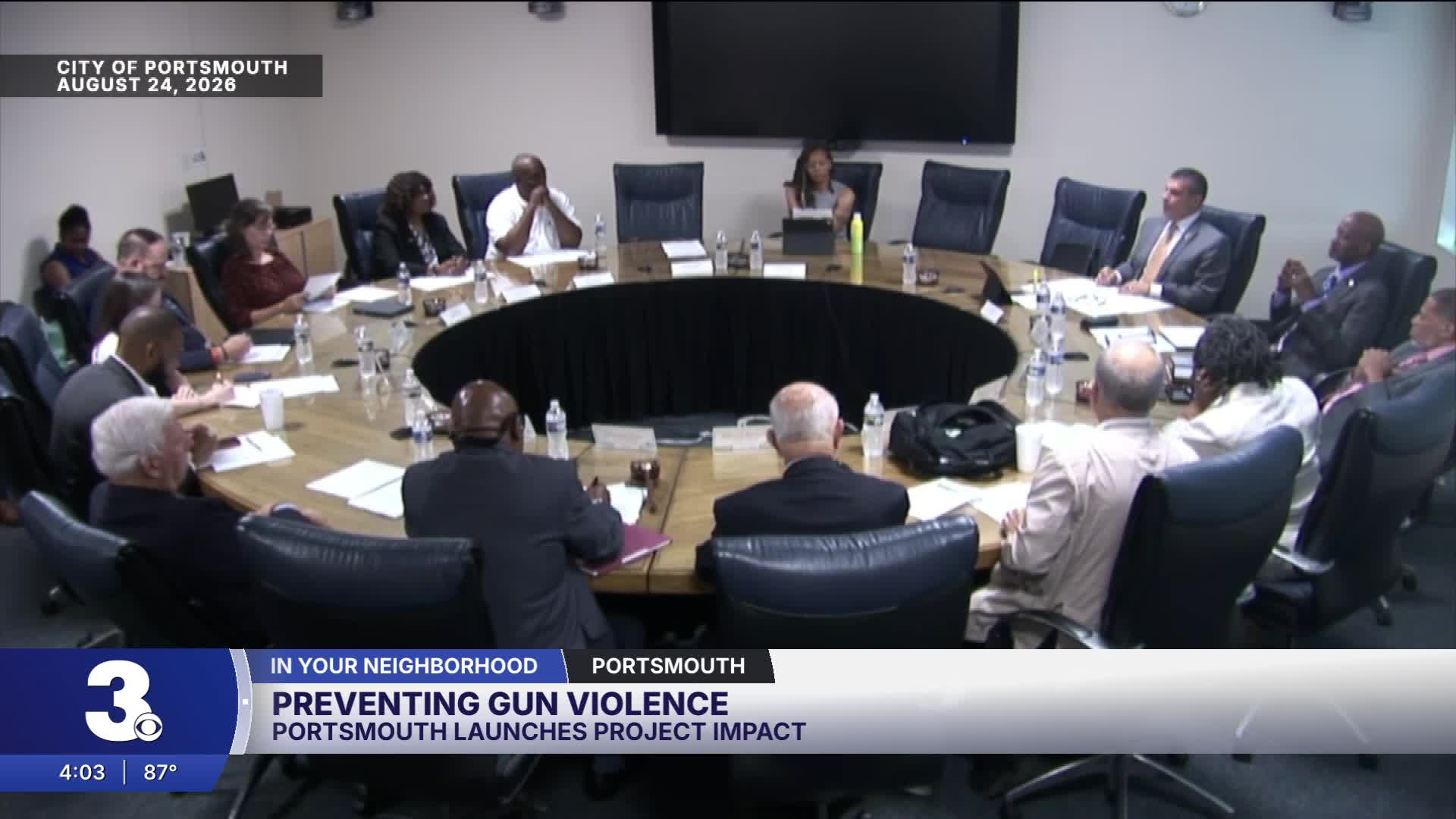
City Council unanimously approved Project IMPACT on Monday, a proposed strategy from Portsmouth’s Crime and Gun Violence Prevention Commission that would bring multiple city agencies and community partners together after certain shootings to address both the violence and the conditions surrounding it.
"The idea behind this is to stop doing things the way we've always done them," chair of Portsmouth’s Crime and Gun Violence Prevention Commission James Cullen said. "The way that we've done them before, we know what the outcome is. That's the situation we have right now."
The proposal is not in effect yet. Cullen said the council vote approved the proposal, and the city will still have to put the framework into operation.
Project IMPACT stands for Interagency Multidisciplinary Prevention, Analysis and Community Transformation. The proposal treats gun violence more like a public health emergency than an isolated criminal justice issue.
Under the plan, a multidisciplinary team would convene within 24 hours of certain shootings, including shootings that result in an injury or death and shootings at commercial establishments. Other violent crimes could also trigger a response at the direction of the chief of police or director of public safety.
Who responds would depend on the situation.
"When I say other people, I'm talking about anybody who has control over that space in some way," Cullen said.
That could include Public Works, Code Enforcement, the school district, property owners and other agencies or organizations.
The team would examine the shooting scene for physical conditions that could contribute to future violence.
"Can we do something about the lighting? Can we do something about cutting back the shrubs or the trees?" Cullen said.
The plan also calls for connecting shooting victims and families with support. In cases involving injuries, hospital-based violence interrupters could work to prevent retaliation before a victim is discharged. After a fatal shooting, crisis advocates could provide support to the victim's family.
For nighttime shootings, officials would return to the scene after dark at approximately the same time the shooting occurred to identify environmental factors that may not be visible during the day.
The city would then set deadlines for addressing problems identified at the scene.
Cullen said the team would have 24 hours to convene, with a goal of resolving 90% of identified problems within seven days. The plan also calls for check-ins at 30, 60 and 90 days.
"The intent is to have the entire incident, the case resolved within 180 days," Cullen said.
Old Dominion University's Center for Mission Engineering is also expected to play a role by using data to help Portsmouth determine where to direct resources and which strategies could be most effective.
"We'll make sure that, again, from the data that fully informed decisions are made based on the data and strategies can be developed for investment and for changes that get to the mission success," Thomas Irwin, director of the center, said.
Cullen said Project IMPACT would not require new city staff initially because the agencies involved already have personnel who could participate.
The goal is to understand why and how a shooting happened, address problems at the scene and reduce the chances of another shooting happening in the same area.
Click here to see how we use AI at WTKR News 3.
