

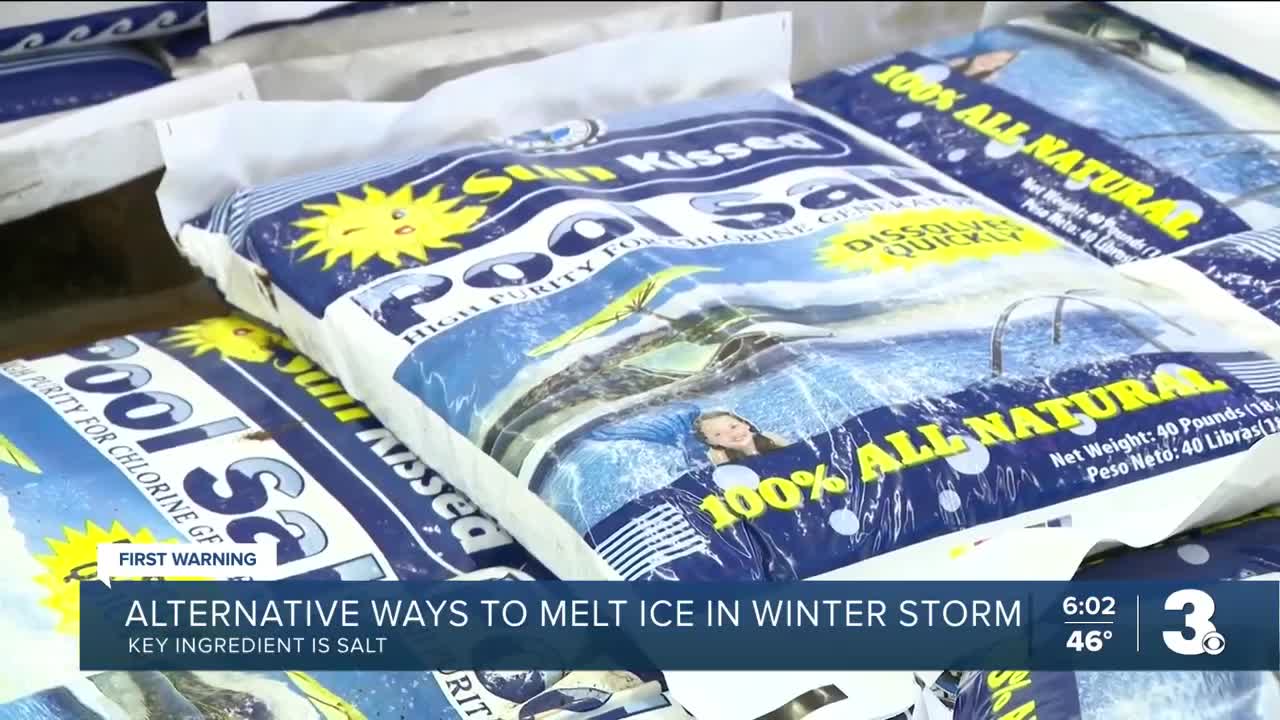


With winter storm concern driving ice melt off store shelves, homeowners are searching for cost-efficient alternatives to keep walkways safe. While several options exist, each comes with distinct advantages and drawbacks.
Salt serves as the key ingredient in effective ice melting products. It lowers water's freezing temperature through a process called "freezing point depression."
Products like kitty litter and sand may prevent slipping but lack salt, meaning they don't actually melt ice. Using these alternatives often results in a wet, clumpy mess during cleanup.
Rock salt or sodium chloride offers another recommended alternative, but it can damage concrete, corrode metal, harm plants and irritate pet paws.
Safer alternatives include fertilizer, sugar beet juice or baking soda. These products contain salt compounds that can help melt ice, though they typically work more slowly than commercial ice melt.
Snow-melting mats present a more expensive but fast and reusable option for homeowners willing to invest in long-term solutions.
Alternative products containing salt can provide relief when commercial ice melt isn't available, though users should expect slower melting results. The most effective strategy involves pretreating sidewalks and driveways before snow and ice arrive.
Let's connect on social media!
Forecaster Derrah Getter:
For weather updates on Facebook: HERE
For weather updates on X: HERE
Follow me on Instagram: HERE
Check out the Interactive Radar on WTKR.com: Interactive Radar
