

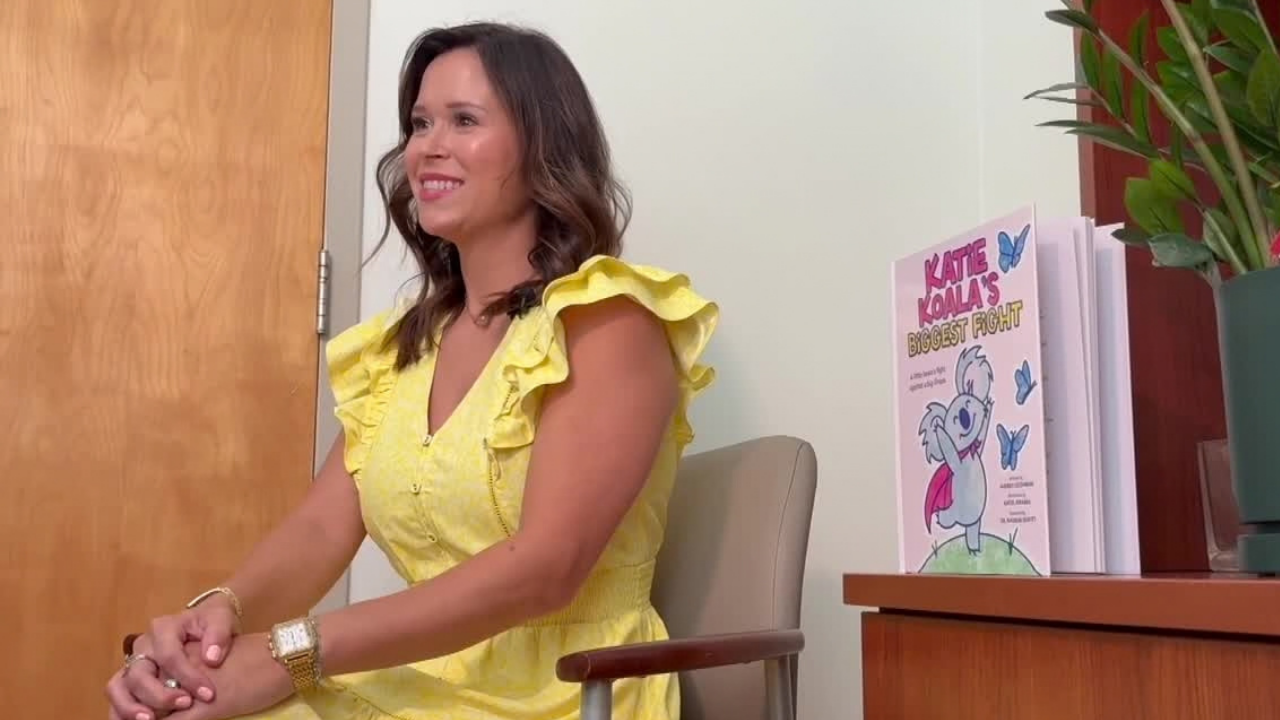


VIRGINIA BEACH, Va. — A simple case of the flu can turn into a deadly internal war in a matter of hour. No one knows that terrifying reality better than Virginia Beach mother Audrey Leishman.
A couple of years ago, we first introduced you to Audrey after a sudden medical crisis left her in a medically induced coma. Doctors gave her less than a 5% chance of survival. The culprit was sepsis—a fast-moving, life-threatening complication that occurs when the body overreacts to an infection. Audrey miraculously beat those impossible odds.
Recently, she got back in touch with me to share her latest mission to make sure other families don't have to experience her pain. She has turned her survival story into a creative educational tool: a brand-new children's book titled Katie Koala's Biggest Fight.
"I very much remember not being able to breathe," Audrey recalls of her 2015 battle. "That was by far the scariest part, it was basically like sipping air. I had never heard of sepsis—and I realized that was why I almost died."
To help bridge the gap between heavy medical terminology and everyday parents, Audrey recently sat down with front-line medical experts at Sentara Virginia Beach General Hospital. Among them was Anise Terrell, a specialized sepsis navigator whose entire job revolves around tracking the condition.
"Sepsis is the body's overreaction to any infection," Terrell explains. "Naturally, the body responds anytime there's an intruder. However, when the body starts to show signs that it is being overwhelmed... that's when we say that a patient has transitioned to actual sepsis."
The danger is widespread. Terrell warns that any standard illness—from a common urinary tract infection (UTI) to a bout of winter pneumonia—can turn into sepsis without warning.
Because sepsis can cause total organ failure in a matter of minutes, Audrey's new book focuses heavily on helping parents memorize the critical acronym T-I-M-E:
- T - Temperature: Changes in body heat, like a sudden high fever or feeling unusually cold.
- I - Infection: Signs of a localized bacterial or viral illness.
- M - Mental Decline: Confusion, sleepiness, or difficulty speaking.
E - Extremely Ill: Severe pain or discomfort, often described by patients as "feeling like they were hit by a Mack truck."
"It's an educational tool," Audrey says of her book. "It takes the fear out of a hospital stay and teaches the warning signs that people miss. My hope is that putting the knowledge in the hands of parents will allow families to recognize symptoms early."
Medical professionals emphasize that treating sepsis is a race against a very tight clock. Hospital teams rely on a 60-minute window known as the "golden hour" to flood a patient's body with IV fluids and broad-spectrum antibiotics. According to clinical data, for every single hour a patient goes without treatment, their risk of mortality increases by 7 to 8%.
Winning that race, however, requires patients and caregivers to shed their timidity in the emergency room. Hospital staff are actively encouraging people to trust their gut and speak up if they suspect a worsening infection.
"I always enjoy hearing a patient say, 'I have concerns for sepsis,'" says Terrell. "Because that makes us stop and take a closer look."
For Audrey, publishing this book isn't just about celebrating her own survival—it is about turning private trauma into a public shield.
"If I had known what the symptoms were, I would have sought treatment earlier," Audrey says .
You can find copies of Katie Koala's Biggest Fight online now.
