

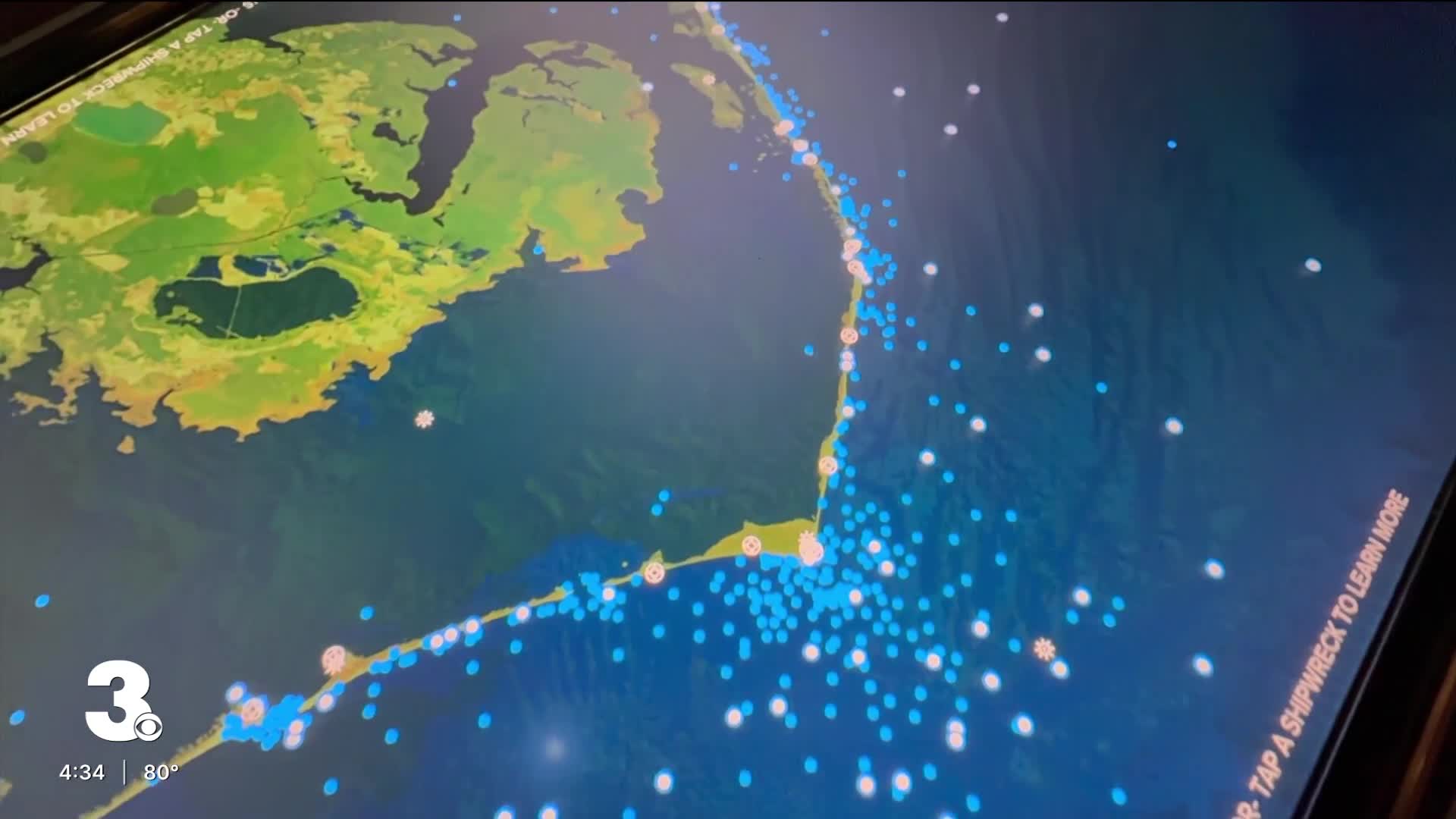


HATTERAS, N.C. — The Outer Banks is called the Graveyard of the Atlantic for a reason. Thousands of shipwrecks go back hundreds of years, with some still visible from the beaches here. During America 250, News 3 wanted to learn more about this history, and the Graveyard of the Atlantic Museum was a perfect place to start.
"The graveyard of the Atlantic Museum tell the stories of the thousands of shipwrecks that have occurred off of the coast of the Outer Banks, which is how the Outer Banks got its nickname, the Graveyard of the Atlantic. The way currents move and the way shoals happen out on offshore of the banks creates some treacherous sailing, and then you tie that in with like hurricanes and storms that come up, and then you know minor things like World War Two and U-boats being out in the Atlantic Ocean created this sort of storm over the last few centuries of shipwrecks that have occurred off of our coast," said Mary Massie, the museum's site manager.
Though not many during the Revolutionary War era of note, there have been plenty of memorable wrecks right off our coast.
"There have been some really memorable ones off the coast of the Outer Banks, not so much the Revolutionary War era, although there were shipwrecks obviously happening around then. Probably most notable the Monitor, which was a Civil War battleship that was sunk off the coast of Cape Hatteras. You've got a ton of shipwrecks from the two World Wars, which I think people also find very surprising when they come to the museum and learn that history," said Massie.
Massie says the museum doesn't just focus on the shipwrecks themselves, but the real people who were on those ships.
"To come in and see like artifacts that have been found on these shipwrecks, which really give you a sense of the people that were on these ships. It's their personal items or work things that they would have been using, windows they looked out of. Things like that, that we're able to use to tell the stories of the ships and the shipwrecks that happened," said Massie.
It's not just about the people on these ships — these wrecks helped shape the Outer Banks community as well.
"It's not all just about the ship itself, the people that were on the ship, but the people that were actually here on the Outer Banks, and how integral they were. Not just the lifesaving service, who were the brave ones, going out and actually getting them off the ships, but their wives and their families, and the other people living in the community, coming in and helping them," said Massie.
This maritime history even shaped some of what we still see on our coast today.
"We talk about the lighthouses, the life saving stations. The US Coast Guard is a direct descendant of the U.S. Life Saving Service that was started in the late 1700s went through the late 1800s. That was really formed to help save people on these shipwrecks, there were so many happening along the coast, and without a system to save people, they were kind of left to their own devices. The government saw the importance of having this life-saving service," said Massie.
During such a special milestone for our country in its 250th year, Massie hopes that locals and visitors take a moment to appreciate how connected we all are.
"I hope that the local community the local comes here and knows that this is their history, and that's the story that we're all really trying to tell and celebrate and commemorate with the 250. And that tourists too, they get to come here, and even though we're not really talking about the Declaration of Independence, that all of this history was happening around that same time, and has had an impact on everything through American history, that it's all really connected to each other," said Massie.
The museum does have some America 250 stories on display that we all can see when we visit there.
"We have a special display in our lobby for the 250, it'll be there all year long. It's this handmade diorama that showcases the Raid on Ocracoke, where a British loyalist came in on his ship, took over some ships from Patriots down off of Ocracoke, and I think maybe the next day the Patriots came back and took their ship back, which is kind of a fun little story," said Massie.
All summer long, the museum is also hosting its Salty Dawg Speaker Series, where every Tuesday at 11 a.m., more stories about the history of shipwrecks off our coast will be shared. For more information, head to their website.
Click here to see how we use AI at WTKR News 3.
-
June 25–July 5, 2026
1776 the Musical in Colonial Williamsburg -
July 1, 2026
Wonder Wednesday: America 250 in Norfolk -
July 3, 2026
Celebrate Freedom at Chesapeake City Park -
July 4, 2026
Annual South Norfolk July 4th Parade & Picnic in the Park -
July 4, 2026
Stars and Stripes Spectacular at Constant’s Wharf Park and Marina -
July 4, 2026
4th of July Great American Picnic & Fireworks at Town Point Park -
July 4, 2026
July 4 Stars & Stripes Celebration at the VB Oceanfront -
July 4, 2026
Stars over Hampton: July 4th Celebration -
July 4, 2026
Fort Monroe hosts Fourth at the Fort -
July 4, 2026
Stars in the Sky at Victory Landing Park
