

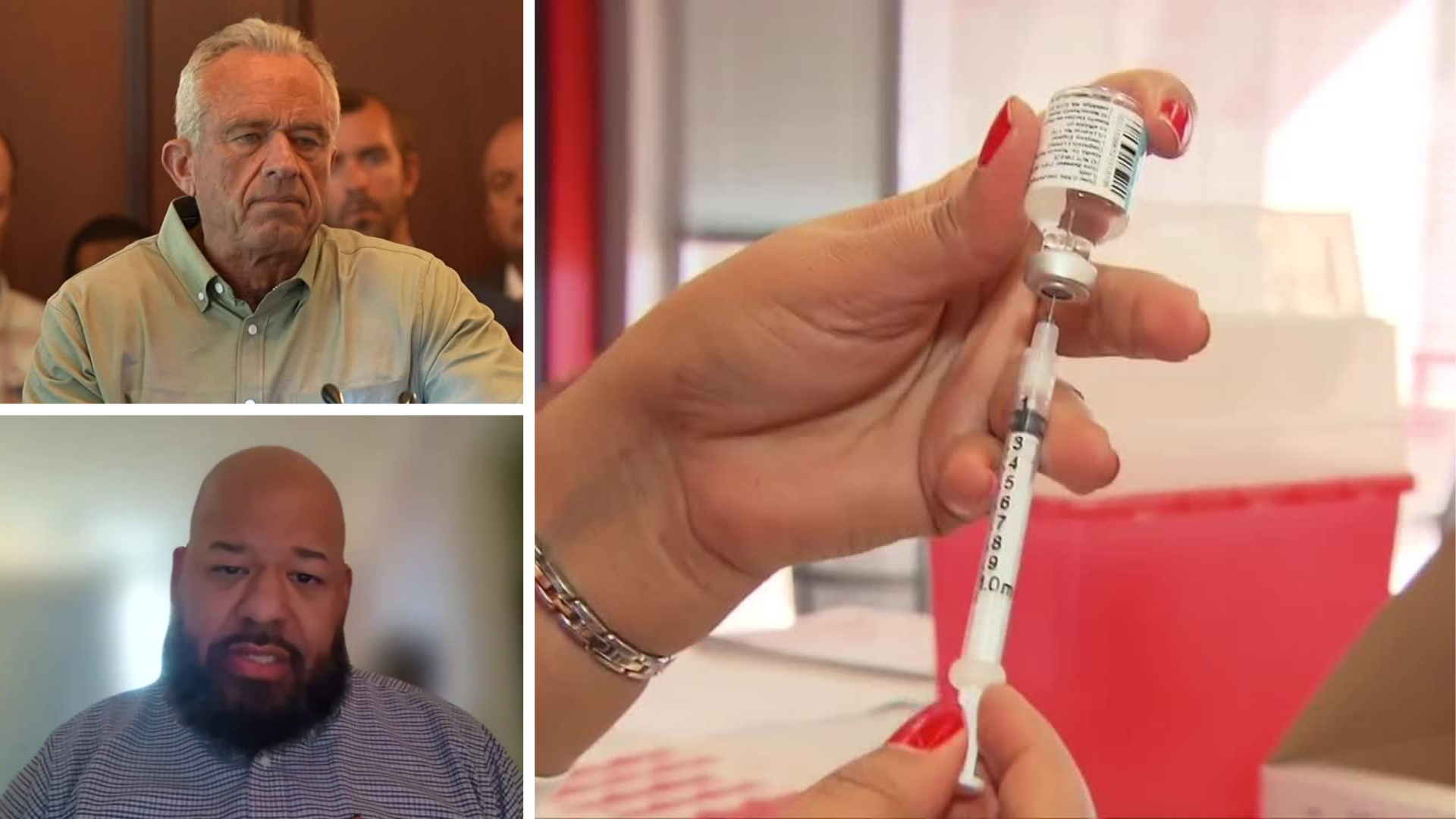


RICHMOND, Va. — Virginia is seeing a measles surge that health officials say is unlike anything they have witnessed in years, with 77 confirmed cases reported as of Tuesday, according to the Virginia Department of Health.
55 of those cases are in Central Virginia, most of them linked to an outbreak in Buckingham County that began with a single confirmed case in early May.
Dr. Eric Freeman, chief pediatrician with Old Dominion Pediatrics, said the numbers are alarming.
"I think it is very unusual that we're seeing the number of measles cases that are currently being reported in the Commonwealth," Freeman said.
Freeman said the spike is connected to declining vaccination rates across the country and warned that Buckingham County may not be the only vulnerable area.
"I am very concerned based on what we see, particularly with the outbreak in Buckingham County, that there are most likely other areas of lower community vaccination in the Commonwealth of Virginia," Freeman said.
Health and Human Services Secretary Robert F. Kennedy Jr. addressed the outbreak Wednesday during a visit to Doswell, urging residents to get vaccinated.
"At CDC, we encourage people to get their measles vaccination. That's the best way to prevent yourself from getting measles," Kennedy said.
Freeman echoed that message, pointing to vaccination data from the Virginia Department of Health.
"It's really important to highlight that here in Virginia, the Department of Health reports that 96% of the individuals who have contracted measles are unvaccinated or under vaccinated," Freeman said.
Measles symptoms typically begin with a high fever, cough, runny nose, and red, watery eyes. Days later, a rash develops, starting on the face before spreading across the body. While many people recover, the illness can become serious.
"One out of five individuals with measles will be hospitalized. One out of 20 children can develop pneumonia, which is probably one of the most common reasons of death in the pediatric population," Freeman said.
For those who are unvaccinated or have inadequate immunity, Freeman said the window for illness after exposure is significant.
"If you are either unimmunized or don't have adequate immunity, if you're exposed to measles, the illness window is about, I would say, seven to 14 days after that exposure time," Freeman said.
Doctors are urging families to confirm their vaccination status before summer travel increases. Two doses of the MMR vaccine are considered strong protection against infection.
"Typically, in children, we give the first dose between 12 and 15 months. The second dose is between four and six years. So, if you have two doses of the measles vaccine, you are good to go. Also, if you were born before 1957, in most instances, you are probably immune," Freeman said.
For anyone concerned about a potential exposure, Freeman offered this guidance.
"The first thing I recommend to people is do not panic. I think if you're concerned about exposure, I would definitely check your vaccination status if you've had two doses of measles vaccine, then in most instances, you are not going to contact measles," Freeman said.
This story was initially reported by a journalist and has been converted to this platform with the assistance of AI. Our editorial team verifies all reporting on all platforms for fairness and accuracy. To learn more about how we use AI in our newsroom, click here.
