




NORFOLK, Va. – March 1st marks the start of meteorological spring, ushering in both the spring wildfire season and the growing season ahead. Despite a wetter-than-normal February, drought conditions linger across parts of the region.
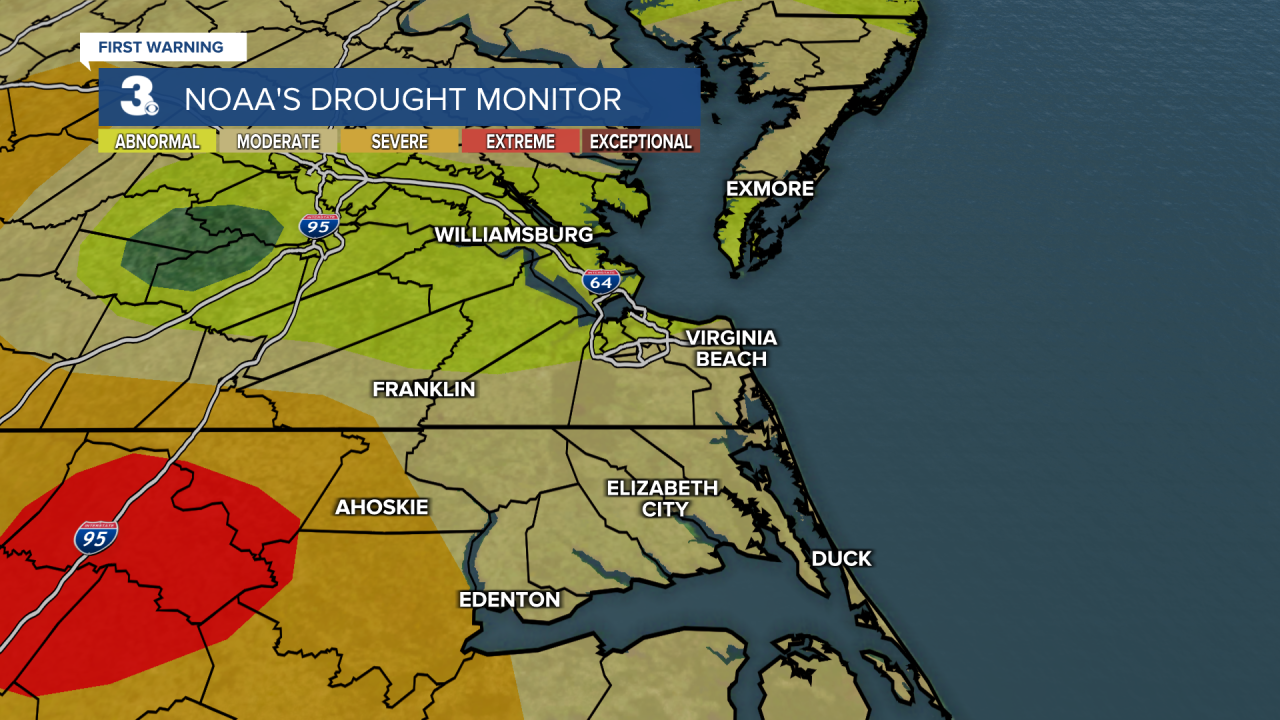
February brought more than an inch above the average rainfall of 2.9 inches. The rain will help to inhibit wildfires to start the season. However, parts of southeast Virginia and northeast North Carolina remain under moderate drought, with severe drought in portions of North Carolina.
While drought is usually viewed as a challenge in spring, it can offer some short-term benefits for agriculture. Drier conditions can allow farmers to get into their fields earlier, rather than being slowed by muddy ground. However, irrigation will still be needed to wet the soil and help plants grow.
Jonathan McGee, a hydrologist with the National Weather Service in Wakefield, says regrowth of wild plants in early spring can drain soil moisture and even intensify drought.
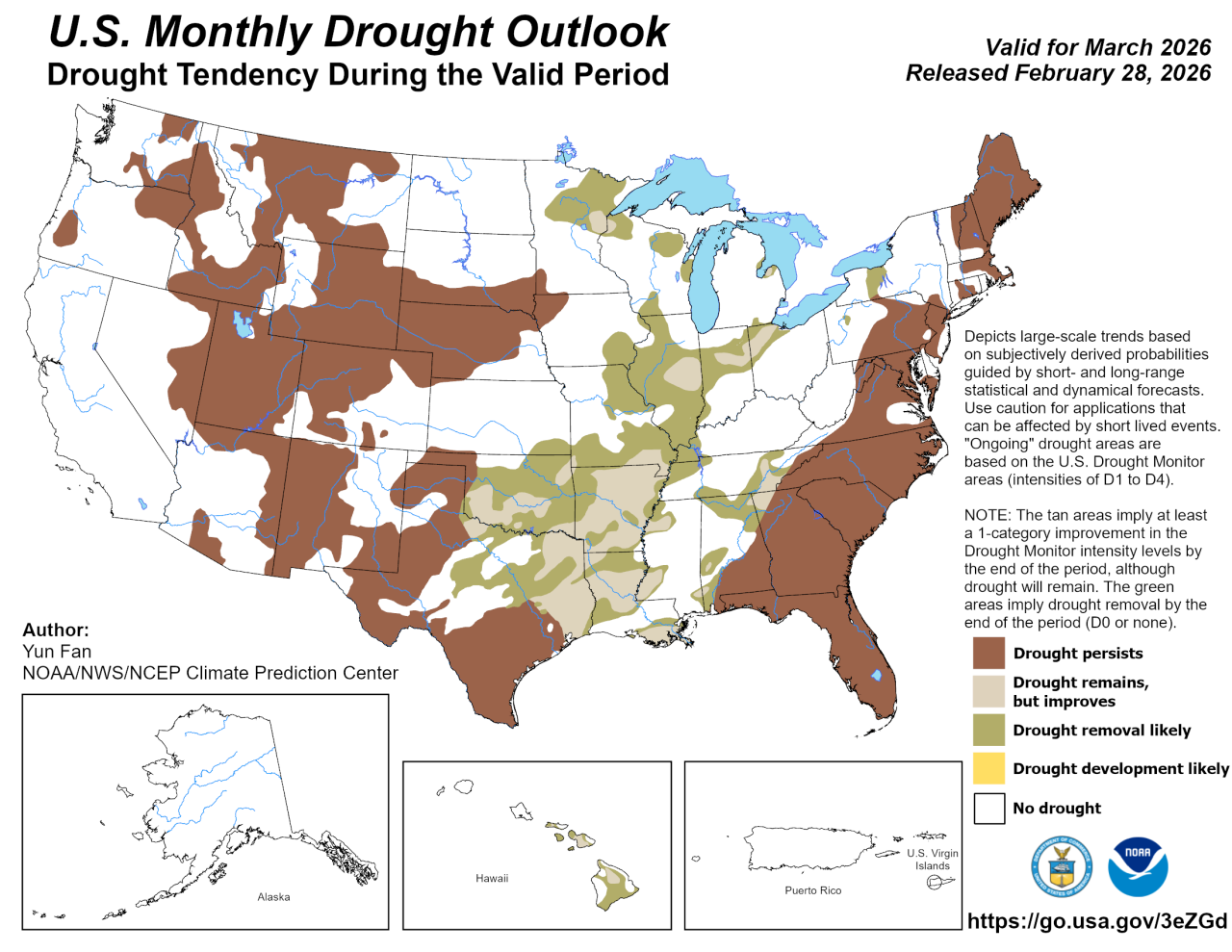
The Climate Prediction Center expects drought to persist across much of the area into March. With vegetation growth and warmer temperatures ahead, wildfire risk will remain elevated. Forecasters are hopeful that upcoming spring rainfall events could help ease conditions and help out farmers as the season progresses.
