



NORFOLK, Va. — Marijuana has been legal for adults to possess in Virginia for more than five years, but that doesn't mean anyone can legally sell it.
That distinction is now at the center of a federal criminal case involving one of Virginia's most influential lawmakers, state Sen. L. Louise Lucas, who is accused of helping operate an illegal marijuana distribution enterprise while using her political position to potentially benefit from the state's emerging recreational cannabis industry.
Lucas, a Portsmouth Democrat who serves as president pro tempore of the Virginia Senate, is facing five federal charges, including racketeering conspiracy, conspiracy to distribute marijuana and money laundering conspiracy.
The allegations come as Virginia prepares to launch its legal recreational marijuana retail market in July 2027.
But what exactly is legal in Virginia right now, and how do those laws connect to the charges against Lucas?
Virginia legalized recreational marijuana possession for adults 21 and older on July 1, 2021. Under current state law, adults can legally possess up to two ounces of marijuana in public.
Possessing more than two ounces but no more than four ounces can result in a $25 civil penalty.
The penalties become more serious as the amount increases. Possessing more than four ounces in public can lead to criminal charges, while possessing more than one pound in public is a felony.
Virginia law also allows adults to grow up to four marijuana plants per household, provided they follow certain requirements, including keeping the plants out of public view and preventing access by anyone younger than 21.
However, while possessing marijuana is legal within those limits, selling recreational marijuana remains illegal without proper authorization.
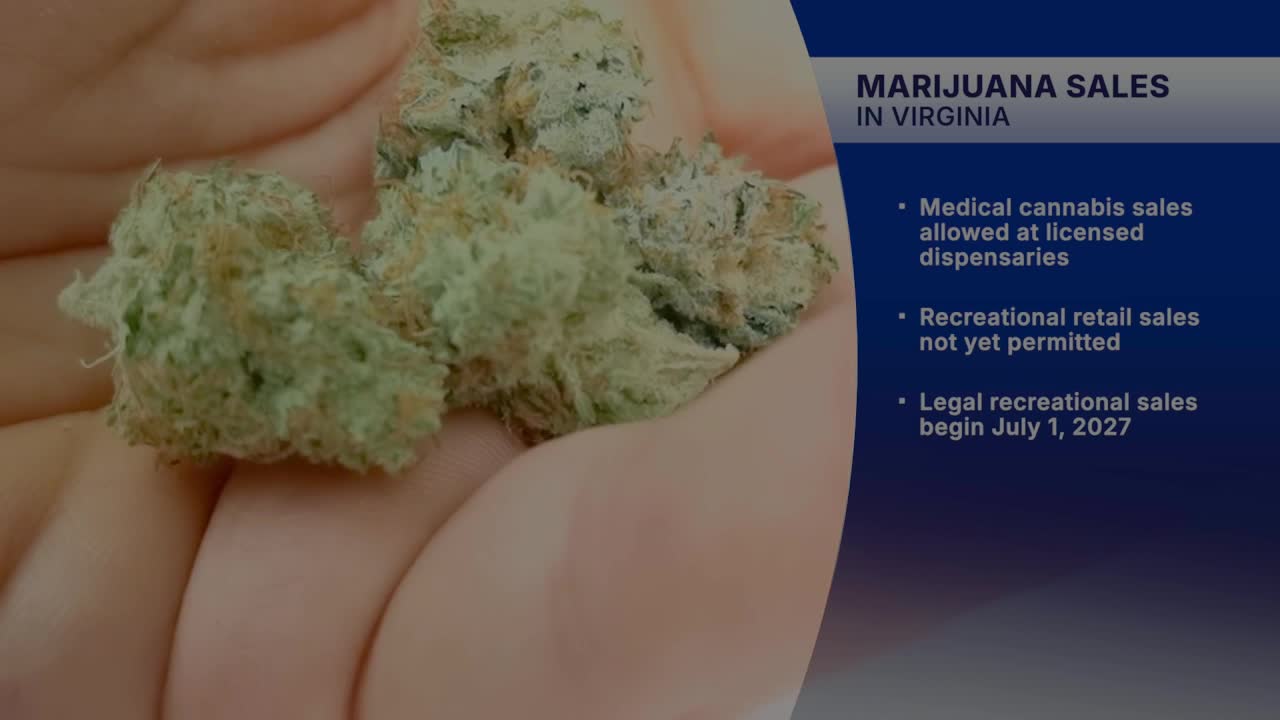
Virginia currently allows licensed medical cannabis dispensaries to sell marijuana products to qualifying patients. But the state has not yet opened a regulated recreational retail market where adults can legally purchase marijuana without medical authorization.
That market is scheduled to begin operating July 1, 2027.
The distinction between possession and sales is particularly important in the case against Lucas.
According to a federal indictment filed Oct. 14, prosecutors allege Lucas helped operate an illegal marijuana distribution business known as The Cannabis Outlet in Portsmouth.
Federal investigators allege the operation involved Lucas, members of her family and several business associates.
The indictment alleges the drug conspiracy involved at least 100 kilograms of marijuana, equivalent to approximately 220 pounds.
Prosecutors also say undercover law enforcement officers purchased marijuana from the business as part of their investigation.
Authorities allege Lucas and others were involved in distributing marijuana and handling money generated through those sales.
But the federal case goes beyond allegations of illegal marijuana distribution.
Prosecutors also accuse Lucas of using her position in the Virginia Senate to influence the development of the state's future recreational marijuana licensing system.
According to the indictment, Lucas allegedly sought to shape legislation and licensing opportunities in ways that would financially benefit herself, family members and business associates.
The allegations are significant because Virginia's future recreational marijuana market will require businesses to obtain state-issued licenses before legally selling cannabis products.
Those licenses could provide businesses with opportunities to participate in a new regulated industry.
Federal prosecutors allege Lucas attempted to use her political influence to secure financial advantages connected to that process.
The indictment includes allegations of bribery and honest services fraud, along with racketeering, marijuana distribution and money laundering conspiracies.
Another important distinction is the difference between state and federal marijuana laws.
Although Virginia has legalized adult possession, marijuana remains subject to federal controlled-substance laws.
That means activities permitted under Virginia law are not necessarily legal under federal law.
Federal prosecutors can pursue marijuana-related criminal charges when they believe conduct violates federal statutes, including laws governing drug distribution and trafficking.
In Lucas' case, prosecutors allege the marijuana operation was part of a broader criminal enterprise involving financial transactions and the misuse of public office.
Lucas has denied wrongdoing and pushed back against the federal prosecution.
The longtime state senator has been a prominent advocate for marijuana legalization in Virginia and has played a significant role in shaping legislation involving the state's cannabis industry.
Her indictment comes as Virginia continues preparing for a regulated recreational marijuana market, raising questions about how the state will oversee businesses seeking licenses to legally sell cannabis.
For Virginia residents, the current law remains clear in one important respect: Adults 21 and older can legally possess limited amounts of marijuana, but recreational marijuana sales are not yet authorized through a general retail market.
Licensed medical cannabis dispensaries remain the state's legal retail option for qualifying patients.
And while Virginia is preparing to allow recreational sales beginning next summer, businesses must comply with state licensing requirements before entering that market.
As for Lucas, the charges outlined in the federal indictment remain allegations. She is presumed innocent unless proven guilty in court.
Click here to see how we use AI at WTKR News 3.
