

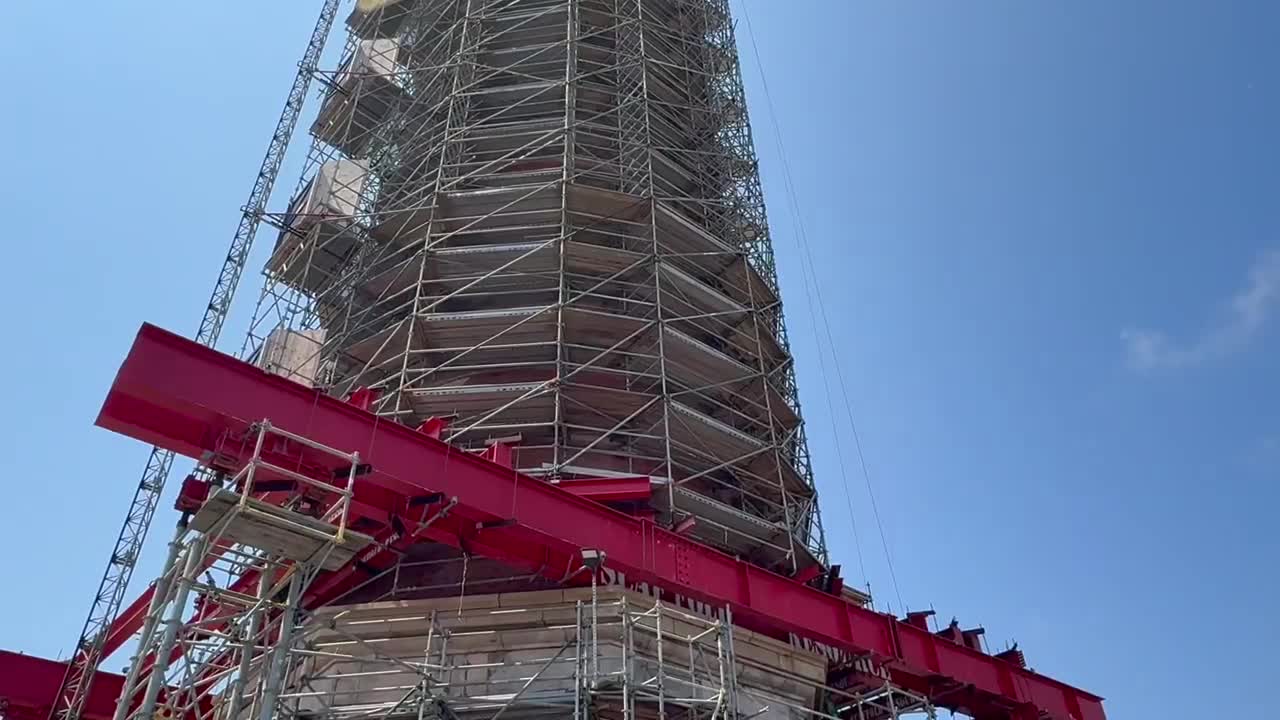


OUTER BANKS, N.C. — One of the most recognizable landmarks on North Carolina's Outer Banks has entered a critical new phase of restoration, with crews tackling unexpected structural damage discovered high atop the Cape Hatteras Lighthouse.
During a media tour Thursday, News 3 got a firsthand look inside the construction zone, where the 156-year-old lighthouse remains surrounded by scaffolding as workers carefully dismantle and restore portions of the historic structure.
The most significant discovery so far has been hidden beneath layers of paint and years of exposure to the elements.
As crews began restoring the lighthouse, they uncovered major structural cracks in the cast-iron brackets that support the top of the tower.
"These brackets hold up the entire top of the lighthouse, which allow visitors to go up and visit outside on the deck plates, on the watch level, and also hold and store the new Fresnels that will be going in," said Lindsey Gravel, project manager with Stone & Lime Historic Restoration Services, the company overseeing the project.
The 16 historic brackets support the gallery deck where visitors step outside at the top of the lighthouse, as well as the lantern room that will eventually house a replica first-order Fresnel lens.
When engineers determined the brackets were structurally cracked, crews had to dramatically change their plans.
Instead of continuing with routine restoration work, they carefully dismantled the top of the lighthouse piece by piece. Every nut, bolt and cast-iron component is being removed by hand to avoid damaging the historic structure.
The brackets are now being shipped to a specialty iron shop in Alabama, where they'll be stripped of old coatings, inspected and repaired before returning to the Outer Banks. Rather than replacing the historic ironwork, engineers plan to preserve the original exterior while adding hidden modern reinforcement inside.
"The intent and idea is that we're going to remove the back flange of the bracket, but preserve the external ornamental piece. And the intent is that we're going to install a stainless steel beam, like an I beam... in the back, and attach it to the historic fabric," Gravel explained.
The result will be a repair most visitors will never notice.
When the lighthouse reopens, the original cast-iron brackets will appear much as they have for generations. Hidden behind them, stainless-steel structural beams will provide the strength needed to support the lighthouse well into the future.
Project leaders say preserving as much of the original lighthouse as possible has guided every decision.
"We wanted to preserve as much as we could of the historic fabric. This is historic fabric that has been mostly untouched from the 1870s... which is an incredible opportunity to be able to work with," Gravel said.
Designed and built between 1868 and 1870, the Cape Hatteras Lighthouse is the tallest traditional lighthouse in the United States. It was moved 2,900 feet inland in 1999 after decades of shoreline erosion threatened the structure.
The current restoration extends far beyond structural repairs. The project includes masonry restoration, repainting the interior and exterior, restoring windows, doors and marble flooring, improving the surrounding landscape, reconstructing historic fencing and installing a replica first-order Fresnel lens designed to resemble the lighthouse's original beacon.
The project's price tag has also grown.
Officials say the original contract was awarded for about $19 million, but the unexpected structural repairs have increased the total cost to approximately $30 million. That figure also includes restoration work throughout the light station, landscaping improvements and installation of the replica Fresnel lens.
The National Park Service expects the restoration to continue through next year, with a goal of reopening the lighthouse to climbers in the summer of 2027.
Until then, visitors can still view the iconic black-and-white spiral landmark from the grounds, while crews work to ensure it remains standing for generations to come.
Click here to see how we use AI at WTKR News 3.
