

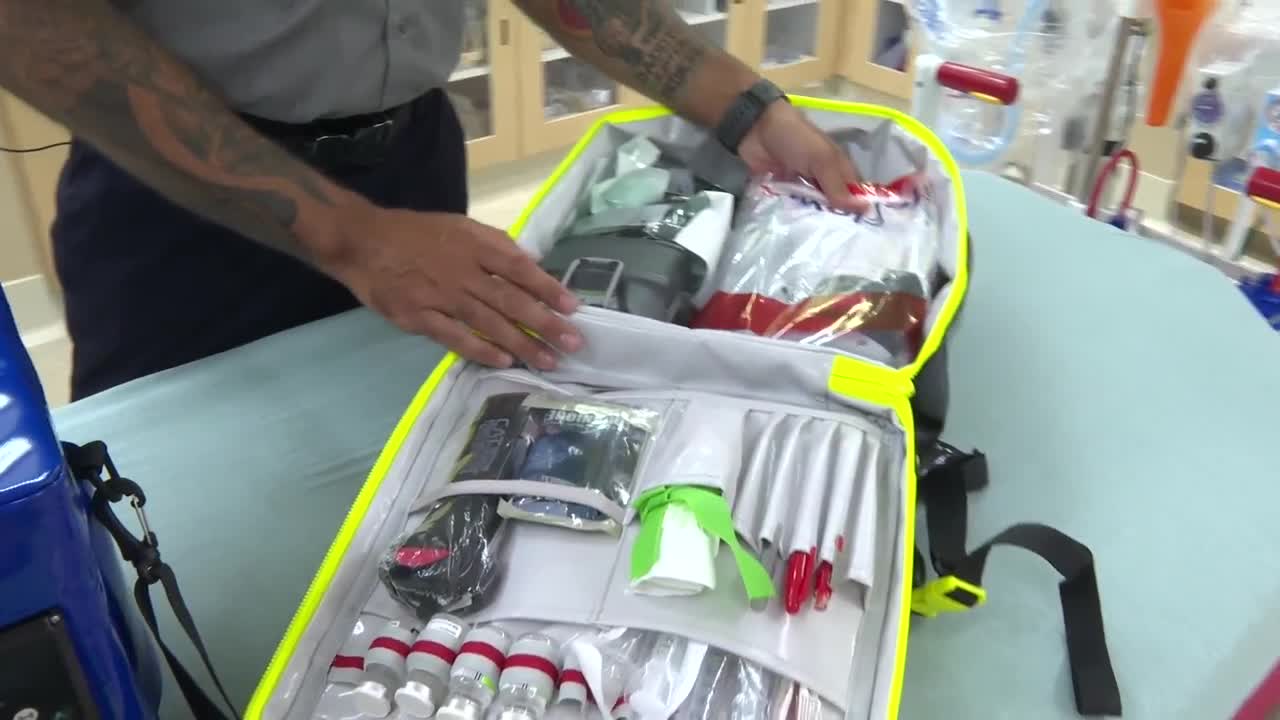


HAMPTON, Va. — Hampton Department of Fire and Rescue is starting a new program, using whole blood to help save lives. With special equipment, paramedics and EMTs can now give patients blood before the patient gets to a hospital.
“This is, by far, the most innovative piece of patient treatment that I’ve seen in my 16 years in the department," HDFR Lt. Matthew Payne said.
Starting a whole blood program took years of planning and research, and it isn’t cheap. The city put $107,000 in the department’s budget to get the program started. The equipment costs about $50,000 and each unit of blood costs $425.
Watch: Use of whole blood by Virginia Beach EMS could save more lives
“Before, the way we were trained was we would replace the blood volume with saline. Well, saline lacks certain components such as platelets, plasma, and red blood cells that the patient needs to sustain life," Payne explained. "In part of our research we found that around 30 patients that were transported to Riverside Regional received blood transfusions in the ER. So they would’ve benefited from this product.”
Antonio Hodges benefited from a similar program in Norfolk. He talked with News 3 Norfolk neighborhood reporter Jay Greene in April 2026 about his experience.
Watch: 'I thought I was gone': Norfolk man saved by whole blood transfusion
“It made it so I wanted to live, because they were fighting so hard for me," said Hodges.
While the whole blood program is new to Hampton, it’s not new to Hampton Roads. Since at least 2022, News 3 has done several stories on local whole blood programs.
Watch: Blood drive supports Whole Blood Initiative, supports EMS on-site aid
“It kind of, for us, changes the starting point," Riverside Regional Medical Center Trauma Program Coordinator Brittany Payne said.
Riverside is where HDFR takes patients who need to go to a hospital. Brittany said the whole blood program in Hampton is a game-changer for the hospital.
Watch: Tidewater EMS expands its 'Whole Blood Initiative' to the Chesapeake community
“It’s changing our starting point from the patient arriving to the hospital and us trying to kind of play catch up versus the patient getting that care pre-hospital," she explained.
“If we’re able to at least save one life with this, I don’t think we can really put a price tag on that," Matthew said.
Click here to see how we use AI at WTKR News 3.
