

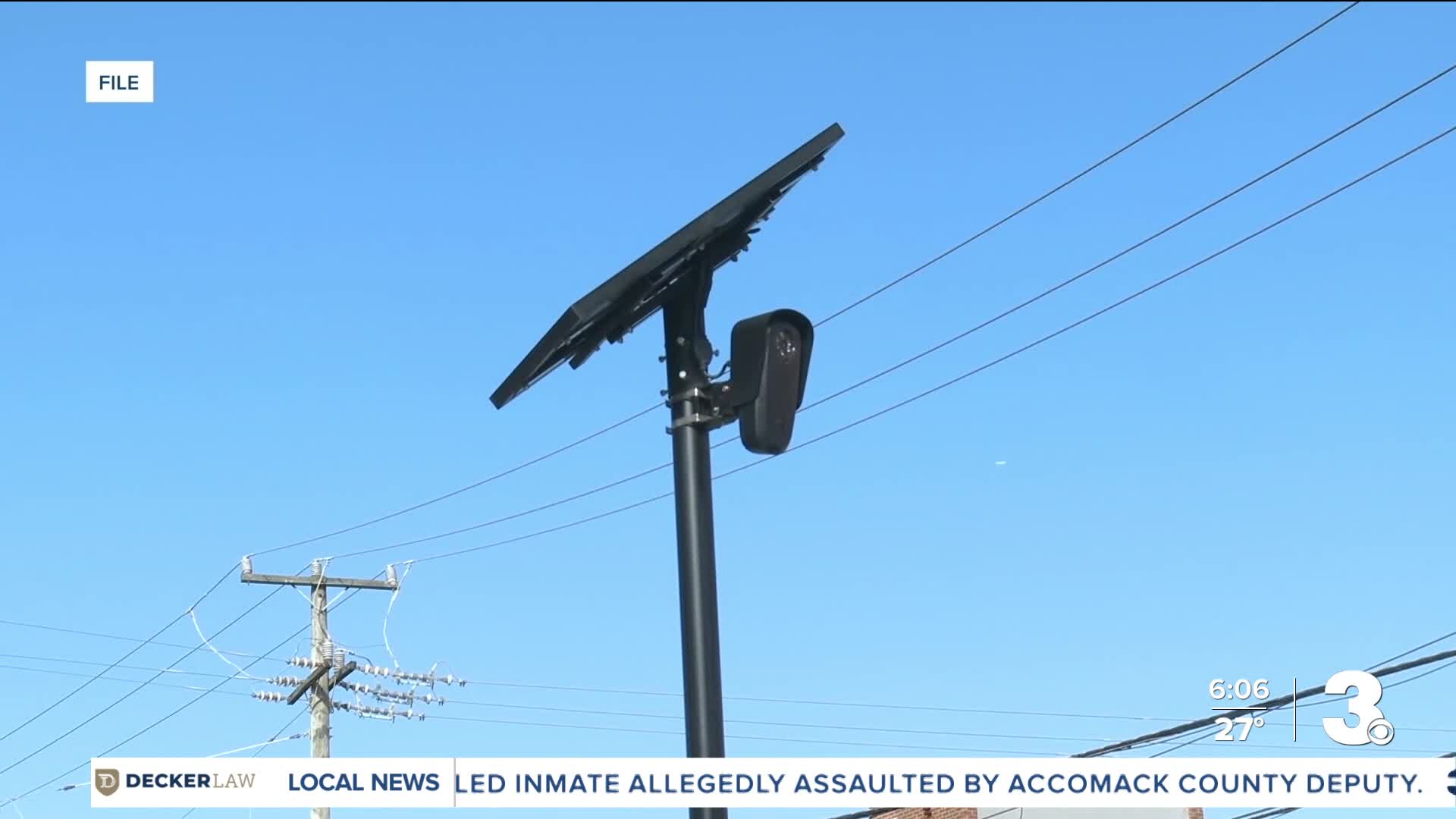


NORFOLK, Va. — A federal judge in Norfolk sided with the city on Tuesday in a lawsuit alleging that its use of Flock license plate reading cameras is a violation of Fourth Amendment rights.
Norfolk's Automated License Plate Recognition (APLR) camera network operates nearly 200 cameras in the city, which capture images of plates and can employ their use in crime investigations.
In his decision, U.S. District Judge Mark Davis cites other court rulings at the state and federal level which, he said "have almost uniformly concluded that neither taking photos of the license plate of a vehicle on a public roadway nor maintaining and querying a database of ALPR photos constitute a warrantless 'search.'"
Representatives for the plaintiffs, Hampton Roads residents Lee Schmidt and Crystal Arrington, released a statement following the ruling saying they plan to appeal.
Watch previous coverage: Norfolk residents challenge Flock camera program in federal court
“The government cannot monitor someone’s daily movements without a warrant based on probable cause, which is why we’ll appeal today’s decision,” said IJ Attorney Michael Soyfer. “As abuses of these ALPR systems are mounting nationwide, it’s more important than ever to vindicate the people’s right to security from mass surveillance guaranteed by the Fourth Amendment.”
Judge Davis also writes in his opinion that other judges have cautioned against uniform rejection of these lawsuits because ALPR technology is still evolving, and "the constitutional balancing could conceivably tip the other way."
Flock Safety, the company behind the camera system, has previously defended the technology's legality.
"License plates are issued by the government for the express purpose of identifying vehicles in public places for safety reasons. Courts have consistently found that there is no reasonable expectation of privacy in a license plate on a vehicle on a public road, and photographing one is not a Fourth Amendment search," the company said.
Read the full lawsuit below.
