

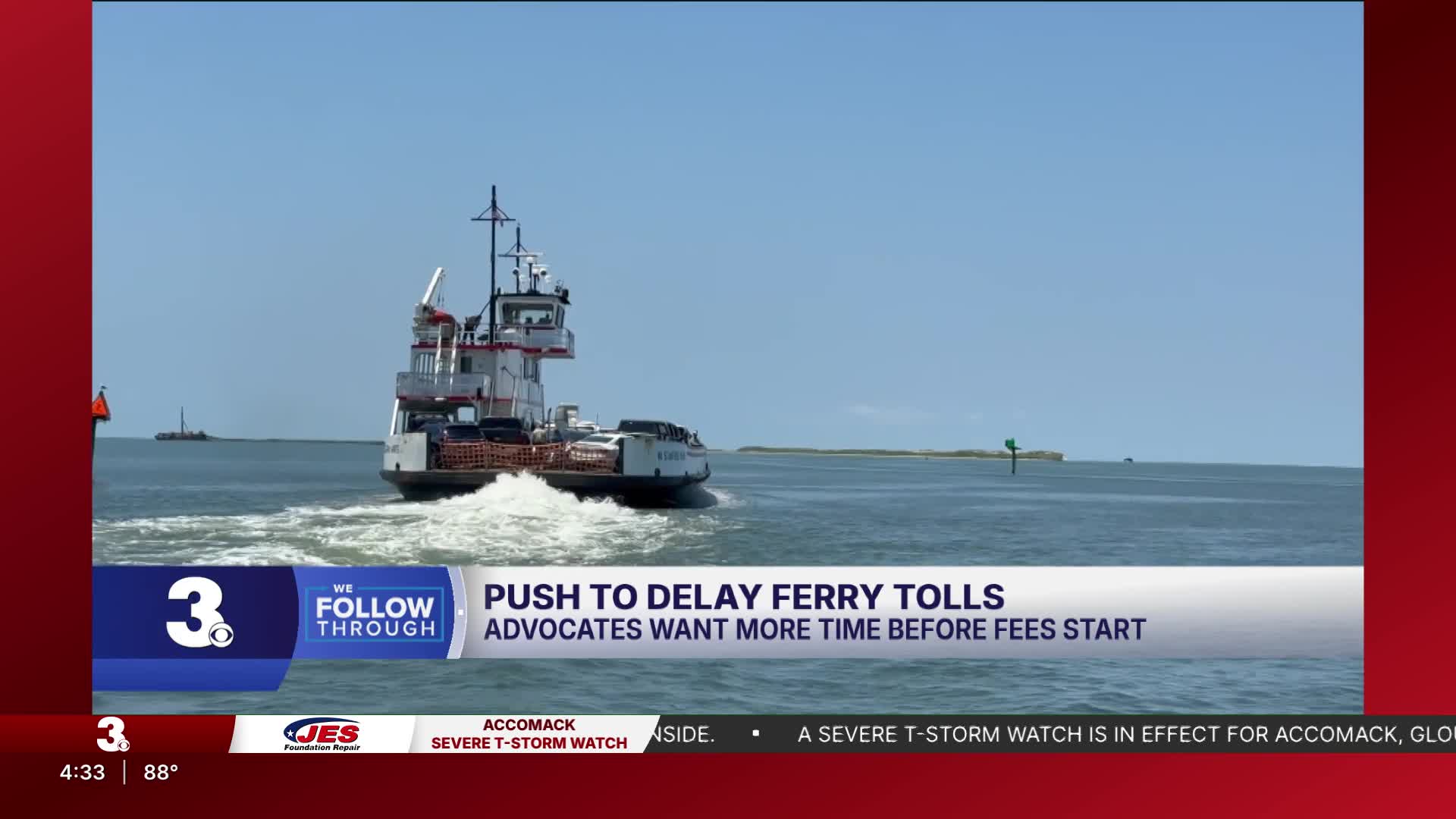


HATTERAS, N.C. — A normal scene at the ferry terminal in Hatteras on Tuesday afternoon, with dozens of drivers waiting to take their ride to Ocracoke. Next summer, it could be a different experience for visitors, with legislation passed in the state budget to toll all ferry routes in the state. The expectation for that to be implemented is by Jan. 1, 2027.
That's just five months away — Justin LeBlanc and the Ocracoke Access Alliance are now seeking to delay it.
"We're just greatly concerned that five months simply isn't enough time for there to be due process and appropriate public input and consideration before they have to implement these tolls," said LeBlanc, the executive director of OAA.
That concern is especially true for the heavily traveled Hatteras to Ocracoke route.
"Hundreds of 1000s of people take the Hatteras-Ocracoke route, 10s of 1000s of vehicles. The mainland routes have 1000s of vehicles, they have a reservation system where you actually book a time slot, that system is simply not going to be applicable to the Hatteras Ocracoke route that operates on a first come first serve basis with a lot more ridership than those mainland routes have," said LeBlanc.
OAA is now pushing elected and State Board of Transportation leaders to change the expected date for implementation of these tolls from Jan. 1, 2027, to Jan. 1, 2028.
Since this is still recent legislation, the toll rates and how to collect them are still unclear.
"The ferry system knows and is going to have to work on coming up with a new system, whether that's Easy Pass or similar technology. Is there a toll on both ends of the route, or is it a toll in one direction and free in another?" said LeBlanc.
LeBlanc and OAA feel making this all happen in a five-month span could be a rushed process that could even ultimately lead to an interim plan to start out.
"That might be a frustrating process where you you've got one system that all of a sudden a year and a half later it changes. That's kind of what we were hoping to avoid by delaying implementation so that we can hit the ground running with a tolling plan and a system that works from the get go," said LeBlanc.
LeBlanc made it clear that OAA is here to support NCDOT and the Ferry Division as it works on the plans for these tolls. That's why OAA feels they need to be a voice for delay here.
"We're going to continue to look for flexibility within the law that the Board of Transportation and the Ferry Division might be able to execute a zero toll in the first year or something like that, where they can give themselves some time to build up a more robust system. I think our primary objective is just going to be to engage in whatever public process unfolds and continue to push for a potential delay," said LeBlanc.
OAA's push also wants to continue conversations about the commuter pass plan that would charge all residents a yearly fee to use the ferry. Right now, what News 3 has heard is it will be a $150 yearly charge.
"We remain concerned about that, and we were hoping that that in addition to the technical you know sort of challenges with implementing tolls so quickly, that a delay would also give us a time to continue conversations about things like an annual commuter pass," said LeBlanc.
LeBlanc also shared how Ocracoke residents have come around on the tolls after years of opposition. It's another reason this topic hits so close to home.
"I think our community resisted the idea of tolling the Hatteras Ocracoke route, feeling that it would really really hurt our local economy. I think we've come to the conclusion that that the sustainability of the ferry fleet is going to have to depend upon tolls, and that the long-term viability and sustainability of our ferry fleet is going to need that tolling revenue to try and maintain the fleet and try to replace those vessels over time. If we want to have a robust ferry division 20 years from now, we need to be open to the idea of tolling today," said LeBlanc.
LeBlanc shares that they have been actively in discussions with the Ferry Division and the State Board of Transportation on these issues and look forward to that dialogue moving forward.
NCDOT, in a statement to News 3 last week about the ferry tolls, says this:
"The N.C. Department of Transportation Ferry Division will work closely with the N.C. Board of Transportation and stakeholders to execute the state budget requirement that tolls be established on all ferry routes.
In the coming months, we will begin discussions about the pricing system, method of tolling and other infrastructure that will be required for this implementation. Further details will be provided once they become available. The department remains committed to providing access to our coastal communities."
Right now, it will be a waiting game for the North Carolina Board of Transportation to decide what the toll rates and implementation plans will look like. News 3 will continue to update our viewers on this story when we learn more.
Click here to see how we use AI at WTKR News 3.
