

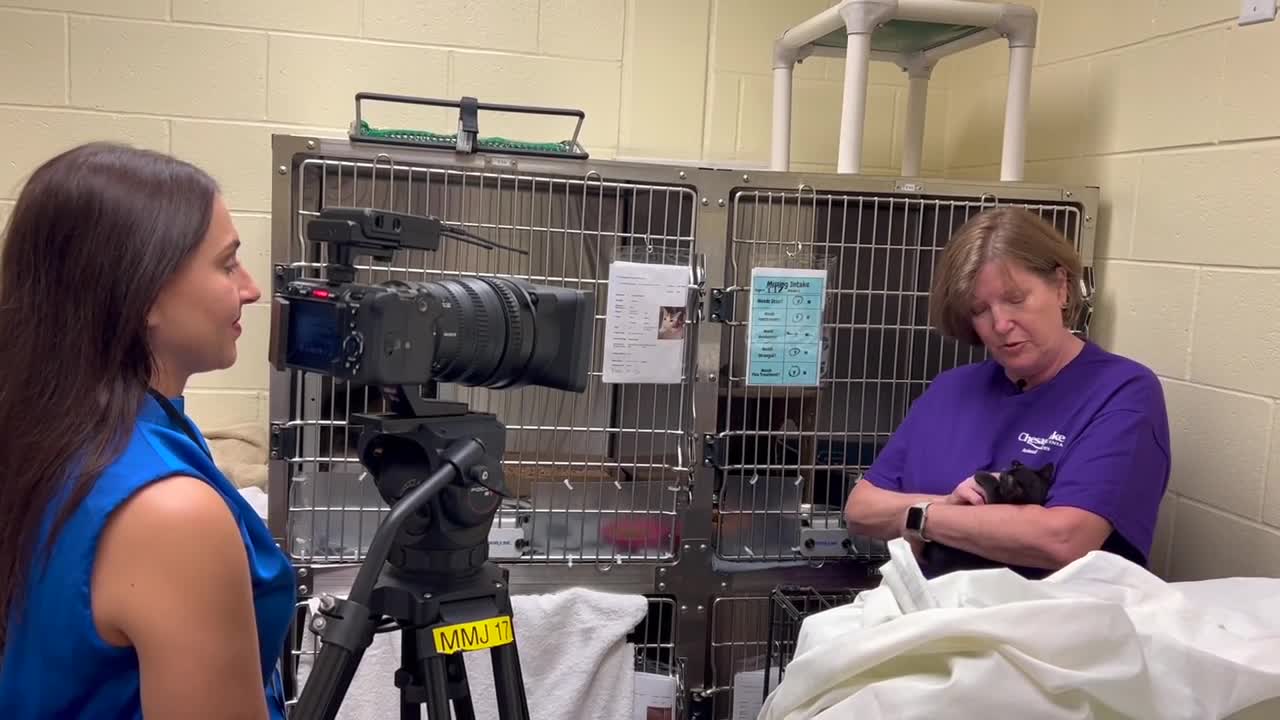


CHESAPEAKE, Va. — Chesapeake Animal Services is asking neighbors to step up and foster kittens. The shelter is hitting capacity during what staff say is shaping up to be one of the busiest kitten seasons in recent memory.
Almost 50 kittens were dropped off in just the past week alone, all under 8 weeks old. Since April 1, the shelter has taken in 224 kittens — and kitten season typically runs through the end of November.
"We're being inundated with kittens. We can't keep up with the amount that we have coming in as strays and we just, we really need Chesapeake's help," Outreach Coordinator Kasey Gallardo said.
Last year, the shelter took in 446 kittens under 8 weeks old for the entire season. With 224 already logged by early June, Gallardo said the numbers are alarming.
"We're already halfway there, and it's only June, so we're gonna really need some help from Hampton Roads," Gallardo said.
Gallardo said warmer winters have contributed to longer and more intense kitten seasons, with an influx beginning around mid-March this year.
Foster families care for kittens until they reach 8 weeks old and weigh 2 pounds — the minimum requirements before the animals can be spayed or neutered and made available for adoption. The length of a foster commitment depends on the age of the kitten at intake.
"It depends on the individual kitten. If you get kittens that are days old, you're going to have them for 8 to 10 weeks. But if you get kittens that are, you know, 1.5 [pounds], then it's going to be less time fostering," Gallardo said.
The shelter currently has 94 kittens placed with foster families, with more waiting at the facility. As an open admission shelter, Chesapeake Animal Services is required to accept every animal that comes through its doors — a policy that puts added pressure on available space.
"We're an open admission shelter, so we have to take anything that comes through the door. But, we run out of space really quickly. And the last thing that we want to do is have to euthanize for space, when we have to put a healthy animal down just because we don't have the space for it. And, we don't have the space for all these kittens," Gallardo said.
Kitten foster Mary Shively has fostered more than 90 cats from Chesapeake Animal Services over the past seven years. She said the commitment is manageable and rewarding.
"I have very little disruption in my regular life. These guys come to me. I love them. The shelter provides everything that I need. I keep them safe. I keep them warm. I feed them, and I teach them how to be cats that people want to take home and adopt," Shively said.
Shively added that getting kittens out of the shelter — even temporarily — makes a meaningful difference.
"It would be lovely to have all these little guys out of cages and in homes, even if it's just for a few weeks," Shively said.
Shively says it breaks her heart to hear that some cats may have a devastating outcome if they don't find foster homes.
"It's a horrible feeling. It's very sad. It's hard when you start fostering or caring for one of them, it's hard not to love them. I love every kitten I take care of. It's a horrible thing to go through when a kitten dies," Shively said.
The shelter supplies everything foster families need at no cost, including food, veterinary care, and other supplies. If a foster family later decides to adopt a kitten, the adoption fee is $75, which includes spay or neuter surgery and up-to-date vaccinations.
The overcrowding is not unique to Chesapeake. Gallardo said shelters and rescues across the region are facing the same pressures.
"If you don't necessarily want to foster for Chesapeake Animal Services, go to Chesapeake Humane Society, go to Norfolk Animal Care and Control, find a rescue. Everybody is overrun with kittens right now, and when we're all overrun, we can't help each other, so we really need the public to reach out and help us," Gallardo said.
For those who cannot foster due to allergies or other limitations, the shelter is also accepting donations. Items most needed include wet and dry kitten food, toys, heating pads, and kitty litter. An Amazon wish list with needed supplies is available on the shelter's website.
Gallardo also offered guidance for anyone who finds kittens outdoors. She said people should wait and watch before intervening, since a mother cat may simply be out hunting or in the process of moving her litter. She also cautioned against attempting to feed stray kittens before bringing them to the shelter.
"Don't try to feed them. We've had a lot of kittens brought in this year that have been given milk — cow milk — which cats are lactose intolerant. If you don't know what to do to feed a kitten, please don't feed a kitten. Just bring them on in and we'll take care of them," Gallardo said.
Gallardo said the most effective long-term solution to kitten overpopulation is spaying and neutering.
"This could all be prevented if people would spay and neuter the cats that they have, keep their cats indoors," Gallardo said.
To apply to become a foster or to adopt, click here. Applicants may be asked to provide proof of up-to-date rabies vaccinations for any pets currently in their home.
This story was reported on-air by a journalist and has been converted to this platform with the assistance of AI. Our editorial team verifies all reporting on all platforms for fairness and accuracy.
Click here to see how we use AI at WTKR News 3.
