

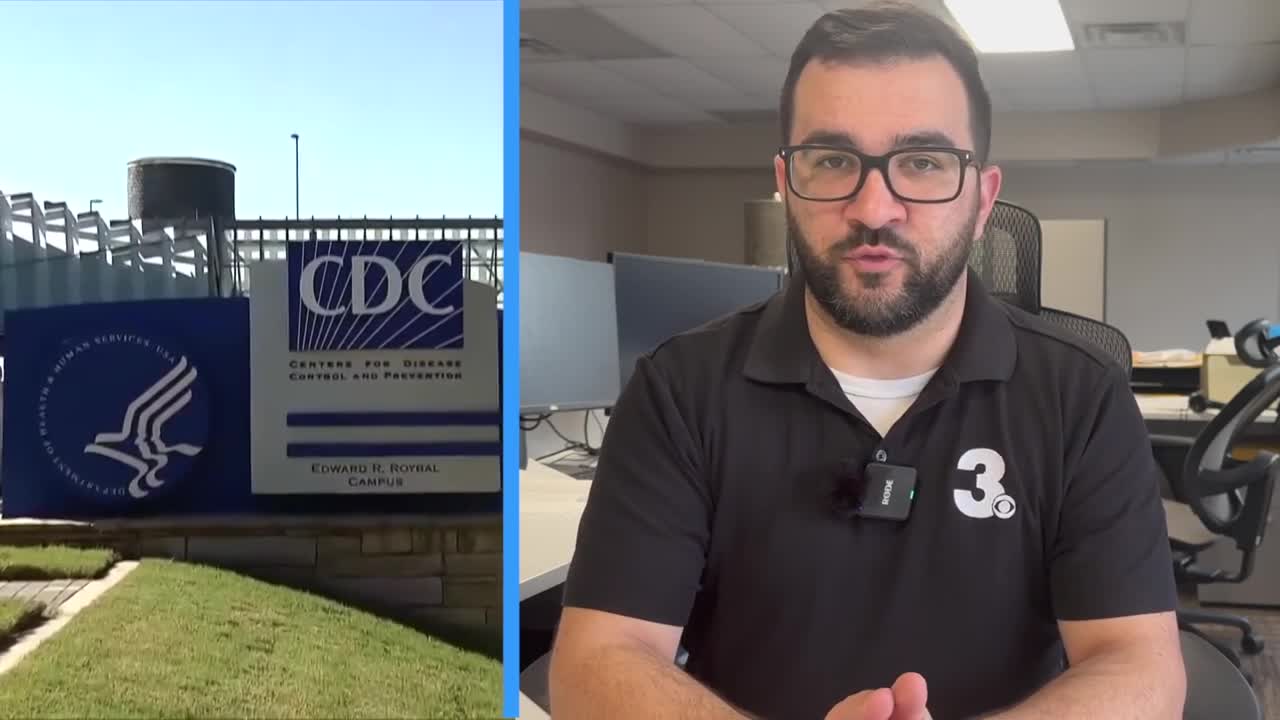


NORFOLK, Va. — The Centers for Disease Control and Prevention has released updated childhood vaccine guidance that recommends fewer immunizations for all children — a move that is already drawing criticism from major medical organizations and raising questions among parents nationwide.
Under the new guidelines, the CDC now recommends all children be vaccinated against 11 diseases, down from the previous 17.
Those vaccines include protection against diphtheria, tetanus, acellular pertussis (whooping cough), Haemophilus influenzae type b (Hib), pneumococcal disease, polio, measles, mumps, rubella, varicella (chickenpox), and human papillomavirus (HPV). Some of those protections are delivered through combination shots, such as the MMR vaccine for measles, mumps and rubella.
Other vaccines are now categorized for high-risk children only or left to what the CDC calls “shared clinical decision-making” between physicians and families.
But pediatricians in Hampton Roads say the changes may sound bigger on paper than they are in practice.
“When I read their recommendations, it’s really not a change in recommendations or requirements,” said Dr. John Harrington, a pediatrician with Children’s Hospital of The King’s Daughters. “It’s more of a reorganization of how they’re looking at the vaccinations.”
Harrington, who also serves as medical director for CHKD’s Children’s Medical Group practices, still sees patients every week at neighborhood clinics across Norfolk and Hampton Roads. He said many of the vaccines now listed for “high-risk” groups already apply to most children.
“We also know that most children are high risk groups,” Harrington said. “When you come to influenza, hepatitis A, hepatitis B, it’s not really a distinction.”
Under the CDC’s updated guidance, vaccines such as influenza, COVID-19, hepatitis A and hepatitis B fall into a category where parents and doctors are encouraged to weigh risks and benefits together. The agency says that approach is meant to strengthen transparency and informed consent.
Harrington said that kind of conversation has always been part of pediatric care.
“It’s really for all vaccines, there’s a shared decision making that happens at that moment when your child’s getting their vaccine,” he said.
During a Zoom interview with News 3, Harrington described how those discussions often play out in exam rooms — particularly when it comes to the flu shot.
“If a parent asked me, ‘You know, they got the vaccine last year and they still got the flu,’ I would say something like, ‘So did they wind up in the hospital? Did they get pneumonia? Did they die?’” Harrington said. “And they would say, ‘No.’ And I’ll say, ‘Well then the flu vaccine worked, because that’s what it’s doing.’”
Those conversations are happening as pediatricians warn about an intense flu season for children.
“Last year, we saw over 200 deaths from the flu in kids,” Harrington said. “And 90% of those kids were not immunized.”
The CDC’s announcement has drawn sharp criticism from groups including the American Academy of Pediatrics, which called the changes dangerous and said it will continue to follow its own vaccination schedule. Infectious disease experts have also warned the shift could worsen outbreaks of vaccine-preventable illnesses, including measles.
Harrington said those public health concerns are especially important in school and daycare settings.
When asked whether private daycares could be affected by the new guidance, Harrington said facilities may actually become more vigilant about vaccination requirements.
“So private daycares, you know, if they want to be sustainable, will probably become more vigilant about vaccination,” he said. “Because if they get a hepatitis A outbreak, you know, that’s going to be very devastating to their group.”
He emphasized that vaccination decisions extend beyond individual families.
“Public health is thinking about the person next to you,” Harrington said. “And how you would want the people, your loved ones, to be treated.”
Despite the changes, the CDC says parents can still choose to give their children additional vaccines beyond those recommended for all children, and those vaccinations will continue to be covered by insurance.
For parents feeling overwhelmed by conflicting information, Harrington said the most important step is to rely on evidence-based guidance and have open conversations with a trusted pediatrician.
“We want them to have evidence-based resources for the information that they have,” he said. “A well informed public of the right information is the strongest sort of public health requirement that we can provide.”
Local pediatricians say that message hasn’t changed — even as the national conversation around vaccines evolves.
“Our recommendations haven’t changed,” Harrington said. “What we’re really trying to do is help parents understand what’s best for their child and for the community they live in.”
