

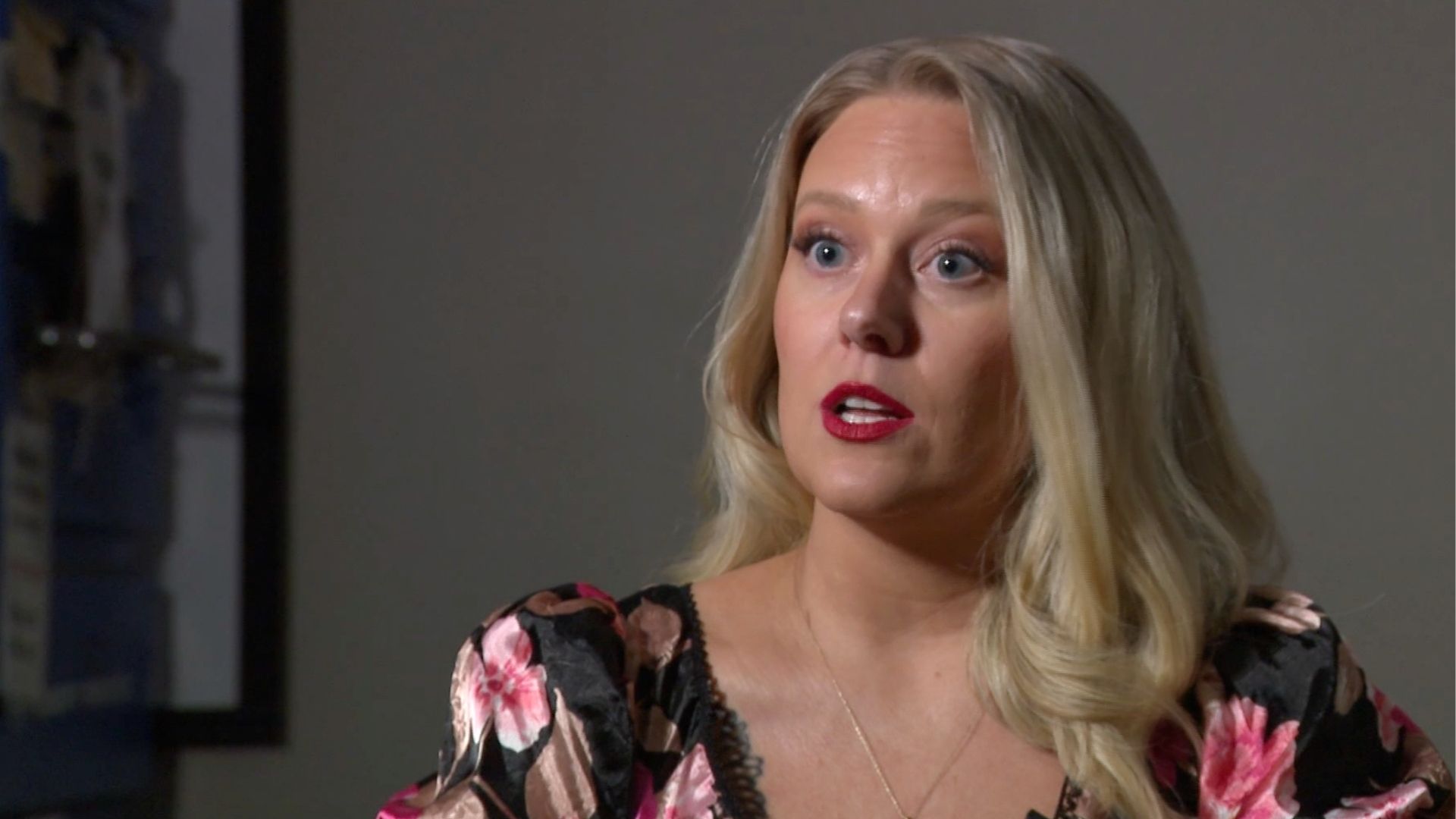


NORFOLK, Va. — A Virginia Beach woman who beat an aggressive form of breast cancer at just 29 years old is now sharing her story about an unexpected second diagnosis that highlights a rarely-discussed connection between cancer treatment and heart health.
Christina Hornyak never expected to face cancer in her 20s, let alone heart failure three years later.
"I've never smoked. I've never been a big drinker. I live an active lifestyle. I was in my 20s. I was not at all expecting to be diagnosed with cancer at 29, let alone heart failure at 32," Hornyak said.
Hornyak's life turned upside down in 2021 when she received a devastating diagnosis.
Watch related: Healthy Dude podcast discusses alarming rise in colorectal cancer
"At 29 I was diagnosed with a very rare aggressive form of breast cancer. It's called triple negative breast cancer," Hornyak said.
Her doctors recommended an anthracycline chemotherapy regimen, but the very treatment designed to save her life also carried a different life-threatening risk.
"I learned that one of the chemotherapies I was going to receive had the potential to be difficult on the heart," Hornyak said.
Christina went through 16 rounds of chemotherapy and celebrated being cancer free. Years later when life was back to normal, new symptoms started appearing.
"I noticed that I started getting very, very, very tired, and I'm not talking like tired, I'm talking extremely tired. I would do the smallest task, and I would have to take a 4-hour nap afterwards," Hornyak said.
Watch related: Man Up to Cancer offers support to local men
The exhaustion led to a shocking discovery about her heart health.
"My cardiologist called me and said that my ejection fraction had reduced down to 30%, which to say I was shocked was an understatement," Hornyak said.
The ejection fraction, according to the Mayo Clinic, is a measurement of the percentage of blood leaving the heart each time it squeezes. A normal EF is between 50% and 70%.
"At that point, my cardiologist referred me to Doctor Tushak in the advanced heart failure clinic," she said.
Dr. Zackary Tushak is the director of Sentara's Cardio-Oncology Program, a highly-specialized program he started to connect the dots to who might benefit from closer monitoring.
"Cardio oncology is the intersection of cancer, its treatment, and how it affects the heart," Tushak said.
He said oncology and chemotherapy have advanced very far in the past 20 years, but there’s still no one-size-fits-all on who may be diagnosed.
Watch related: Sentara expands mobile breast cancer screenings in Coastal Virginia
"Being young can be deceiving, and sometimes you don't realize what your risk factors are," Tushak said.
Risks include preexisting cardiovascular conditions like high blood pressure, uncontrolled diabetes, and uncontrolled elevated cholesterol. Some breast cancer therapies, including anthracycline chemotherapy and HER2-targeted drugs, can be stressful on the heart. That's why Dr. Tushak says patients are monitored in three phases.
"Our first phase is our pre-treatment phase, and that's the phase where we evaluate pre-existing conditions. If you have a history of heart dysfunction or heart disease or high blood pressure, we try to optimize those conditions first," Dr. Tushak said. "The second phase is our active phase or treatment phase."
Christina is now in Phase 3, the survivorship phase, and her treatment has been successful.
"Through the collaboration between me, Christina, and her other cardiologists, we've now gotten her function back up to normal, and now she has improved in her quality of life and her symptoms," Dr. Tushak said.
The improvement has allowed Christina to return to living a normal life.
"I was able to go to Disney past year and celebrate my niece's 16th birthday, so I've lived a very normal life," Hornyak said. “I still have bad days. Sometimes I have bad weeks, but then I also have a lot of really great days -- I also have a lot of really great weeks.”
Despite the scary potential side effects, Christina encourages others not to fear recommended treatments.
"In my case, the benefit outweighed the risk," Hornyak said.
"Don't be afraid. You know, that's why they monitor your heart before, during, and after. That's why they educate you," she said.
Through this process, Christina learned she has a cardiac gene mutation, which is likely why she was predisposed to heart failure.
According to the CDC, genetic testing looks for genetic changes, sometimes called mutations or variants, in your DNA. Some genetic changes can cause disease or other health conditions.
Genetic testing is available at several locations across Hampton Roads. It may or may not be covered by your insurance.
This story was reported on-air by a journalist and has been converted to this platform with the assistance of AI. Our editorial team verifies all reporting on all platforms for fairness and accuracy.
