

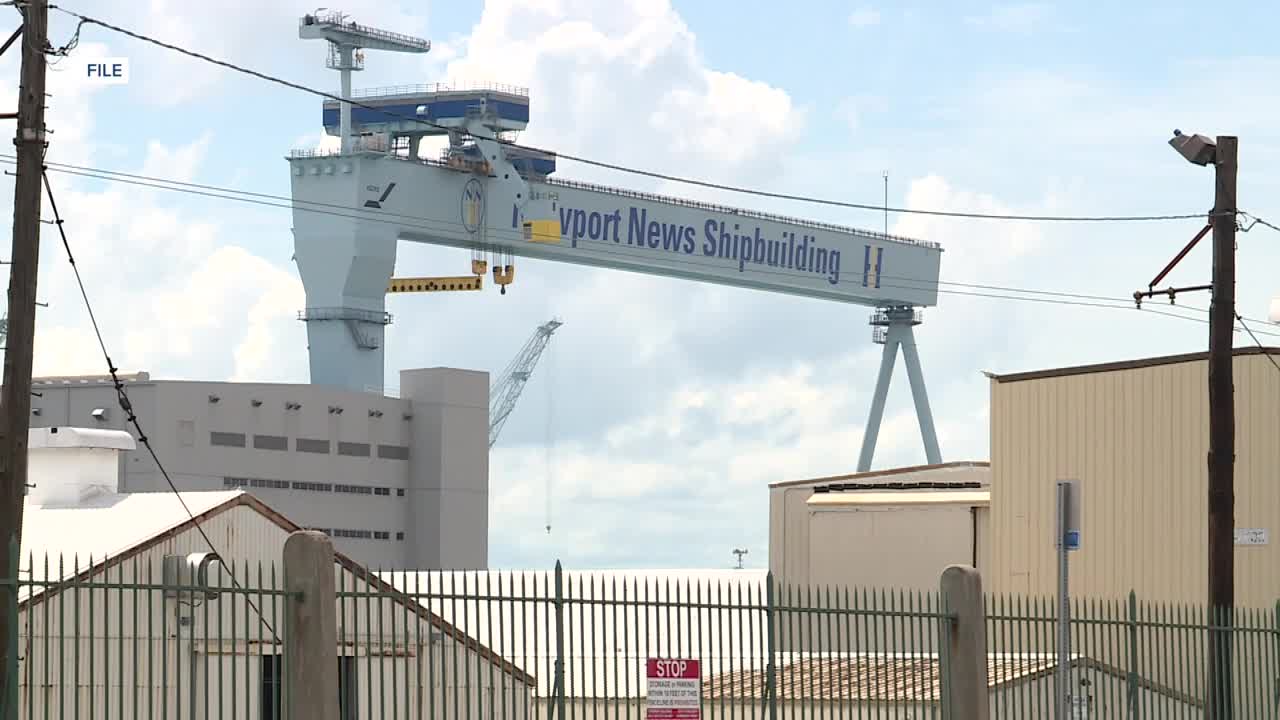


NORFOLK, Va. — Nearly 8,000 gallons of fuel spilled into the James River near Newport News Shipbuilding on Friday, February 13th, during a transfer to the John F. Kennedy aircraft carrier, prompting cleanup efforts and raising concerns about environmental impact.
The Virginia Department of Environmental Quality confirmed that potentially up to 7,749 gallons of fuel entered the water during the incident. Officials say that even for a river of this size, it's considered a major spill.
"It's a very serious threat to the businesses and the community that live along this area but also to wildlife and the health and ecology of the bay," said Christy Everett, Hampton Roads Director for the Chesapeake Bay Foundation
The spill has already claimed at least one casualty - a loon near Fort Monroe died, according to DEQ officials. However, they say because jet fuel evaporates quickly, few additional wildlife impacts are expected.
Everett, whose nonprofit organization is dedicated to the restoration and protection of the Chesapeake Bay, warns that the environmental consequences could be more severe than initially anticipated.
"Diesel fuel in particular is very toxic to shellfish particularly, oysters, certain types of fish, wildlife so it dramatically impacts our environment," Everett said.
Local watermen and seafood businesses could feel the economic effects of the spill. The James River supports various commercial fishing operations that depend on healthy marine ecosystems.

"Oysters out of the James River, and then of course crabbing, and doing other sorts of fishing in the water so these businesses rely on the health of the species and a diesel spill can dramatically affect their business directly," Everett said.
Studies show environmental impacts from fuel spills can persist for more than a year, affecting wildlife diversity and population numbers. However, DEQ officials maintain that no lasting damage is expected from this incident.
The responsible company quickly deployed containment boom and recovery crews after the spill occurred. Favorable wind conditions helped limit the spread of the fuel across the water.
The Virginia Department of Health has assured residents that local drinking water remains safe despite the spill.
The cause of the fuel transfer incident remains under investigation. DEQ reports there is currently no impact to shellfish growing areas, though officials continue monitoring the situation.
Anyone who observes wildlife affected by the spill should report it to the Virginia Department of Environmental Quality at troprep@deq.virginia.gov.
