

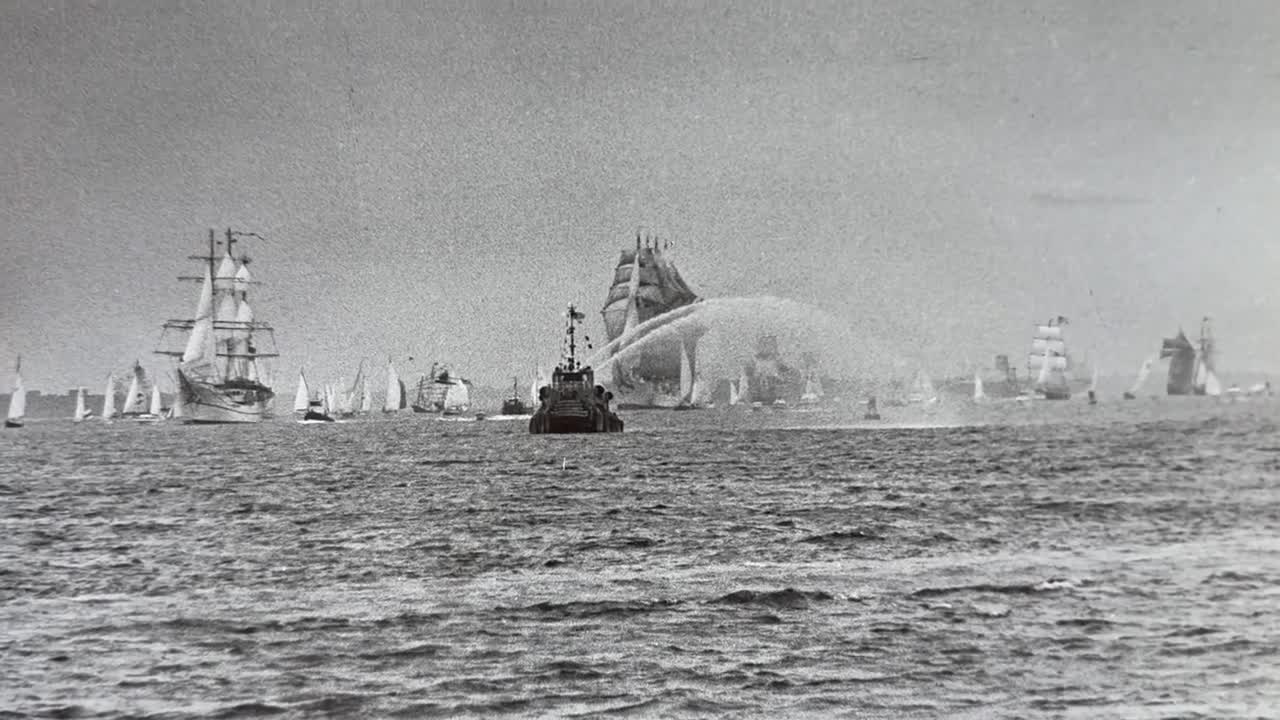


NORFOLK, Va. — For five decades, Harborfest has brought tall ships, live music, and hundreds of thousands of people to Norfolk’s waterfront. Over the years, some have chosen not to attend, believing the festival celebrates the region’s role in the slave trade.
As part of this milestone anniversary, News 3 wanted to find out how Harborfest began and whether that belief is true.
Inside the Sargeant Memorial Collection at Slover Library, the history of Harborfest is preserved in photographs, newspaper clippings, and records spanning decades.
Watch previous coverage: Norfolk businesses prepare for Sail250, Juneteenth and Harborfest convergence next weekend
Troy Valos manages the collection, and as he showed me images from Harbor Fest’s earliest days, a different downtown Norfolk came into focus.
"Started out as the town tall ships coming through. And I think at the time, the city leaders were like, hey, we we're bringing quite a few people downtown," Valos said.
That success helped transform a waterfront still finding its identity. Over the years, Harborfest grew into one of Hampton Roads’ signature events; however, it's original intent has been called into question as some people have believed the annual festival celebrates Norfolk's role in the slave trade.
Watch previous coverage: Diggs Town organizers say Juneteenth celebration won't be overshadowed by Harborfest, Sail250
Valos says the records tell a different story.
"Based off of the newspaper coverage and everything. The event was never about that. It was more of just hosting the tall ships that came through," Valos said.
That doesn’t mean the waterfront isn’t connected to that history. Dr. Cassandra Newby-Alexander and Valos have spent years researching Norfolk’s role in the domestic slave trade, finding more than 20,000 enslaved people were sold through the city’s waterfront.
Watch previous coverage: Details on route for Virginia Parade of Sail
Newby-Alexander says that is likely where the misconception began. Because Norfolk played such a significant role in the domestic slave trade, some people have associated a waterfront festival centered on ships and commerce with that history.
"Years ago, I would fear that this has to do with the Transatlantic Slave Trade. The waterways — yes — they were a point of importance for the city in terms of commerce," Newby-Alexander said. "It was important in terms of even our participation in the Underground Railroad. But it was also a point of pain for so many African Americans who were shipped out of here by the thousands."
But Harborfest itself was never created to celebrate slavery. That’s something one of the festival’s original organizers, Bruce Bishop, told News 3 in a previous interview.
"It's an event that brings us together as a community," Bishop said.
Newby-Alexander added that recognizing the history does not mean ignoring what lies beneath it.
"See how far we have come. That you can celebrate. You don't celebrate the horrors of the past, but you can be inclusive in telling that full story," Newby-Alexander said.
Click here to see how we use AI at WTKR News 3.
