

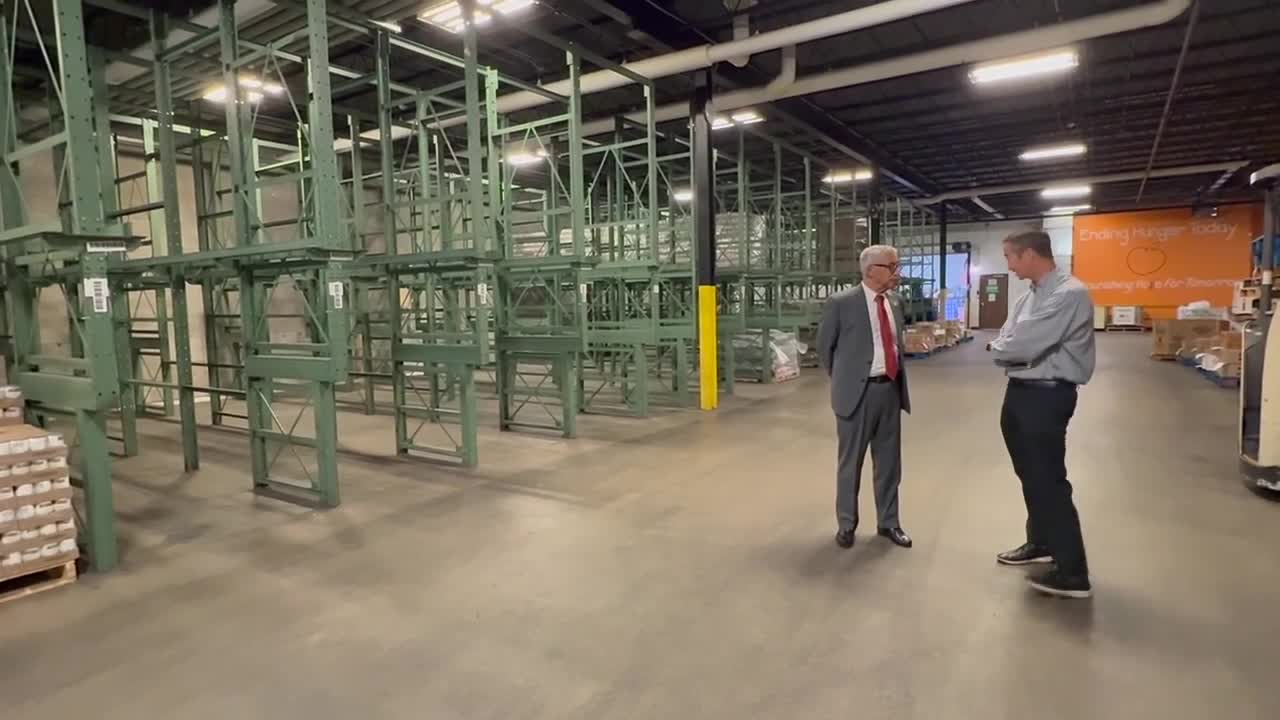


NORFOLK, Va. — Congressman Bobby Scott (D-Virginia) returned to the Foodbank of Southeastern Virginia and the Eastern Shore Wednesday, getting a firsthand look at what food bank leaders say is growing demand for assistance as changes to the federal Supplemental Nutrition Assistance Program take effect.
News 3 was there as Scott toured the Norfolk facility with Foodbank President and CEO Chris Tan. During the visit, Tan showed Scott shelves that would typically hold food distributed through federal programs but were largely empty.
“We're meeting less — we're getting less food, and so the challenge is we're purchasing more food than we've ever purchased before, and that's at a higher cost for sure,” Tan said.
Tan said the pressure is coming from both sides: The food bank is seeing more people seeking help while some sources of food are not keeping pace with that demand.
“The lines are 30% higher than they were at the height of COVID,” Tan said. “I think if you asked any food bank at the time, ‘Hey, is this going to be the worst it gets?’ We would have said absolutely. And now it's 30% more than that.”
Changes under the 'One Big Beautiful Bill'
The visit comes a little more than a year after President Donald Trump signed the One Big Beautiful Bill Act into law on July 4, 2025.
The sweeping tax and spending law made several changes to SNAP, including expanded work requirements, changes to eligibility and a shift in some of the costs of administering the program from the federal government to states. The U.S. Department of Agriculture says the law changes who is subject to SNAP's time-limit requirements and reduces the federal government's share of state administrative costs from 50% to 25% beginning in fiscal year 2027.
Supporters of the Republican-backed law have argued its SNAP provisions encourage work, improve accountability and require states to have a greater financial stake in administering the program. USDA describes SNAP's work rules as reflecting “the importance of work and responsibility.”
Scott, a Democrat who opposed the legislation, argues the changes are reducing access to food assistance and pushing more people toward charitable organizations that cannot replace the scale of SNAP.
“One of the problems we've had is the big ugly bill that passed last year that significantly cut SNAP benefits, which means that the people who were previously receiving SNAP benefits are now relying on the food bank, and the food bank just cannot meet that demand,” Scott said.
Scott said the impact was visible as he walked through the facility.
“One of the things that took note of was the fact that some of the shelves are totally empty,” Scott said. “When the food bank gives someone a package, usually it has many more cans of food than they're able to provide now, so they don't have the resources they had.”
Foodbank says it cannot replace SNAP
Tan said there are about 100,000 fewer Virginians receiving SNAP than there were a year ago. He cautioned against assuming that decline means those households no longer need food assistance.
“I would love to think that that's all people have graduated from SNAP, but that's certainly not the case,” Tan said.
Tan said the Foodbank will continue trying to meet the increased demand but stressed that charitable organizations do not have the resources to take the place of a federal nutrition program.
“We'll do our best. We will always do our best to meet the need, but we cannot replace SNAP,” Tan said. “We cannot replace these cuts without significant help.”
The changes are part of a broader national shift. Food banks around the country have reported increased pressure as SNAP enrollment has fallen since the One Big Beautiful Bill Act became law.
For Scott, Wednesday's tour was a return visit to the Foodbank and an opportunity to see how conditions have changed. He said what he saw reinforces his push to restore SNAP funding and federal support for food banks.
“Our message is that we recognize that the legislation that passed last year is having an effect, and we're going to try to do something about it,” Scott said. “If we restore the cuts that were made in the SNAP program, if we restore the support for food banks, we can restore the kind of support that we have traditionally been able to provide.”
Tan, meanwhile, said the Foodbank is asking the community for help as it prepares for continued demand. He said that can include donating food or money, but also volunteering time.
“We know that the neighbor that needs us is going to rely on food banks,” Tan said. “We're very proud of that fact that we're here for our neighbors in need, but we also know that it's going to be a huge challenge for us to meet the need in the future.”
Click here to see how we use AI at WTKR News 3.
