

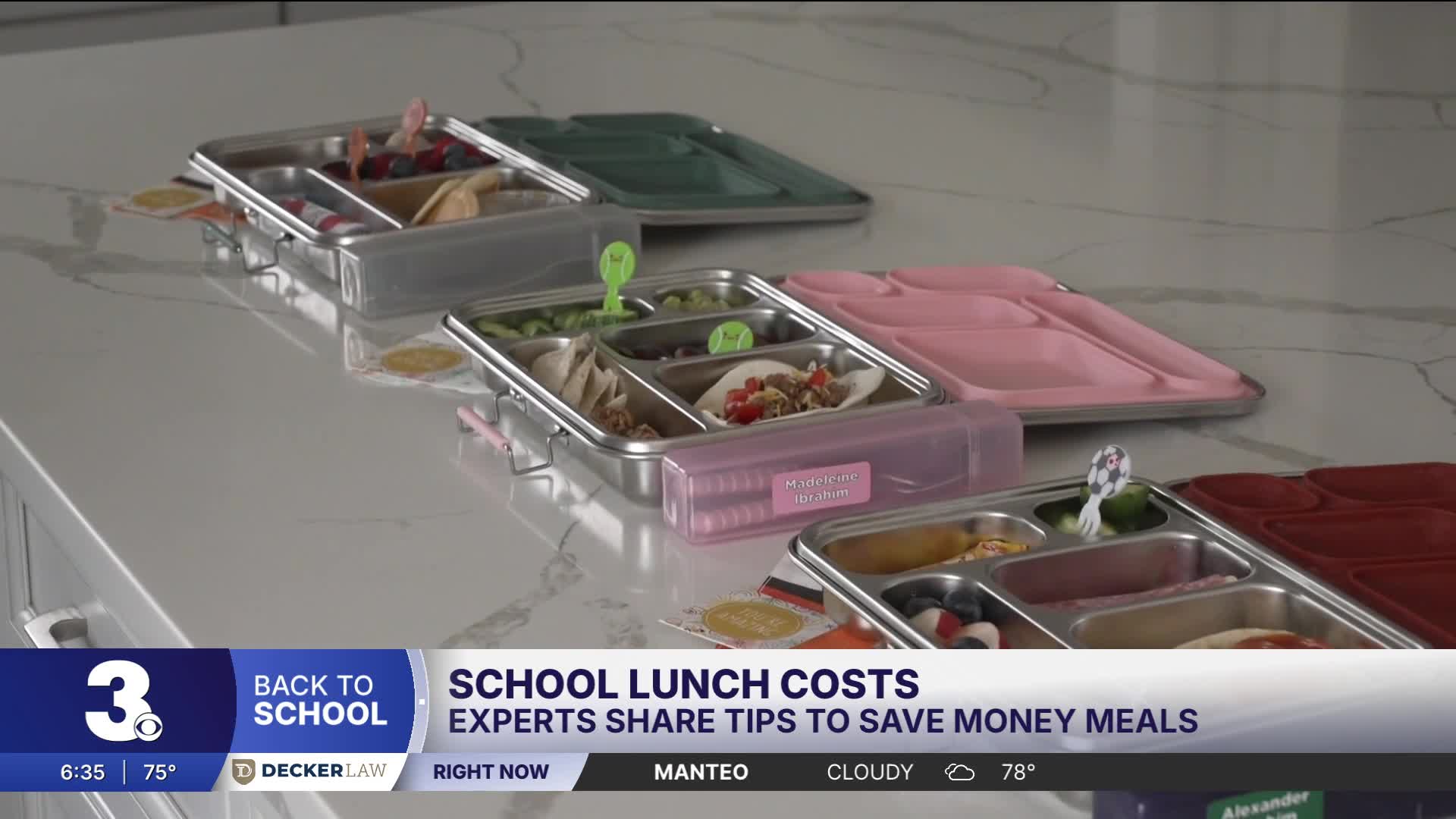


NORFOLK, Va. — With the first day of school arriving at the end of August parents are weighing one of the most routine — and in some cases expensive — decisions of the school year: pack lunch or buy it?
For Mom Jordan Fitzpatrick, the answer depends on the day.
"We kind of do fifty-fifty, so it just depends on what school lunch is and if it's something they'll eat, and if it's not, then we usually pack it," Fitzpatrick said.
Fitzpatrick, whose son Beckett is heading back to school, says preparation is the key to making it work.
"We try to look the week before and plan out so that way we can have a rough idea of what we need or whatnot. So yeah, a lot of preparation," Fitzpatrick said with a laugh.
What does lunch actually cost?
Data from Deloitte shows that the average cost of a packed lunch has risen from $6.03 in 2023 to $6.33 in 2026. However, the report notes a meal made up of a peanut butter and jelly sandwich, carrots, an apple and cookies can come in at less than $5.
For families whose kids buy from the cafeteria, Deloitte reports the average cost is $3.15. Some school districts, like Suffolk, go further — offering free meals to all students.
Building a healthy lunch on a budget
Registered dietitian Blake Avery of Sentara Health says the nutritional priorities are straightforward, regardless of where the meal comes from.
"It's fruits and vegetables, it's whole grains, it's getting exercise and getting out to play outside. It's making sure that kids get enough protein," Avery said.
Avery recommends leaning on whole, unprocessed foods — and not stressing over the occasional packaged snack.
"[At my house] we love the carrot sticks, [and] we love the cucumber slices," Avery said. "Little cherry tomatoes hold up really well in the refrigerator."
She said the goal of the meal should have a majority of unprocessed produce, fruits, and vegetables, but "having a small snack that's processed isn't necessarily a bad thing. Having a serving of [whole grain chips] sometimes just hits the spot," Avery said.
Tips to cut costs and reduce waste
Avery says her family saves money by buying in bulk, buying store brands, freezing items before they spoil and choosing fruit that comes in its own natural packaging.
"When you're throwing stuff away [like berries] because it went moldy on you, you're losing money. So, we do tend to [buy] the apples, oranges, [and] bananas here," Avery said.
She also cautions parents to watch out for marketing. Character-branded packaging — like yogurt featuring popular cartoon characters — can significantly drive up the price of pre-packaged items. Her workaround: buy a cheap pack of stickers and let kids put their own favorite characters on their food.
For families buying from the cafeteria, Avery says school meals are a nutritionally sound option.
"The school lunches are balanced. They have requirements that they have to fulfill through the state and the federal government," Avery said. "They're required to provide produce, fruits, vegetables, whole grains. Half of all the grains have to be whole grains at the schools in our area. "
And for parents feeling the pressure to get it all right from day one, Avery offers some reassurance.
"You're not gonna get it right the first week of school, probably not the second week of school, and that's OK," Avery said.
This story was reported on-air by a journalist and has been converted to this platform with the assistance of AI. Our editorial team verifies all reporting on all platforms for fairness and accuracy.
Click here to see how we use AI at WTKR News 3.
