

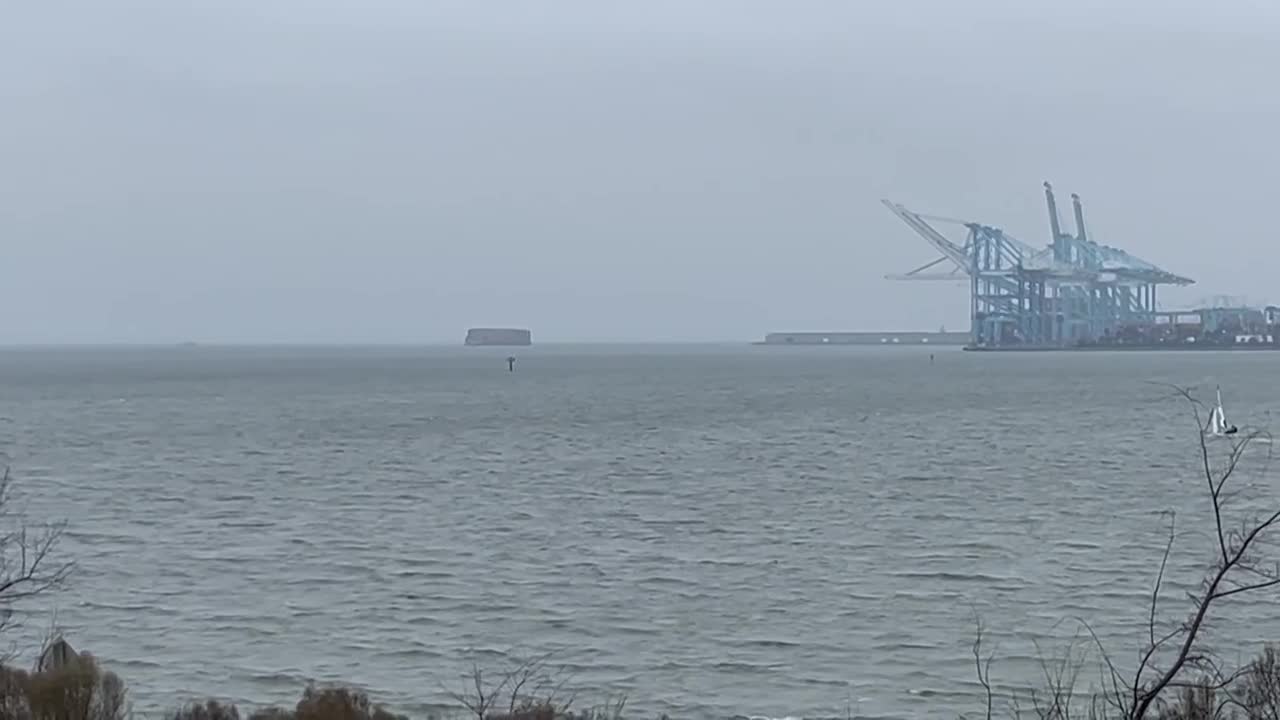


NORFOLK, Va. — Massive cranes tower over container ships along Hampton Roads, a familiar sight for many drivers heading down Hampton Boulevard or through Norfolk’s waterfront neighborhoods.
But now, officials say a multi-billion-dollar expansion at the Port of Virginia is reaching a turning point — one they hope will help move goods faster across the country while limiting impacts felt by people living nearby.
Port spokesman Joe Harris said years of construction and upgrades are now allowing Virginia to compete more aggressively for global shipping traffic.
The port has added cranes and expanded berth space so it can now handle four ultra-large container ships at the same time — some of the biggest vessels moving cargo around the world.
“We can process these vessels quickly,” Harris told News 3's Jay Greene. “We can get them onto trucks, train these containers can get onto trucks, trains and barges without issue, and move to market so that flow is what you want in in the port business, you want consistency, and this will add to our consistency.”
The upgrades are part of the Port of Virginia’s $1.4 billion Gateway Investment Program, which includes berth expansions, rail improvements and channel deepening projects scheduled to wrap up by the end of 2027.
Another major milestone is just weeks away: Hampton Roads is set to become home to the deepest shipping channel on the East Coast, at 55 feet deep.
That depth allows cargo ships to enter and leave without tidal restrictions or delays caused by vessel traffic moving in only one direction at a time.
“With 55 feet of water, no tidal restrictions and no overhead obstructions,” Harris said. “We're telling them, load that ship as heavy as you want it and bring it to Virginia.”
For people living in Norfolk and surrounding communities, however, the question often centers on what all this growth means for traffic.
Roads around the port — especially Hampton Boulevard and connections leading to interstates — already see heavy truck traffic as containers move in and out of terminals daily.
Port officials say one goal of the expansion is to move more cargo by rail instead of truck, reducing pressure on local roadways.
A recently expanded rail yard inside Norfolk International Terminals now allows the port to handle significantly more cargo by train.
“This port can now process 2 million rail units a year,” Harris said. “So there's a significant increase in the amount of rail cargo that we can process, and our goal is to continue to move cargo by trucks, but make greater use of our rail.”
Rail service allows containers to move directly from ships to trains headed to markets across the Midwest and East Coast, cutting down on truck trips leaving the terminals.
Still, as cargo volume grows, transportation experts say some increase in freight movement is likely — whether by rail or road — as shipping companies shift more cargo through East Coast ports.
Harris argues the long-term benefit is economic growth across Virginia.
The port industry already supports hundreds of thousands of jobs statewide, and officials say expanded capacity is designed to attract more companies to build warehouses and distribution centers near Hampton Roads.
Projects like the Port 460 Logistics Center in Suffolk are examples of companies investing near port infrastructure, bringing additional jobs and development to the region.
Port leaders say they’re planning not just for today’s cargo needs but for the next decade or more.
“The goal is,” Harris said, “with all this work that we're doing, we're going to have the capacity to process about 6 million TEUs a year.”
A TEU — or twenty-foot equivalent unit — is the standard measurement for shipping containers.
Officials say it will take time for cargo demand to grow into that capacity, but investments are meant to ensure Virginia stays competitive with other East and Gulf Coast ports as shipping patterns evolve.
For now, residents living near port corridors may not immediately see dramatic changes on local roads, but growth at the port is expected to continue shaping Hampton Roads’ economy — and its transportation patterns — for years to come.
