

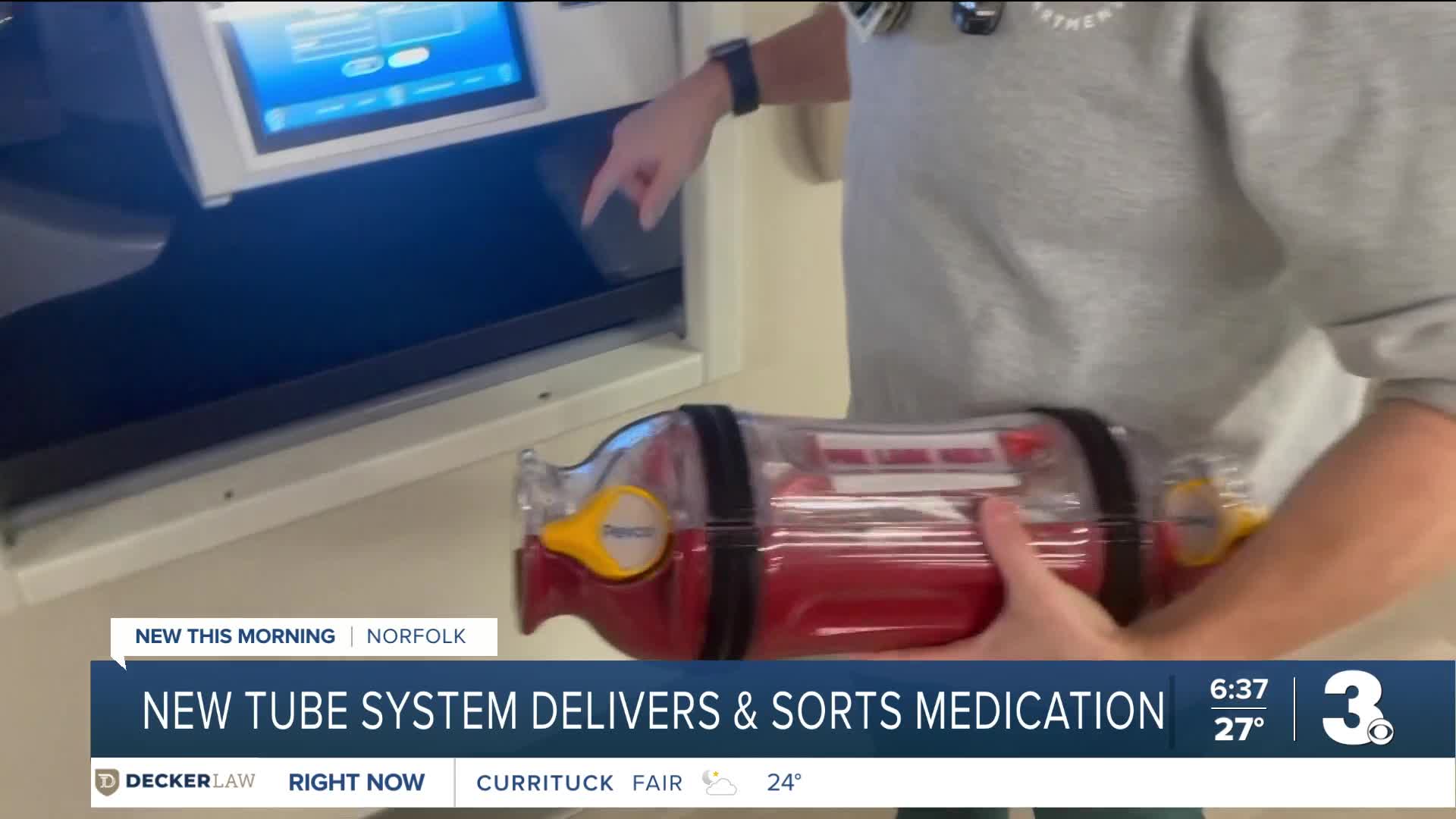


NORFOLK, Va. — A new pneumatic tube system at Sentara Leigh Hospital in Norfolk is reshaping how medical specimens and clinical documents travel throughout the facility, cutting transport times from 15 minutes to about a minute.
The system allows nurses and clinicians to load blood samples, lab specimens and other biohazardous materials into clear plastic tubes that are then whisked through a network of pipes to their destination using compressed air. No more waiting for elevators or walking through halls with sensitive materials.
"We have half a million square feet in this building. So, if you think about that, how long it might take someone to transport a specimen all the way from the 5th floor of a tower down here to the lab could take 15 minutes round trip or more," said Bailey Myers, senior director of operations at Sentara Leigh Hospital.
Myers said seconds matter in healthcare, which is why the hospital needed a better model than their previous system.
"This old system would break down. We would have days where we wouldn't have a tube station working and so we were reliant on our people to walk and transport specimens and that's not what we want," Myers said. "We want to be able to utilize technology and tools and equipment like this so that way our clinical staff can really focus on patient care."
Antonio Jackson, who goes by AJ, is the hospital's facilities electrician who helped install the new system. He explained how it works more reliably than the old version.
"The blowers are what pushes the air through the system to get them to go everywhere," Jackson said. "We actually can take 2 down and 2 blowers will still run the whole system."
The tubes also have tracking capabilities, which is essential, when according to hospital officials, 1,300 tubes are moving through the system daily. Red tubes are designated for the emergency department and lab, while black tubes serve other hospital areas.
While pneumatic tube systems aren't new to hospitals, the accuracy and efficiency of this technology represents a significant upgrade.
"We have been needing this tube station now desperately for about 10 years," Myers said. "It's a critical piece of technology."
The system includes a mile and a half of tubing running throughout the hospital. Two other Sentara hospitals also use this technology.
Hospital officials said they've already seen improvements in patient care and wait times since implementation.
"This story was reported on-air by a journalist and has been converted to this platform with the assistance of AI. Our editorial team verifies all reporting on all platforms for fairness and accuracy."
