



OUTER BANKS, N.C. — A delegation of Outer Banks leaders and organizations have returned to the beach after a summit last week in the nation's capital. A summit where they were part of a panel discussion outlining the challenges the area is facing to organizations and elected leaders from around the country.
"I think we learned over the couple days that we're not the only ones with these challenges, that there are other communities around the United States and, in fact, around the world that are that are struggling with beach nourishment and ocean erosion issues that affect their infrastructure as well. It was an opportunity to highlight our situation, but also learned that we're not the only ones facing these challenges," said Justin LeBlanc, executive director of the Ocracoke Access Alliance.
LeBlanc, alongside leaders like Dare County Manager Bobby Outten, Cape Hatteras National Seashore Superintendent Dave Hallac, Brian Harris and Heather Jennette with the Buxton Civic Association, Patrick Barrineau with Coastal Science and Engineering, N.C. State University and the Southern Environmental Law Center, were all on a panel discussion at the annual American Shore and Beach Preservation Association's Summit in Washington, D.C., last week.
"I think there was a lot of real synergy. I think there's a lot of energy amongst different constituencies interested in trying to solve this challenge," said LeBlanc.
"The more people we have that actually are talking about this, the better off it is," said Brian Harris with the Buxton Civic Association.
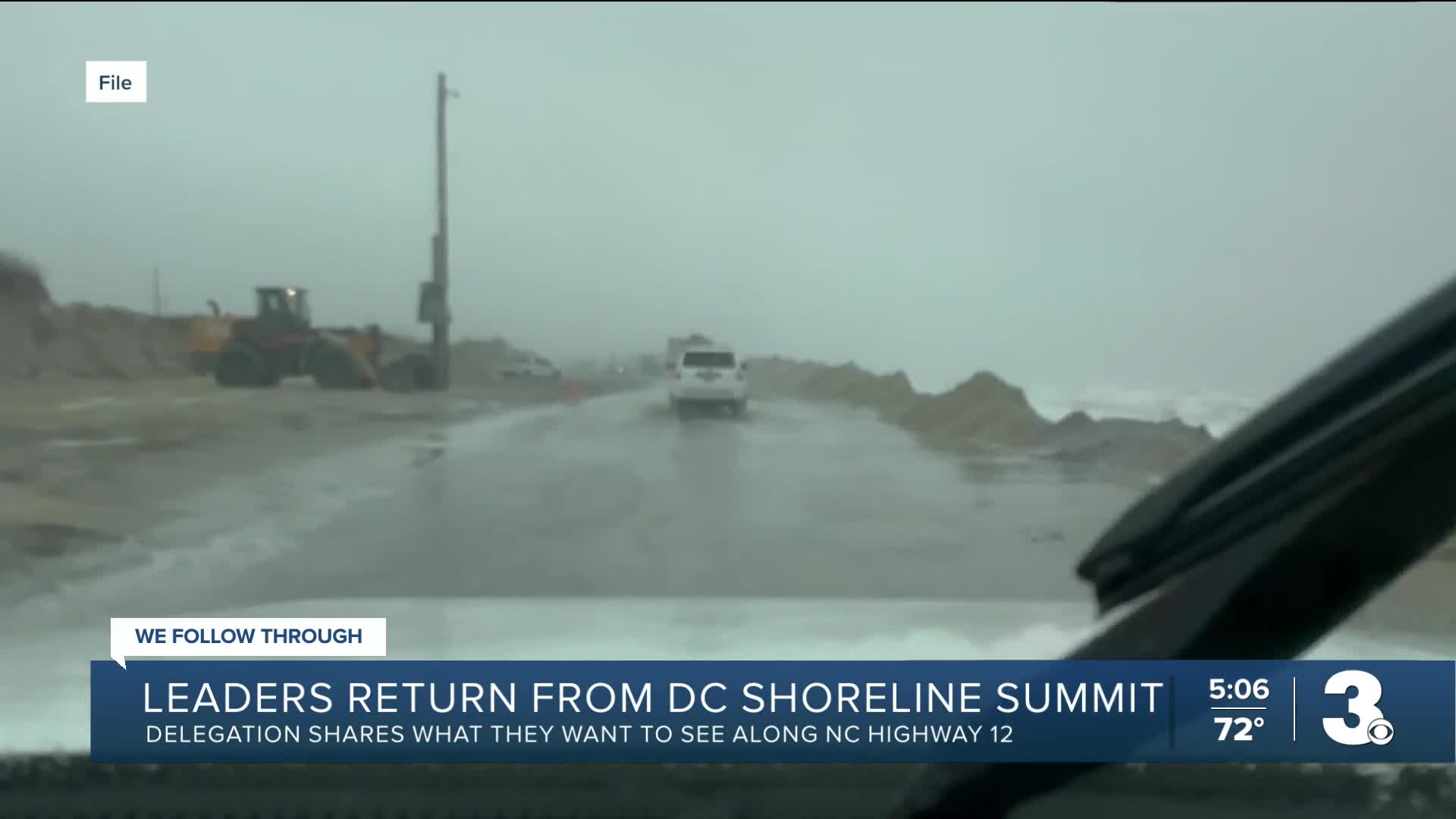
One key part of the discussion was about access to N.C. 12, which is a lifeline for both Hatteras and Ocracoke islands. Even the smallest coastal storm can lead to closures along the stretch of infrastructure.
Dare County has been looking at ways to tap into funding to address specific hot spots along the highway. News 3 reported previously that could include options such as moving or raising the road or building small bridges in specific threatened areas along the highway. This summit has opened more doors.
"A lot of the members of the conference are on the sub committees in both the House and the Senate in DC. Basically, there's four committees in the House and four in the Senate to handle coastal funding. So now we have doors to go get funding," said Harris.
Funding that will be vital to addressing the short- and medium-term solutions the highway needs, but will also buy time for the long term.
"We're going to have to do some short term and medium term kind of projects in order to give ourselves the time we need to design, find how to fund and implement a long term solution," said LeBlanc.
A starting point — that's what this is — and optimism from all who were in D.C. about what the future of the shoreline will look like.
"I think that we're optimistic and we're hopeful, I would say that we're cautiously optimistic, though. We've just begun this journey. We're excited to have partners like Brian and others in our in our region, working with us on it, but it's going to take continued effort to reach successful outcomes," said LeBlanc.
