

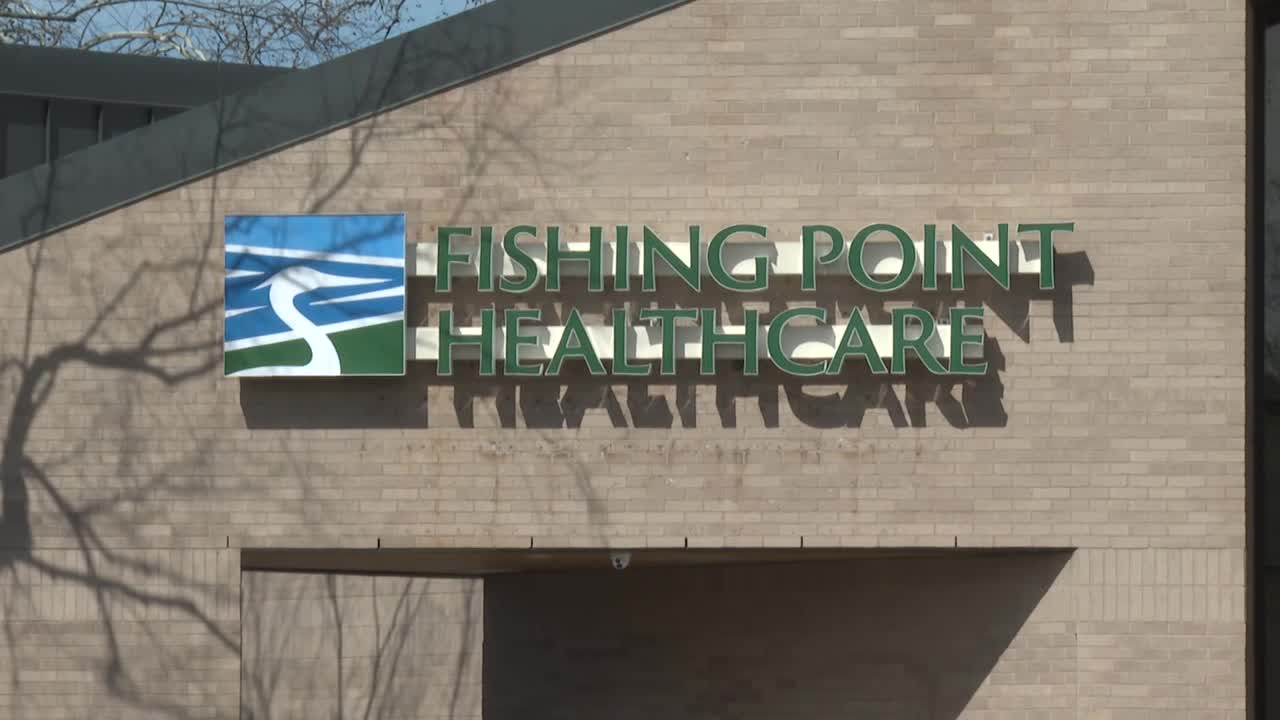


PORTSMOUTH, Va. — A local healthcare provider is under investigation for Medicaid fraud after billing the state more than $105 million in a single fiscal year, leaving more than 1,200 patients scrambling to find new care.
Fishing Point Healthcare billed Virginia's Department of Medical Assistance Services $105 million from July 2023 to June 2024 for 1,267 Medicaid members. Of that total, $96 million was billed for personal care services alone.
In early 2024, DMAS noticed a dramatic spike in billing from Fishing Point and opened an internal investigation.
DMAS referred Fishing Point to the Medicaid Fraud Control Unit in March 2025. The following month, the agency determined there were five separate credible allegations of fraud.
WTKR reached out to Fishing Point CEO Lance Johnson and asked about the fraud allegation, saying:
"Fishing Point has never been found to have committed fraud. It is important to understand what a "credible allegation" means in this context. Under federal regulations, a state Medicaid agency is required to suspend payments when it identifies a credible allegation of fraud. That is a procedural trigger. It is not a finding, not a determination, and not a conclusion that fraud occurred. It is the beginning of a review process, not the end of one. It is also worth noting that while the regulation requires an initial suspension, it provides multiple good cause exceptions under which a state can lift or limit that suspension. Those exceptions exist for a reason. If every credible allegation resulted in a permanent shutdown, healthcare providers across the country would be continuously closing their doors. The regulation gives states the tools to act proportionately, and DMAS chose not to use them.
Fishing Point disputes the allegations and has laid out its position in detail in the formal administrative proceeding that is currently pending. Because that proceeding is active, we are not going to try each allegation in the press. What we will say is that at the heart of this dispute is Virginia's Medicaid program misunderstanding how federal rules apply to tribally owned entities operating under 638 contracts. That misunderstanding has significant financial consequences for the Commonwealth itself. During the administrative hearing, DMAS acknowledged that it owes between $100 million and $200 million back to the federal government because it drew down the wrong federal matching share for services provided by Fishing Point. Fishing Point is confident that when the full record is reviewed, it will be clear that it operated in compliance with the law and that the real issue is the Commonwealth's failure to properly administer its own Medicaid program as it applies to Indian healthcare providers."
On April 29, 2025, DMAS issued a formal notice of payment suspension to Fishing Point. Federal law required the agency to suspend all Medicaid payments to the provider once credible allegations of fraud were confirmed.
WTKR reached out to Fishing Point CEO Lance Johnson and asked about the increased billing. He responded, saying:
"The increase in billing that DMAS references corresponds to the period when Fishing Point was a new clinic building its patient base. Any new healthcare provider will see billing volume increase as it opens its doors, hires staff, begins seeing patients, and grows toward capacity. That is not evidence of improper billing. It is what a new clinic looks like.
As for the billing methodology itself, Fishing Point bills Medicaid at the federally established Indian Health Service encounter rate. That rate is set by federal law under the Indian Self-Determination and Education Assistance Act, not by Fishing Point. It is the same rate and the same billing methodology that Indian healthcare providers across the country use, and it is the same rate Fishing Point is required to bill DMAS under the Virginia Medicaid State Plan. There is nothing unusual or novel about how Fishing Point billed. The only thing that changed was that a new tribally owned clinic opened in Virginia, and DMAS had limited experience with how federal Indian healthcare reimbursement works."
For patients like Marc Gibson, the investigation has been hard to accept. Gibson is among the Medicaid patients who will lose Fishing Point as a provider.
"I knew in my heart it wasn't this place because I just saw the care, and the kindness that they showed," Gibson said.
Gibson said he has seen nothing at Fishing Point to suggest wrongdoing.
"You kind of sense when something's unethical and people are doing things that aren't above board and everything I've ever seen here was above board," he said.
DMAS said Fishing Point stopped treating Medicaid patients without notifying the agency, prompting emergency outreach to affected members to prevent gaps in care. WTKR asked why Fishing Point didn't notify DMAS, Johnson said:
"Fishing Point did not choose to stop treating patients. It kept its doors open and continued providing care for almost a year without receiving Medicaid reimbursement. No healthcare provider can sustain operations indefinitely without payment, and Fishing Point held on far longer than most organizations could have. The clinic serves a predominantly Medicaid population, and the financial burden of operating without reimbursement eventually became unsustainable.
Fishing Point informed the Commonwealth on multiple occasions about the consequences the payment suspension would have for patient access. DMAS knew what the outcome would be. It imposed the suspension, it was warned about what that would mean for patients, and now it is faulting Fishing Point for exactly what it was told would happen."
Fishing Point has appealed the payment suspension. The administrative case is ongoing. Johnson responded to our question about the suspension and why it should be lifted.
"Fishing Point is asking that the payment suspension be lifted and that Medicaid reimbursement be restored so that it can get back to doing what it was built to do, which is provide healthcare to the community it serves. Approximately 4,400 Medicaid patients in the Hampton Roads region depended on Fishing Point’s Portsmouth clinic. Those patients lost access to their provider as a direct result of this suspension.
Fishing Point’s position is that the suspension was not legally justified as applied to a tribally owned healthcare provider operating under a federal 638 contract, and that the Commonwealth did not meet its obligation under federal regulations to resolve this matter in a timely way. The suspension has been in place for almost a year with no finding of wrongdoing. The specific legal arguments are set out in the briefs filed in the administrative proceeding."
In April 2025, the Nansemond Indian Nation filed a lawsuit against the Commonwealth of Virginia and DMAS in connection with the matter. The case was dismissed in its entirety in August 2025.
Medicaid patients currently with Fishing Point must find a new provider by April 15. Patients who are part of the Nansemond Tribe are not included in this deadline.
DMAS said most of Fishing Point's Medicaid patients are enrolled in one of five Medicaid managed care organizations and can access care through providers in those networks. Contact information for each organization is available at the DMAS website.
This story was reported on-air by a journalist and has been converted to this platform with the assistance of AI. Our editorial team verifies all reporting on all platforms for fairness and accuracy.
