

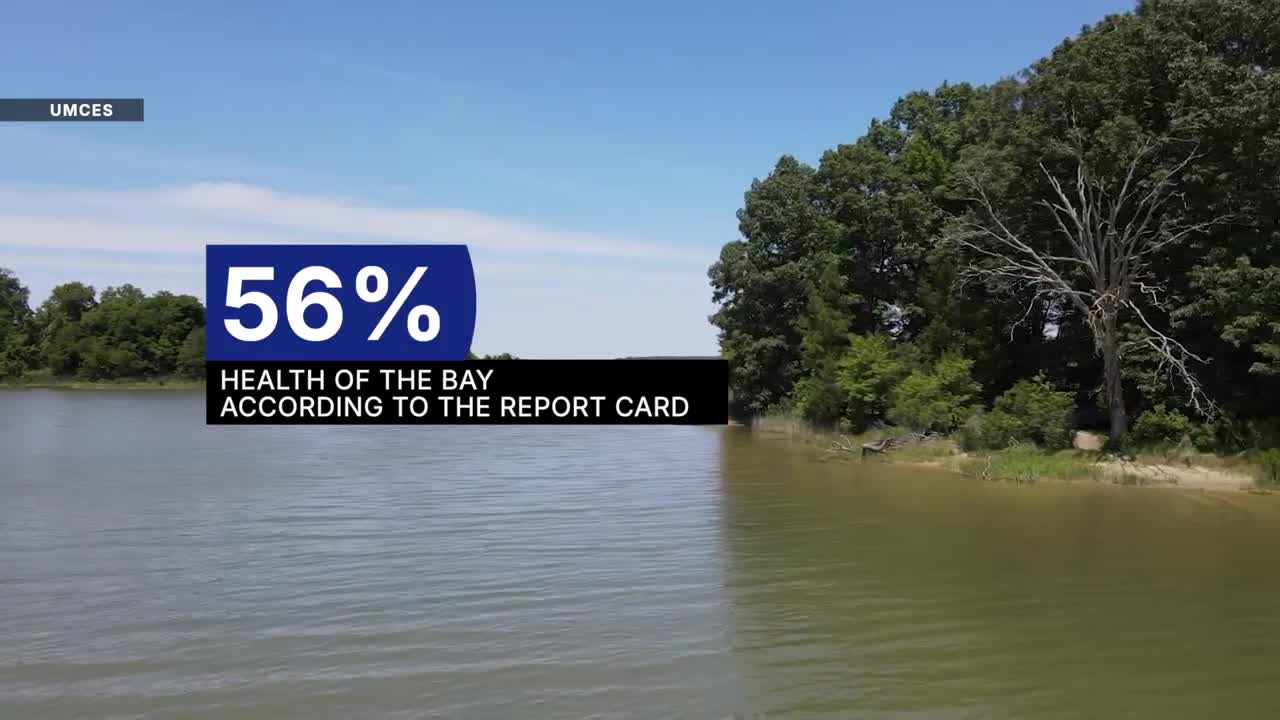


EASTERN SHORE, Va. — The Chesapeake Bay is showing signs of improving water quality, according to the 2026 Chesapeake Bay and Watershed Report Card. The latest assessment gives the bay an overall score of 56%, the highest in the report card’s 40-year history.
The report card, compiled by scientists at the University of Maryland, evaluates water quality and the health of the bay’s ecosystem. Researchers analyzed data from approximately 180 monitoring stations throughout the bay and its connecting waterways, grading each region based on several environmental factors.
“We are calculating scores based on mainly water quality parameters and some biotic parameters and like habitat like sea grasses, aquatic grasses that live under the water. So nitrogen, phosphorus, water clarity, how far you can see into the water,” said Alexandra Fries, one of the scientists behind the report.
While the overall score may appear modest, researchers say the upward trend is an encouraging sign that continued conservation efforts are making a difference.
“The fact that we are trending upward, improving over time, and many regions are showing improvements over time, is a real positive for the health of the bay and our systems,” Fries said.
Eastern Shore Region Earns Highest Score
The improvements are particularly evident along Virginia’s Eastern Shore. The Lower Bay region, which borders Accomack and Northampton counties, earned a score of 76%, or a B+. That was the highest regional score in this year’s assessment.
Other Virginia waterways also showed improvement compared with last year. The James River earned a C+, while the Elizabeth River received a D+. Although the scores indicate there is still work to be done, both rivers improved from their previous year’s assessments.
One key indicator of progress is the improvement of underwater grasses, which provide essential habitat for marine life.
“Aquatic grasses are improving over time, and that is a really key habitat for baby fish and crabs, and to have that kind of nursery habitat where they live with enough oxygen for them helps those populations,” Fries said.
These underwater habitats give young fish and crabs places to grow while supporting the broader ecosystem.
Oyster Farms Offer Another Sign of Progress
To learn how these environmental changes are affecting local industries, WTKR News 3 reached out to Laughing King Oyster Company on Virginia’s Eastern Shore.
The company reports seeing more spat, young oysters that attach themselves to shells and other surfaces, settling on its oysters. That activity can be an encouraging indicator of wild oysters thriving and reproducing.
Oysters also play an important role in water quality. A single oyster can filter approximately 50 gallons of water per day under suitable conditions, meaning oyster farms can contribute to filtering substantial volumes of water while supporting the local seafood industry.
The report’s findings offer a reason for optimism, but researchers and local businesses say continued work will be necessary to sustain the improvements.
“It's really like positive news, I guess. And, um, we should celebrate it, but also keep going, um, and, and continue doing the work,” one source said.
Continued Work to Protect the Bay
Although the latest report card shows progress, challenges remain for the Chesapeake Bay and the communities that depend on it.
In the coming weeks, WTKR News 3 plans to speak with additional farmers and scientists about issues affecting the bay, including algal blooms and their potential impacts on marine life, as well as the ways local farmers are helping improve water quality in their regions.
For communities along the Eastern Shore and throughout the Chesapeake Bay watershed, the latest findings offer an encouraging look at the bay’s recovery, and a reminder that protecting its waters will require continued effort.
Click here to see how we use AI at WTKR News 3.
