

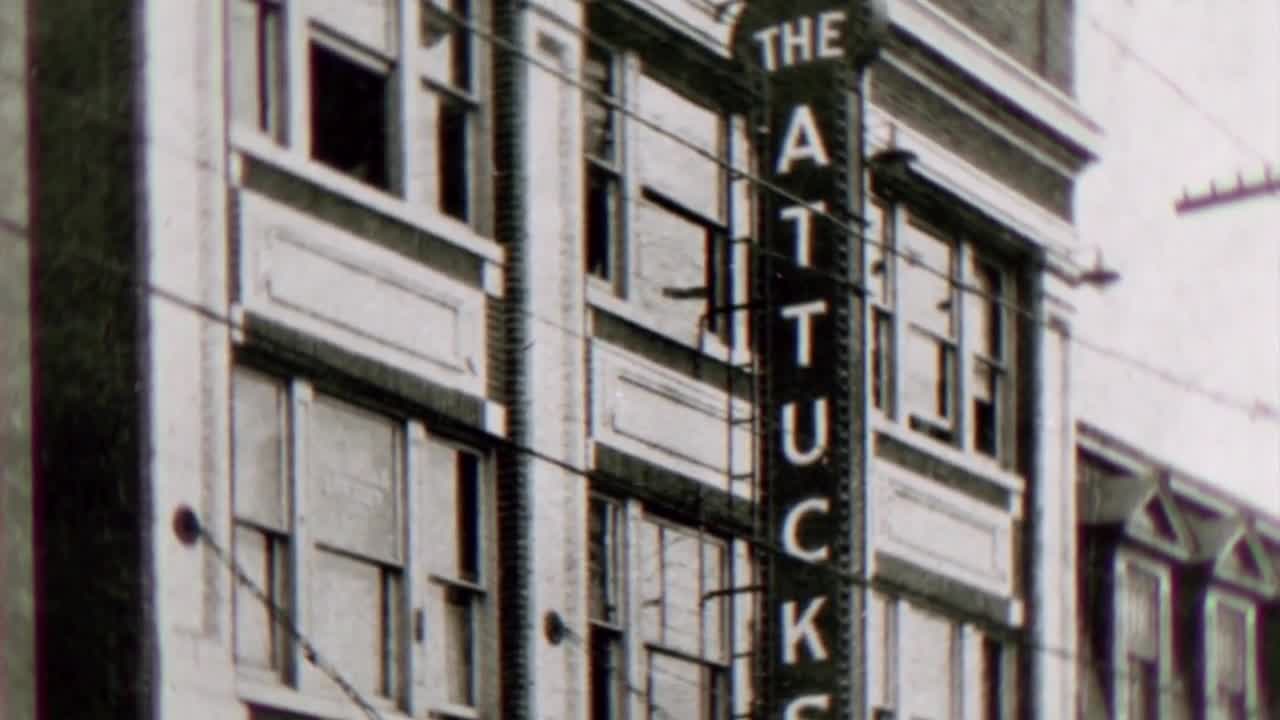


NORFOLK, Va. — On a chilly Martin Luther King Jr. Day morning, community members gathered along Church Street for the unveiling of a new state historical marker at Norfolk’s Attucks Theatre — a site long regarded as a cornerstone of the city’s Black history and cultural life.
The marker, approved by the Virginia Board of Historic Resources and installed by the Virginia Department of Historic Resources, is intended not as a memorial, but as an educational tool highlighting the theatre’s regional, state, and national significance.
Built in 1919, the Attucks Theatre was funded, designed, built, and operated by Norfolk’s African American community at a time when segregation restricted where Black artists could perform and where Black audiences could gather. Nicknamed the “Apollo of the South,” the theatre hosted concerts, films, plays, and community events and later operated under the name the Booker T. before closing in 1955. It reopened in 2004 after extensive renovations.
The theatre was named for Crispus Attucks, who is widely regarded as the first casualty of the American Revolution after he was killed during the Boston Massacre in 1770. By choosing the name, the theatre’s founders intentionally tied the venue to themes of sacrifice, freedom, and Black contributions to American history at a time when those stories were often excluded from public recognition.
Mayor Kenneth Cooper Alexander, Ph.D., said the marker reflects both resilience and belief across generations.
“It’s a reflection of a commitment, of a people that thrived and pushed through very difficult times in our history,” Alexander said to News 3's Norfolk reporter Jay Greene. “They fought, they protested — but more importantly, they believed. They had hope that this day would come. If they’re smiling down from heaven, they would say, ‘Keep the faith. Keep the fight.’”
Alexander also emphasized the theatre’s role during segregation, noting that at one point it was the only venue in Norfolk where many world-famous Black performers could appear.
Those performers included Ella Fitzgerald, Dizzy Gillespie, and Ruth Brown. Offices upstairs in the theatre once housed Black professionals, helping make Church Street a hub of commerce, culture, and community life.
Following the outdoor unveiling of the marker, the event moved inside the theatre for a program that blended history, reflection, and music. Attendees sang Lift Every Voice and Sing and We Shall Overcome, then listened to Dr. King’s iconic I Have a Dream speech — all in observance of MLK Day.
Community activist Bilal Muhammad said the moment was about continuing King’s work beyond ceremonial remembrance.
“It’s imperative that we generate that same spirit and constantly move forward with his legacy,” Muhammad said. “The world needs more peace, harmony, and love for all people.”After the indoor program, the crowd marched down Church Street to the Martin Luther King Jr. Memorial at the intersection of Church and Brambleton avenues, where Mayor Alexander laid a wreath.
Norfolk City Councilmember Carlos Clanton, a lifelong Norfolk resident, said the marker also tells a broader story about Church Street itself.
“When you hear ‘Apollo of the South’ and think about the Apollo in New York, it lets you know Norfolk was once called the Little Big Apple,” Clanton said. “There was a time of separation, but community came together — and Church Street was just that. You look at the churches, the businesses that used to be here, and we’re working to bring that back for the next generation.”
Charles Johnson, former vice chair of the Attucks Theatre Centennial Commission and one of the last remaining board members of the former Attucks Cultural Center, called the marker another milestone in a long preservation journey.
“This is just another milestone in the history of the Attucks Theatre — from saving it, restoring it, and reopening it, to now having state recognition,” Johnson said. “We’ve had local recognition, and now we’re moving toward national recognition.”
Johnson said the marker application required proving the theatre’s significance beyond the city.
“They want to know what significance this building has — not just here, but to the city, the state, and the people in general,” he said. “You’re limited in words, but those words have to tell what the Attucks was really about.”Looking ahead, Johnson said he hopes the marker helps future generations understand that history is rooted in people as much as places.
“A building matters, but it’s the people and what goes on in that building that makes it great,” he said.
Despite the cold temperatures, organizers said the turnout and energy underscored the continued relevance of both the Attucks Theatre and Dr. King’s message.
As the crowd dispersed from the memorial, Muhammad said the marker should serve as both a reminder and a call to action.
“The Attucks Theatre and this marker stand as a beacon of hope and unity,” he said. “It lets our children and our community know that we can look to this and be inspired to move forward together.”
