



NORFOLK, Va. — Nearly 500,000 people visit the 175-acre Norfolk Botanical Garden each year, but its beginnings nearly 90 years ago were much more humble.
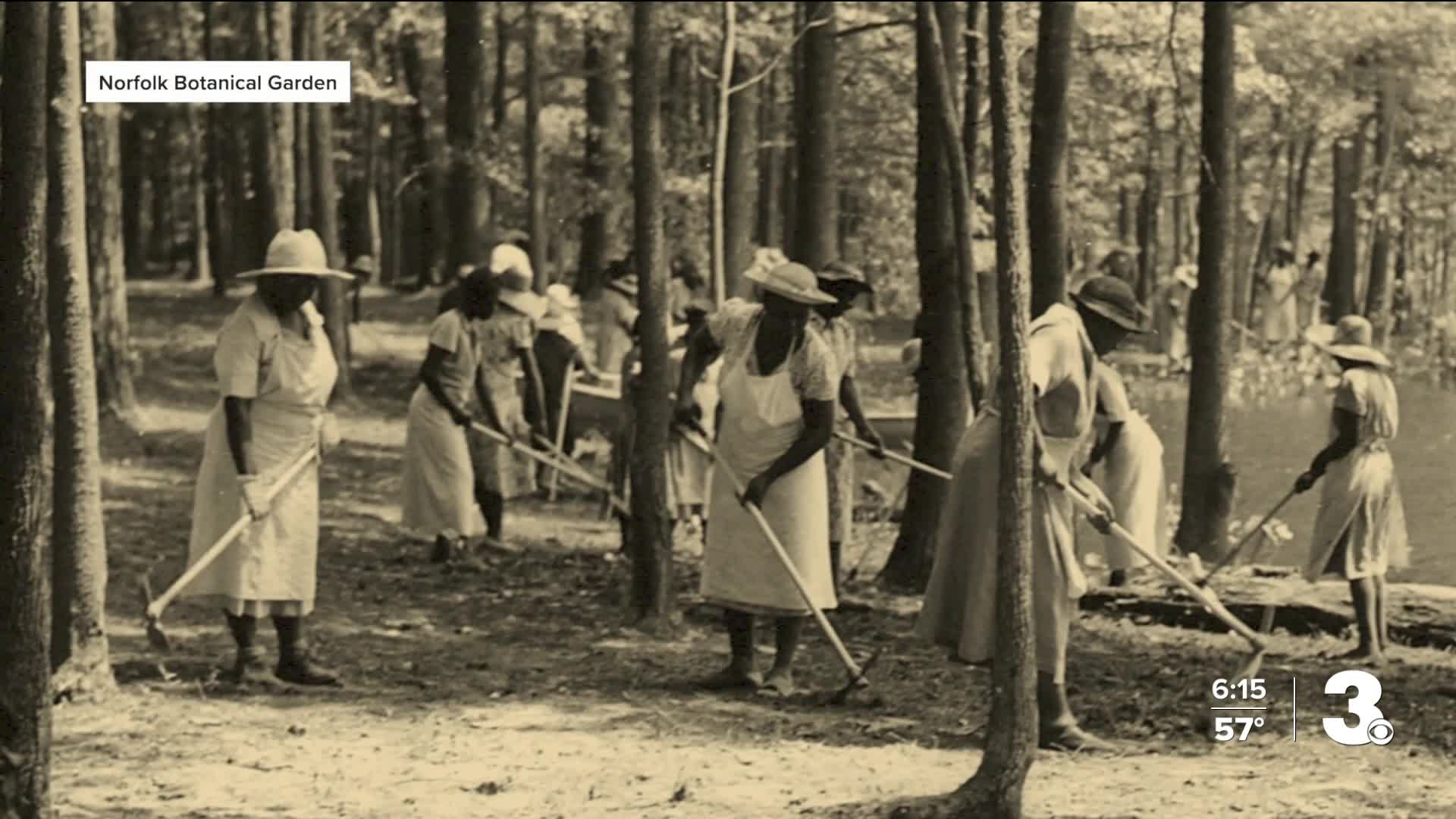
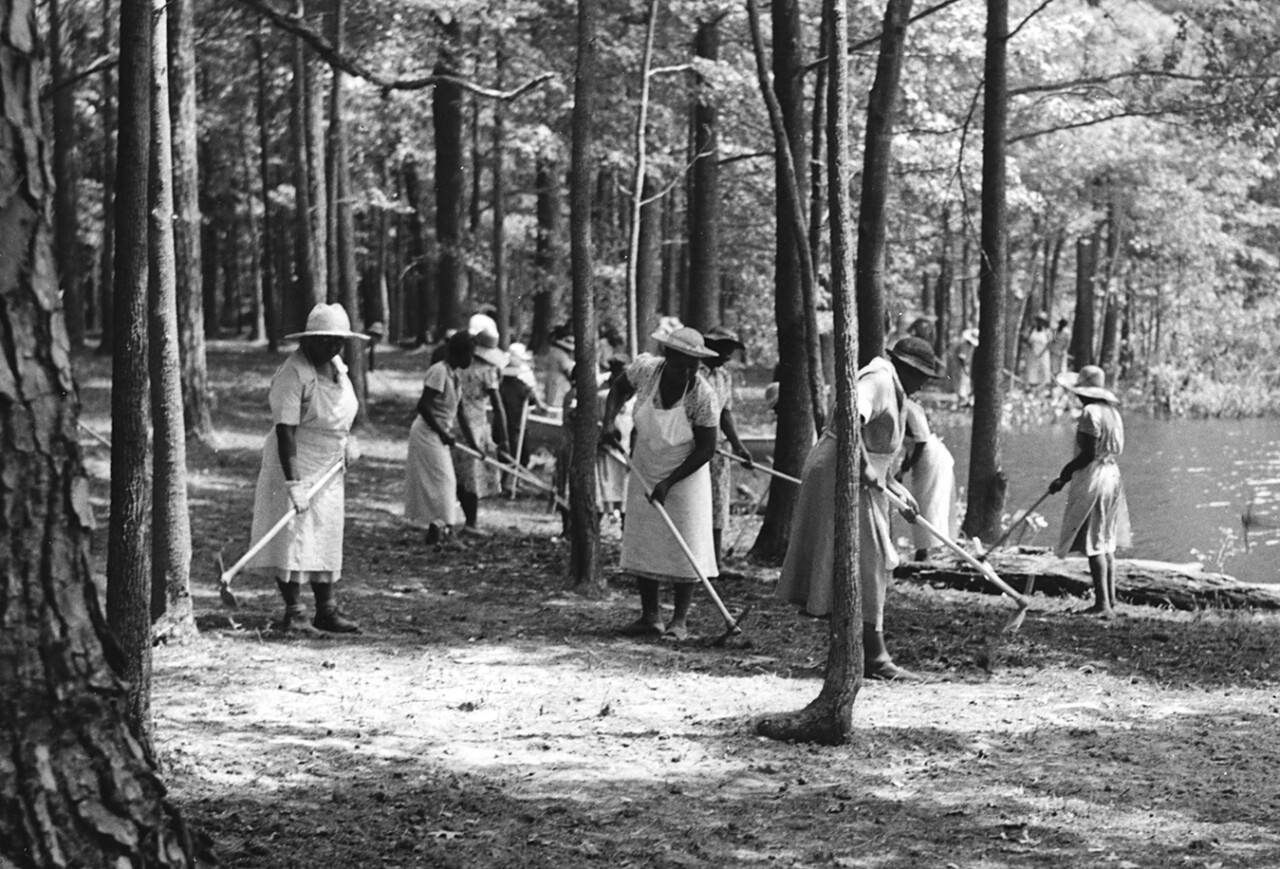
In 1938, the city set out to create the "Azalea Gardens," but the area's workforce was already working on other projects. As a result, 200 African American women and 20 African American men were assigned to the garden project as part of the Works Progress Administration (WPA).
“It was a lot of trees, it was marshy and…it was scary," former WPA worker Mary Elizabeth Ferguson told the city of Norfolk in 2009.
That same year, Ferguson, the last known living WPA worker, helped the city unveil a statue honoring the original gardeners near the Norfolk Botanical Garden entrance.
Ferguson died at 97 in 2017 and her daughter, Helen Ferguson Williams, is now sharing the stories of her mother and others who worked on the garden.
“I walk around with my head up and I smile all the time because when I come through here, I say ‘oh, mama’s walking with me,'" Williams told News 3 in a recent interview. “(They were) out here digging, cutting down trees, planting azaleas.”
She says the workers were paid 25 cents an hour, which wasn't much, but helped put food on the table at the end of the Great Depression.
“My mother was very petite. Probably a little smaller than I am," said Williams. “They’re working 12 to 14 hour days. It wasn’t an eight hour job.”
Williams tells News 3 her mom eventually had to quit — the work was too hard, and after she was finished, she didn't want to return.
She couldn't if she wanted to.
“It was during segregation so Blacks was not welcomed here," she said. "They could not come see it.”
They built the garden...but weren't allowed in.
Later, the rules obviously changed and what became Norfolk Botanical Garden began working to honor the original builders, which Williams says is when her mother began to soften to the idea of coming back.
Her name and more than 90 others are listed on a plaque near the statue that she helped unveil, but it's less than half of the 220 people that worked all those years ago.
Williams, who's on the garden's President's Council for Inclusion and Diversity, is now on a mission to find the remaining workers.
“There were no records kept, no names, nothing. The only thing we can rely on now is if their descendants can tell us," she said.
If you or your ancestor have worked on the original garden, find contact information to share your story HERE.
The garden is hoping people will come forward so everyone who worked so hard for so little to build the Azalea Gardens — and, by extension, Norfolk Botanical Garden — can be remembered and honored.
