

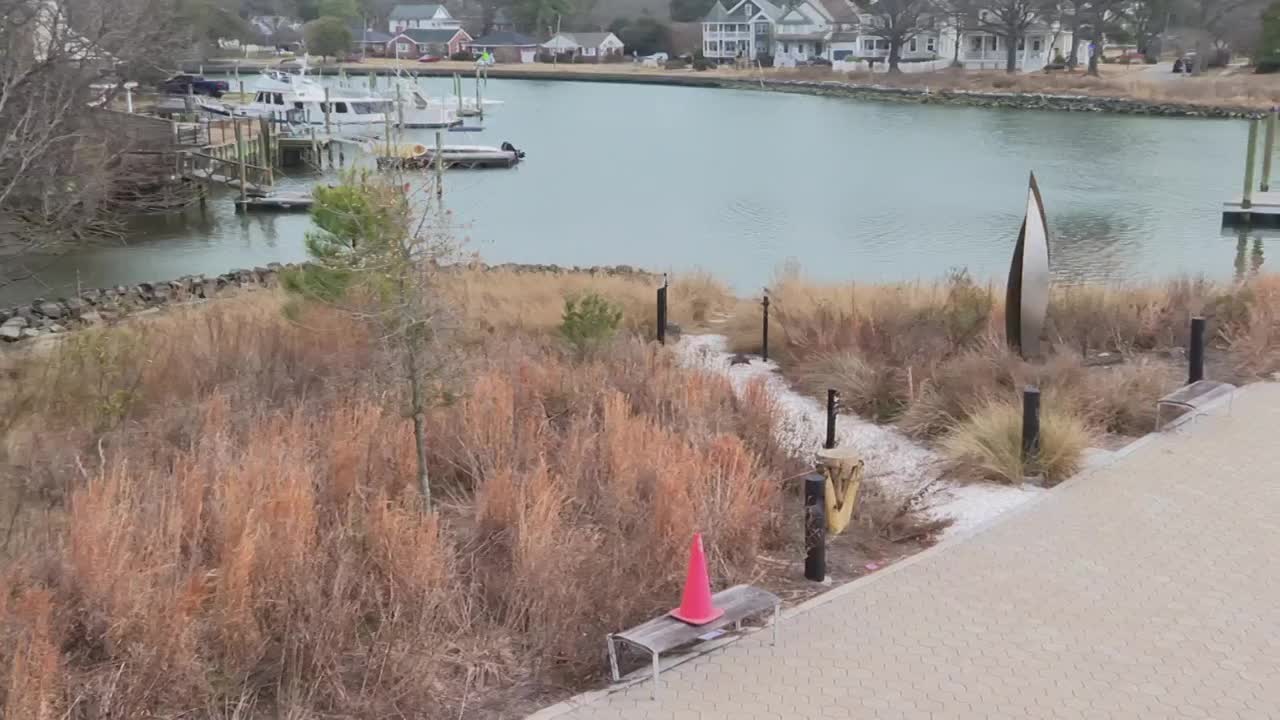


NORFOLK, Va. — A $2 million federal grant will fund new living shoreline projects along the Elizabeth River, an effort aimed at improving water quality and adding natural buffers in neighborhoods that regularly experience flooding.
The Elizabeth River Project announced it received the grant from the National Fish and Wildlife Foundation to construct what it calls “mosaic living shorelines” throughout the river’s watershed, including Norfolk, Portsmouth, Chesapeake and Virginia Beach.
The three-year grant, which runs through September 2028, allows the nonprofit to take a layered approach to shoreline restoration — building from mud flats and shellfish habitat to low and high marsh grasses and upland buffers behind them.
“We’re looking at the whole shoreline gradient — from mud flats, to shellfish habitat, to low and high marsh, and even the buffer behind it,” said Phoebe Merrell, director of restoration for the Elizabeth River Project.
Unlike traditional bulkheads or seawalls, living shorelines are designed to work with natural tidal patterns. Marsh grasses and oyster habitats can absorb wave energy and help reduce erosion before water reaches developed land.
Merrell said the approach can provide some flood mitigation benefits but is not intended to eliminate flooding altogether.
“They can have some impact on flooding. They’re not a cure for stormwater flooding,” she said.
Norfolk is among the East Coast cities experiencing some of the fastest rates of sea level rise, and tidal flooding has become increasingly common in several riverfront neighborhoods. Project leaders say natural shorelines can help build long-term resilience by slowing wave action and improving shoreline stability as water levels rise.
In addition to construction, the grant will support research partnerships with the Virginia Institute of Marine Science and Old Dominion University. The project will explore adding ribbed mussels to restoration sites, study marsh grass genetic diversity and develop mapping tools to determine where shoreline projects could have the greatest impact.
The funding also includes a public outreach component through the organization’s Ryan Resilience Lab, where residents can participate in programs such as native seed collection to support future restoration efforts.
The Elizabeth River Project said waterfront property owners interested in shoreline restoration can contact the organization to determine whether their site may qualify for participation.
