

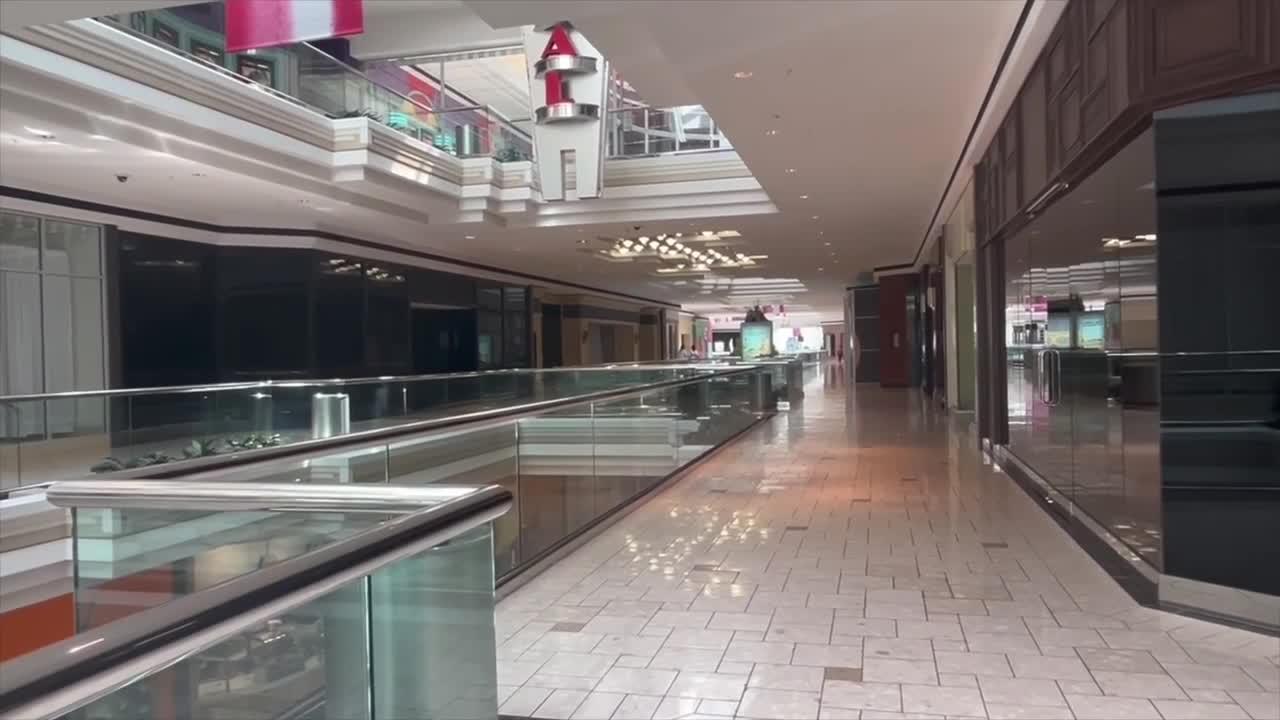


NORFOLK, Va. — Norfolk is on the verge of a major transformation downtown, with the MacArthur Center set to close by June 30 as the city pushes forward with a long-term redevelopment plan.
The city says the goal is to replace the aging mall with a mixed-use district that includes housing, hotels, street-level retail and new street connections — all designed to create a more walkable, connected urban core.
During his 2024 State of the City address, Mayor Kenny Alexander described that vision in broad terms.
“The future of MacArthur Mall demands a bold vision that celebrates our culture, reconnects our city, attracts tourists, and ensures economic vitality,” Alexander said. “Let’s envision a vibrant mixed-use destination where people live, work, and connect.”
The plan comes after years of declining foot traffic at the 1.1 million-square-foot mall, which opened in 1999 with more than 100 stores. In recent years, businesses have steadily left, including the Regal Cinemas theater.
Now, the city is looking to start over.
Sean Washington, Norfolk’s director of economic development, said the focus is on reshaping how people experience downtown altogether.
“What does it look like to re-knit our city, create the street grid back that we were, and maintain this as a pedestrian friendly experience,” Washington said.
Instead of a closed-off retail space, the goal is to open the area up — making it easier for people to move between destinations across downtown.
“How do we get folks to this site where they’re able to walk around and continue their experience downtown,” Washington said.
That transformation, however, raises one of the biggest questions for residents and visitors: where will people park?
Washington said the city is still working through those details, especially as thousands of parking spaces tied to the mall could be impacted.
“The City of Norfolk, we actually own and control over about 13,000 parking spaces right in our downtown,” he said. “We want to do the necessary research and due diligence to kind of get this right.”
At the same time, Washington said the future of downtown may rely less on cars altogether.
“What does it mean to kind of shift the car culture … and get folks more interested in taking the Ubers here downtown, in addition to obviously leveraging our light rail,” he said.
Traffic patterns could also change, as the city considers restoring a more traditional street grid around the site — something Washington said would help reconnect parts of downtown that were cut off when the mall was built.
“The mall was built as a fortress … the goal now is to get people back into the core of downtown and connected to everything around it,” he said.
While much of the focus is on downtown, Washington said broader economic forces are also shaping what comes next — especially the military and defense industry.
He said Norfolk’s economy has long been tied to ship repair, but there is now a push to expand into shipbuilding, driven by federal demand.
“We’re seeing them make some generational assets that literally come once in a lifetime,” Washington said.
That shift is already underway.
City Council approved rezoning last fall to allow Colonna’s Shipyard — the oldest continuously operating family-owned shipyard in the United States — to move forward with an $80 million expansion along the Elizabeth River. The project includes building a fourth dry dock capable of lifting up to 25,000 tons, expanding the company’s capacity by 2028.
Washington said that kind of investment reflects a larger trend.
“That’s a generational type of investment that you only see once in a lifetime,” he said.
He added that major defense contractors are also driving demand for local work.
“They’re looking at our shipyards and saying, hey, can you fabricate these pieces or assemble these pieces,” Washington said.
Washington said those investments don’t just stay at the shipyard.
More work means more workers — and more people spending money across the city, including downtown.
“That’s tax that comes back to the City of Norfolk to be able to provide police and fire and schools,” he said.
He said the city is also looking to attract more companies tied to the defense industry, with the goal of growing its tax base and supporting long-term economic development.
“Helping the existing base grow and then bring in some new tax dollars here,” Washington said.
Beyond shipyards, Washington said Norfolk is also evaluating how to reuse underutilized properties — including school buildings that could close in the coming years — as part of its broader redevelopment strategy.
“If they’re being underutilized, how do we get them back … and put them into productive use, whether that’s industrial or residential,” he said.
Washington said the redevelopment of MacArthur Center and the broader changes to downtown will take years to fully materialize. But he said the work happening now — from rethinking streets and parking to capitalizing on defense-related growth — is laying the foundation for Norfolk’s next chapter.
Click here to see how we use AI at WTKR News 3.
