

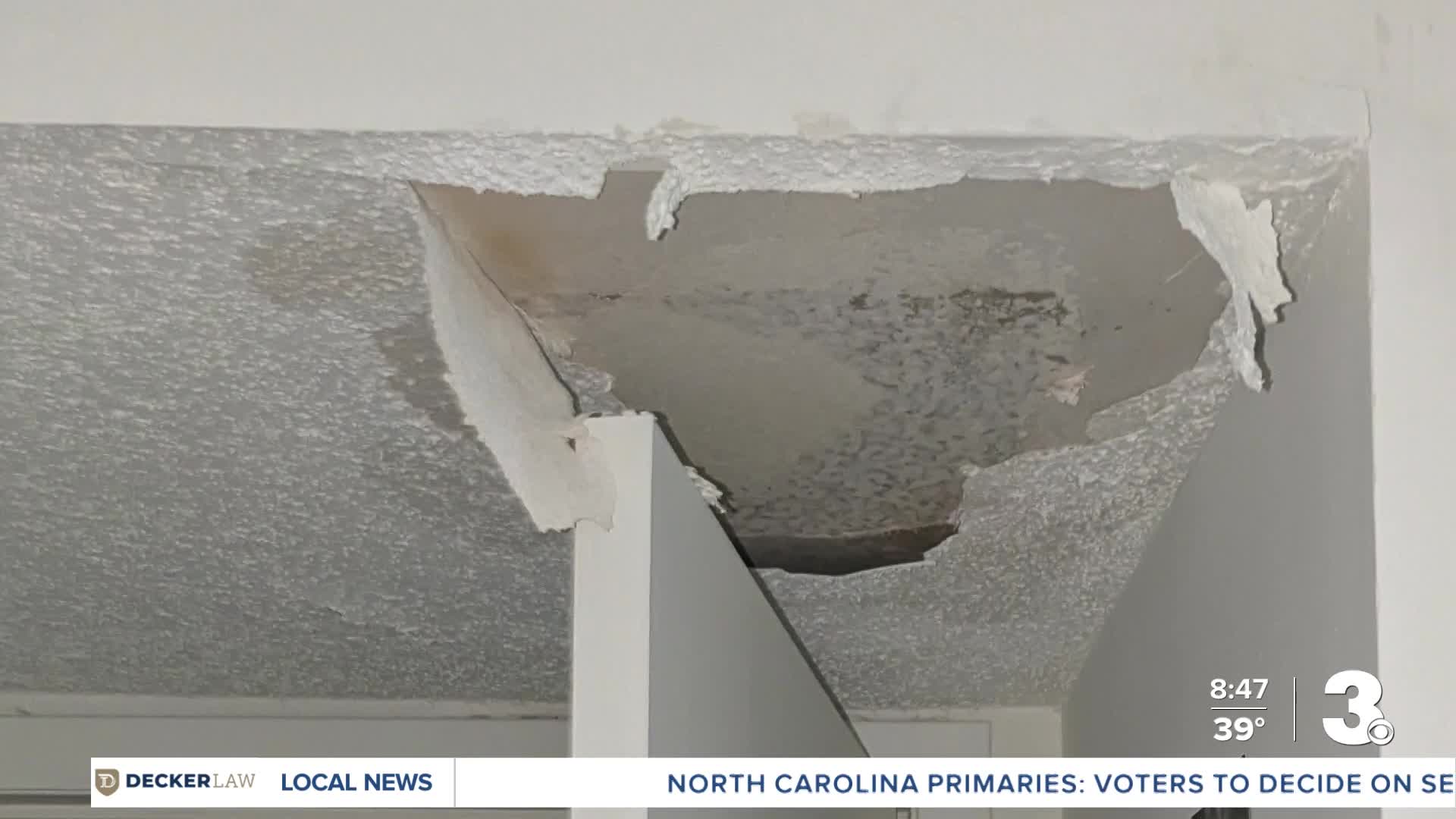


NORFOLK, Va. — What to do when water damage strikes your apartment — and how renter's insurance can make all the difference
Imagine coming home to find your apartment flooded and most everything you own destroyed by a burst pipe.
It happens more often than you might think, and knowing your rights as a renter — and the steps you need to take — could save you thousands of dollars.
A News 3 viewer experienced this nightmare firsthand after a pipe burst in her apartment. She wanted to remain anonymous as she said she was working through issues with the property management team, however I've learned she is not alone.
Jonathan Burke, a producer at News 3, knows exactly what that moment feels like.
"We opened the door, about one to two inches of water was on the floors, pouring through the vents [and] pouring through any holes, like, at the center of the apartment," Burke said.
Burke came home to find water leaking from an apartment on the third floor of his building, destroying his walls, ceiling, and belongings — and starting a fire in the water heater.
Fortunately, he had renter's insurance.
"The first thing I did was call the insurance, let them know what was going on, even if I couldn't file a claim right away. The second thing I did was try and call the complex and be like, ‘Hey, there's a giant pool of water in here, we can't stay here,’" Burke said.
From there, he said, it became a frustrating back-and-forth.
"It's like the little worst game of telephone. You're trying to talk to the insurance company about everything that's going on and trying to talk to the apartment owners about everything that's going on, and you're kind of in the middle and you really can't do much," Burke said.
Know your rights — and your policy
What you can do is know your rights and understand what is in your insurance policy, if you have one. Burke's rental policy covered pet boarding for his dog and cat, an extended hotel stay and meals — but not every policy is the same.
After contacting your insurance provider and property manager/landlord, document everything. Take photos and videos and put together a list of damaged items and their estimated value.
That documentation will support your insurance claim, help resolve any disputes with your landlord and improve your chances of reimbursement.
You first must provide your landlord with written notice and allow them a reasonable time to fix any issues.
However, if they are unresponsive you can file a tenant's assertion. This legal option allows tenants to pay rent into a court-managed escrow account instead of directly to the landlord while repairs are being addressed.
Burke's advice for renters
Now settled and happy in a new home with his fiancé, Burke has a clear message for other renters.
"Making sure you know what that policy is, and then constant communication [with the insurance company and the property manager]," Burke said.
He also reflected on what the experience cost him beyond money.
"It was stressful. [I remember thinking] I just wanna sit where our home is and enjoy. You know, being in our home and not in a hotel – not sure when I'm actually going to sleep in my own bed," Burke said.
How to get renter's insurance
If this story has you considering renter's insurance, getting started is easier than you might expect. You can shop around online. According to NerdWallet, the average renter's insurance in 2026 costs $151 a year, or $13 per month.
Click here to read information from the Virginia State Corporation Commission on what questions to ask yourself before signing up.
