

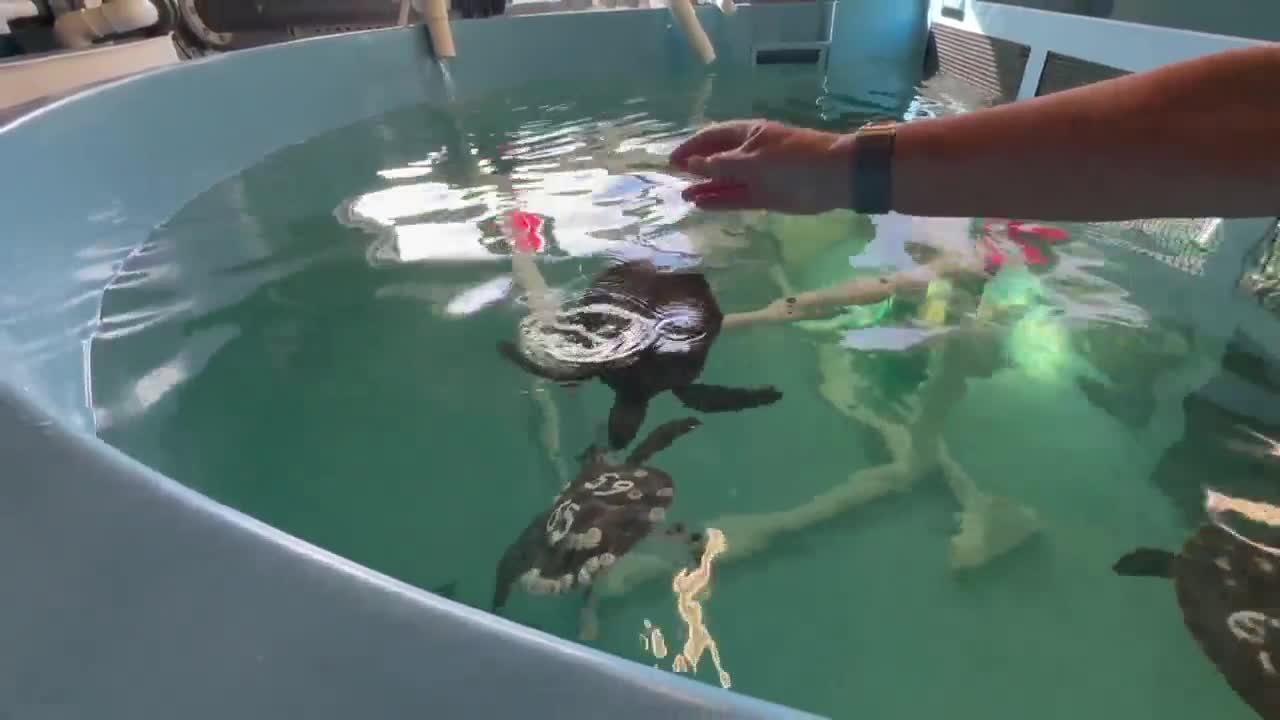


MANTEO, N.C. — Right now, there are currently fewer than 100 patients at the Sea Turtle Assistance and Rehabilitation (STAR) Center at the North Carolina Aquarium on Roanoke Island. What we mean by "patients" is sea turtles. After record-breaking numbers of cold-stunned sea turtles in the 2024-25 winter season, things are normal so far this season, for now.
"We're having kind of a more normal pattern to what we're seeing versus last year, which was a record breaking year," said Leslie Vegas, the animal husbandry curator at the North Carolina Aquarium on Roanoke Island.
Last winter, around 800 cold-stunned sea turtles were rescued and more than 550 released — record-breaking numbers. Vegas explains this year the numbers are down because we haven't seen a dramatic change in water temperatures in the sound waters, where many sea turtles spend their time feeding in the summer and fall.
When temperatures in the sound waters start to drop, sea turtles start to head back to the ocean waters, but quick drops in the water temperatures sometimes lead to the creatures being cold-stunned, basically a form of hypothermia.
"Last year, the sound waters ended up cooling off very quickly over one night, and that happened a couple times in a row and so that's what led to those huge numbers for us. But this year, it gradually cooled down, which gave the turtles their cue to head out to the ocean," said Vegas.
Vegas says so far this season, 157 cold-stunned sea turtles have checked into the STAR Center, with 55 recently being released back into our water systems in the Outer Banks.
"Anywhere from 100 to 500 is sort of a typical year. Once we get passed that 500 mark, we're kind of calling it an unusual year," said Vegas.
So what exactly does most of the rehabilitation look like? Vegas explains.
"The primary rehabilitation that these animals are warming back up, rehydrating them, making sure they have a full diet and they can eat well before we plan a release for them back to the Gulf Stream," said Vegas.
Some of the sea turtles need more than that primary rehabilitation, and the cold-stunning recovery allows the experts to perform treatments the sea creatures wouldn't otherwise receive in the wild.
"We're also checking for things like infections, sort of lung and heart issues. Sometimes they have wounds, if they've gone through frostbite periods, so we're looking at all of that as well," said Vegas.
Vegas shares they see a handful of different species and sizes of the creatures, but mostly are treating green sea turtles.
"We see juvenile green sea turtles the most because they're the perfect age to want to go into the sounds to eat those greens and those little baby fish and crabs and shrimp and those kinds of things. We do see a couple Loggerhead's, we do see some Kemp's Ridley turtles, the Loggerhead's we usually see towards the end of the season, just because they're bigger, so it takes them longer to cold stun," said Vegas.
Though it's a milder winter temperature-wise in the sound waters so far, over the next couple of months that could change.
"It could get warm in February and then drop off in the middle of February, or even in early March. So we never really know what's to come. We just stay prepared, just in case," said Vegas.
At the end of the day, it's a service that organizations like the Network for Endangered Sea Turtles (N.E.S.T.) and the North Carolina Aquarium on Roanoke Island are proud to be part of.
"We love being able to take care of these animals that live naturally here in the Outer Banks, right off our coast. It provides an awesome education opportunity for people to see these wild animals that our ultimate goal is to return back to their home," said Vegas.
Each year is another learning experience for the STAR Center staff that allows them to continue to refine their skills in treating cold-stunned sea turtles.
"We learned a lot last year because we had so many at one time. We learned how to kind of streamline our processes a little bit, which makes caring for slightly less turtles this year a lot easier, because we could set in place those procedures we learned to perfect last year," said Vegas.
Anyone who comes across a cold-stunned sea turtle can call N.E.S.T.'s hotline at (252) 453-0565.
