

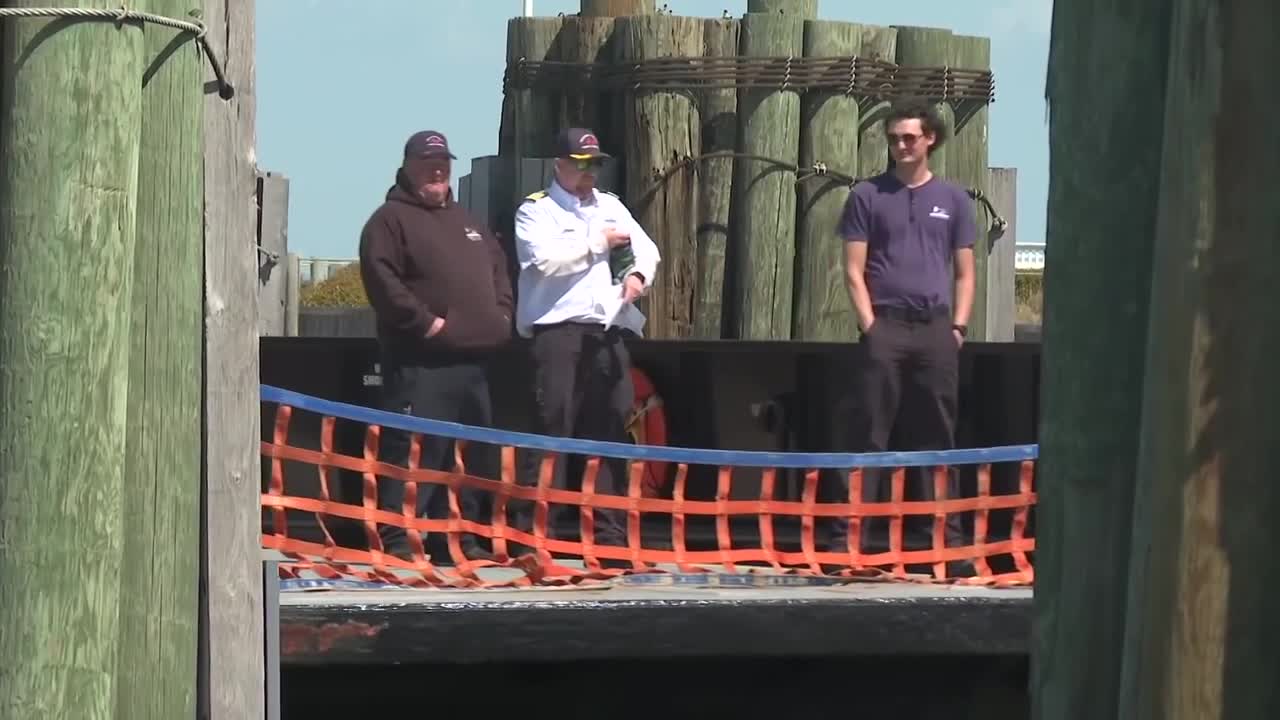


HATTERAS, N.C. — The idea of tolling the ferry route from Hatteras to Ocracoke Island is not a new idea. It's something that island residents have been dealing with for more than 20 years. That free route is the one that the majority of visitors and residents take to get to and from the island.
In 2025, the North Carolina Senate including a ferry toll in their proposed budget to help with ferry division funding was met with massive opposition in the Outer Banks. But in January, during a visit to the General Assembly in Raleigh, Ocracoke Access Alliance members learned this is something that leaders are set on.
"We talked with a number of Senators and a number of House members in Raleigh, and it became very clear to us that the General Assembly had an intention to toll the ferry system here in North Carolina, and that we could come to them with proposal and put ourselves a little bit in the driver's seat or not," said Justin LeBlanc, executive director of OAA.
OAA did just that, putting together a list of 10 recommendations that they feel would be the best route forward if ferry tolling does become a reality. Right now, the two mainland routes from Swan Quarter and Cedar Island to Ocracoke carry a $15 fee, but Hatteras to Ocracoke and vice versa remains free.
"The the North Carolina State Senate was proposing a $30 toll on the routes that serve Ocracoke from the mainland, we're proposing that it increases to $20. They were proposing a $20 toll each way from Hatteras to Ocracoke and back. We're proposing either a $10 toll each way, or $20 toll one way and a free return from Ocracoke," said LeBlanc.
News 3 saw mixed reviews when it came to tolling the Hatteras to Ocracoke ferry with visitors who were in line at the terminal on Tuesday. Some said it would impact their decision to take the trip, but most were understanding since the toll rates would go back into the ferry division.
"I wouldn't mind paying a nominal fee for a toll. It's not unreasonable at all," said Gregory and Tiffany Henriksen, who have been going to Ocracoke since 2017.
Part of the reason why OAA was established was to be an advocate for funding for the ferry division and its operations.
"In 2024 the ferry division came out with a ferry vessel replacement study, and costs for replacing all 26 vessels in the fleet over the next 37 years. We've got vessels that are already 27, 28, 35, we have one vessel that's already 55 years old. If it's going to take us 37 years to replace that whole fleet, we've got to figure out how to have the revenue to do that," said LeBlanc.
Part of their recommendations also encourage the General Assembly to fully fund the ferry division's operations and maintenance budget.
"That was one of our criteria, was to say, look, if you're going to toll the Hatteras route, people are going to want to see improved service, and they're not going to see improved service from the tolls, because tolls only go to ferry vessel replacement. You've got to make sure that that O and M budget is fully funded so that ferries aren't breaking down, that they're running at maximum capacity, and that they're fully staffed, and that takes the resources that are provided by the General Assembly and the regular recurring budget of the state," said LeBlanc.
At the end of the day, the OAA feels this is all about sustainability of the system that is the lifeline for Ocracoke Island. LeBlanc hopes that elected leaders will consider the priorities that they are proposing when it comes to a ferry toll being included in the state budget.
"We're really hopeful that they'll look at our proposal as a package and try to move it forward. We think all 10 items sort of linked together are important to be supportive of one another, so we'd hate to see it sort of piecemeal apart," said LeBlanc.
Another priority includes a full free annual pass for Ocracoke Island full-time residents.
It's not clear when discussions will begin about what the proposed ferry tolling system will look like in the proposed budget, but News 3 will continue to follow this story and update our viewers when we know more.
You can find the full list of OAA recommendations below:
1. Establish a Practical Toll for the Hatteras–Ocracoke Route:
The Alliance recommends a $10 per-trip toll for the Hatteras route, indexed to inflation, maintaining affordability while achieving revenue goals. Alternatively, the state could adopt a $20 one-way toll departing Hatteras with a no-toll return trip—simplifying administration while preserving access.
2. New Tolls for Mainland Routes:
Mainland ferry routes should adopt a standardized toll of $20 each way, also indexed to inflation over time. This represents an affordable alternative to higher toll levels proposed in the Senate budget that still generates necessary revenue.
3. Toll Waiver for Verified Permanent Residents:
To protect essential access and recognize Ocracoke residents’ existing contributions to state highway funds, the Alliance proposes codifying a toll waiver for full-time Ocracoke residents, limited to one per registered vehicle and driver’s license with matching Ocracoke addresses.
4. Streamline Reservations and Operations:
The Alliance recommends maintaining reservations for longer mainland routes, while preserving the Hatteras–Ocracoke route as a first-come, first-served system. Implementation of EZ-Pass or Toll-by-License-Plate technology would minimize administrative overhead and improve throughput.
5. Fully Fund Ferry Operations (O&M):
The Alliance calls for full funding of the Ferry Division’s recurring operations and maintenance budget—$85.5 million for FY 2025–26 and the amount requested by the Ferry Division for FY 2026–27—while accounting for upward pressure from rising costs, including fuel prices.
6. Eliminate Deferred Maintenance Within Two Years:
With total backlogged and deferred maintenance estimated at $69.3 millionA, the Alliance supports continued non-recurring appropriations to eliminate this backlog within two fiscal years. Current House and Senate proposals would leave roughly $22.8–$24.8 million remaining for FY 2026–27, which should be fully addressed.
7. Dedicate Capital Funding for Ferry Infrastructure:
The proposal supports setting aside $10 million annually from the Highway Trust Fund into the Ferry Capital Fund for at least five years, ensuring a stable pipeline for vessel replacement and infrastructure upgrades. The existing ferry fleet has an average age of 26 years, with one vessel already 55 years old. This aging fleet risks deeper disruptions to reliability.
8. Reform the STI Process for Vessel Replacement:
Ferry vessel replacement should be removed from the State Transportation Improvement (STI) process, where it currently competes poorly against highway projects as evidenced by the fact that North Carolina has not awarded a ferry contract to modernize its ageing ferry fleet in the last 8 years. A simple legislative fix—adding “and ferry vessel” alongside existing bridge replacement exemptions—would provide a durable solution.
9. Reinvest Proceeds from Vessel Sales:
Revenue generated from the sale of retired vessels should be directed into a dedicated Ferry Vessel Replacement Fund, creating a self-reinforcing capital cycle.
10. Modernize the “Commuter Pass”:
The current commuter pass should be renamed an “annual pass” as no one commutes to/from Ocracoke. It is available to all North Carolina residents.
