



VIRGINIA BEACH, Va. — Small Black-owned businesses and community members filled the Coastal Virginia Unitarian Universalists church this week as they marked the third day of Kwanzaa, celebrating the principle of Ujima, or collective work and responsibility.
The event, hosted by the church's Racial Justice Task Force, featured a drum call, a libation ceremony, and a marketplace highlighting local Black entrepreneurs.
“Today we’re celebrating the third principle of Kwanzaa, which is Ujima, collective work and responsibility,” said organizer Diana Chappelle. “We have a marketplace going on, a libation ceremony coming up, and a drum call as people are brought together to celebrate and take part in the festivities.”
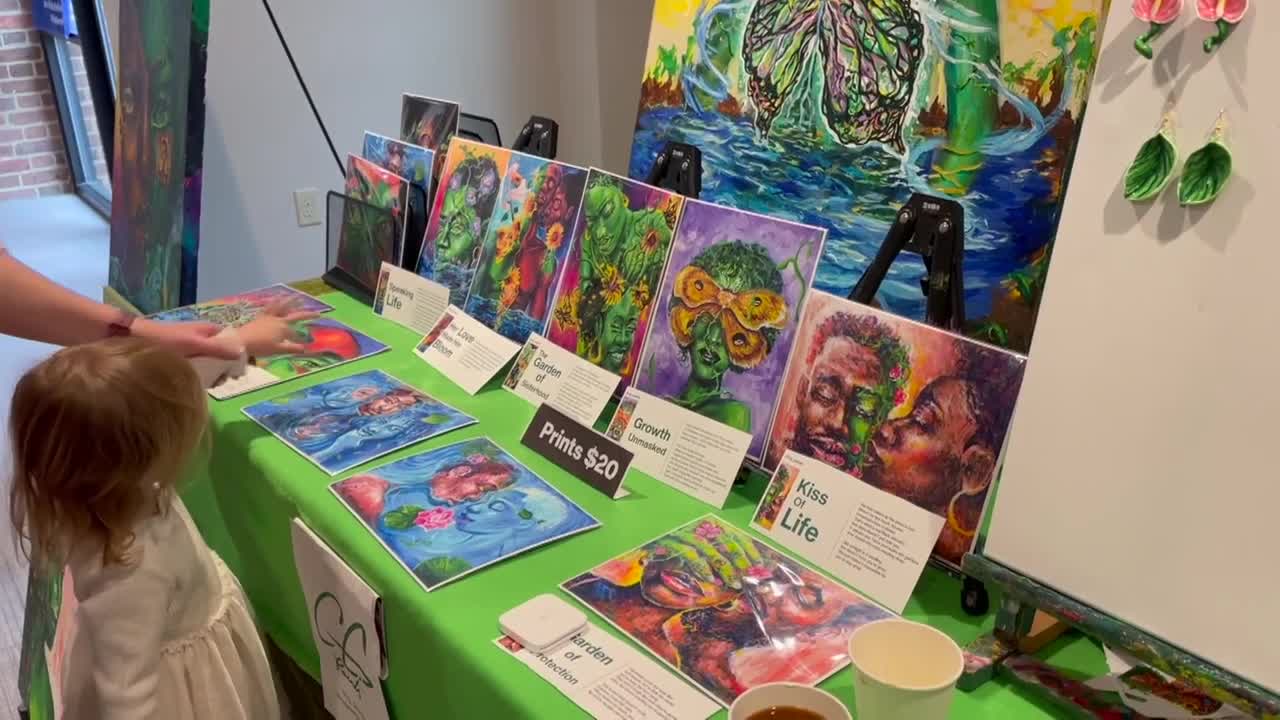
Vendors from across the community offered jewelry, clothing, books, artwork, and face painting, turning the sanctuary into a cultural and economic hub.
Chappelle said the goal is not only to celebrate Kwanzaa but also to support local businesses and keep money circulating within the community.
“It’s important for people to be here because this is the time of year when we come together to acknowledge the seven principles of Kwanzaa,” she said. “It’s also a time to develop cooperative economics by bringing community entrepreneurs into this space so people have the opportunity to shop with them.”
Kwanzaa is a nonreligious African American cultural celebration created in 1966 by Maulana Karenga during a period of racial unrest in the United States.
Observed from Dec. 26 through Jan. 1, it centers on seven principles, including unity, self-determination, cooperative economics, and faith.
Chappelle said the Virginia Beach celebration is about affirmation and identity as much as tradition.
“Kwanzaa is an African American celebration, a time for affirmation,” she said. “It’s a way for us to look inward, celebrate ourselves, recognize our self-determination, honor our contributions to society, and reaffirm our faith in God and in the community.”
Organizers said they hope events like this continue to grow, giving more families, especially children, opportunities to learn about Kwanzaa and see Black culture and entrepreneurship reflected in their own community.
