

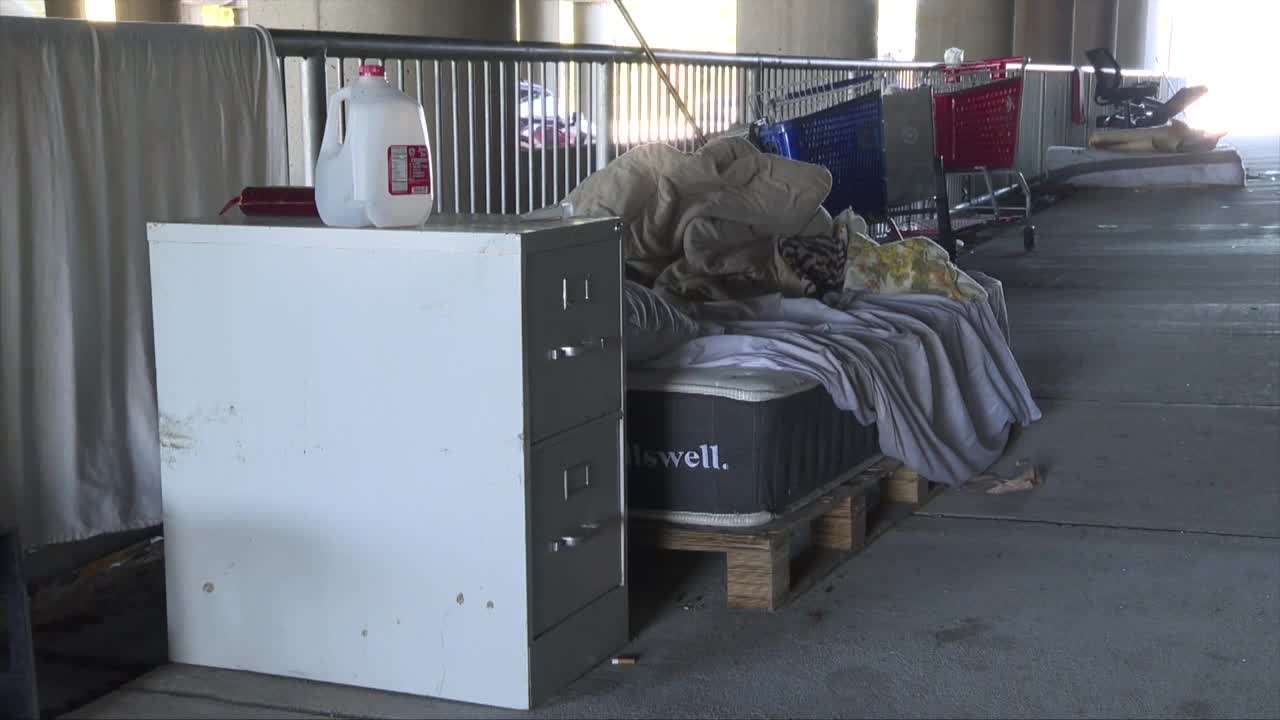


VIRGINIA BEACH, Va. — New data from Virginia Beach shows seniors and minority groups are making up a growing share of the city's homeless population, reflecting national trends that have housing experts concerned.
Virginia Beach's next Point-in-Time Count happens January 29, 2026 — a yearly snapshot of how many residents are living without stable shelter. This year's early numbers show 327 people experiencing homelessness, up from 311 in 2024.
The concern isn't just the increase — it's who is being impacted. National research from the U.S. Department of Housing and Urban Development and the Government Accountability Office shows the same pattern happening across the country. Seniors are the fastest-growing homeless group nationwide, and minorities remain disproportionately represented due to long-standing inequities in income, housing access and health.
Pamela Shine oversees the city's Homelessness Division within Housing and Neighborhood Preservation and says those national trends are showing up locally, too.
"Last year the trend was a very troubling one where we are seeing an increase in seniors experiencing homelessness… and we have consistently seen minorities being represented disproportionately in our homeless numbers as well," Shine said.
In Virginia Beach, seniors now make up 28% of people experiencing homelessness, and minorities account for 53%. Federal housing researchers link these trends to rising rents outpacing fixed incomes, limited accessible affordable housing and higher displacement rates in minority communities.
Even with those challenges, the city says the long-term picture shows progress.
"When you look at our PIT numbers in a longer span of time over 10 years we have reduced our overall numbers by 16%," Shine said.
Shine credits that to a coordinated, systematic approach — a strategy national housing experts say is key.
"So we have a systematic response to homelessness that involves a community of resources — housing is one of them, shelter, transitional housing — that we place individuals in to resolve their homelessness," Shine said.
Part of that approach includes the winter shelter program.
"A warm safe place for individuals to sleep overnight that are experiencing unsheltered homelessness. It is operated by a local nonprofit, Penn Ministry, in partnership with about 20 to 30 churches," Shine said.
The city invests most of its funding into long-term housing — a strategy backed by national data from HUD and the University of California, San Francisco. This year, Virginia Beach received roughly $2.3 million in federal funds and just over $500,000 in state support, with 98% of federal dollars going directly toward housing opportunities.
Shelters stay nearly full year-round — similar to trends in cities nationwide.
"We maintain about a 2% vacancy rate in our shelter," Shine said.
As the Point-in-Time Count approaches, Shine says volunteers remain essential, and federal agencies agree accurate counts shape future funding.
"They are extremely critical to the implementation and execution at the Point-in-Time Count," Shine said.
to volunteer for the PIT Count go to https://housing.virginiabeach.gov/ending-homelessness/point-in-time-count-volunteer-registration
