



JOINT BASE LANGLEY-EUSTIS, VA — Joint Base Langley-Eustis is undergoing major infrastructure upgrades to protect its most valuable assets from extreme weather. The dual-focused initiative targets both the immediate health of the base's military working dogs and the long-term survival of its historic airfield against rising sea levels.
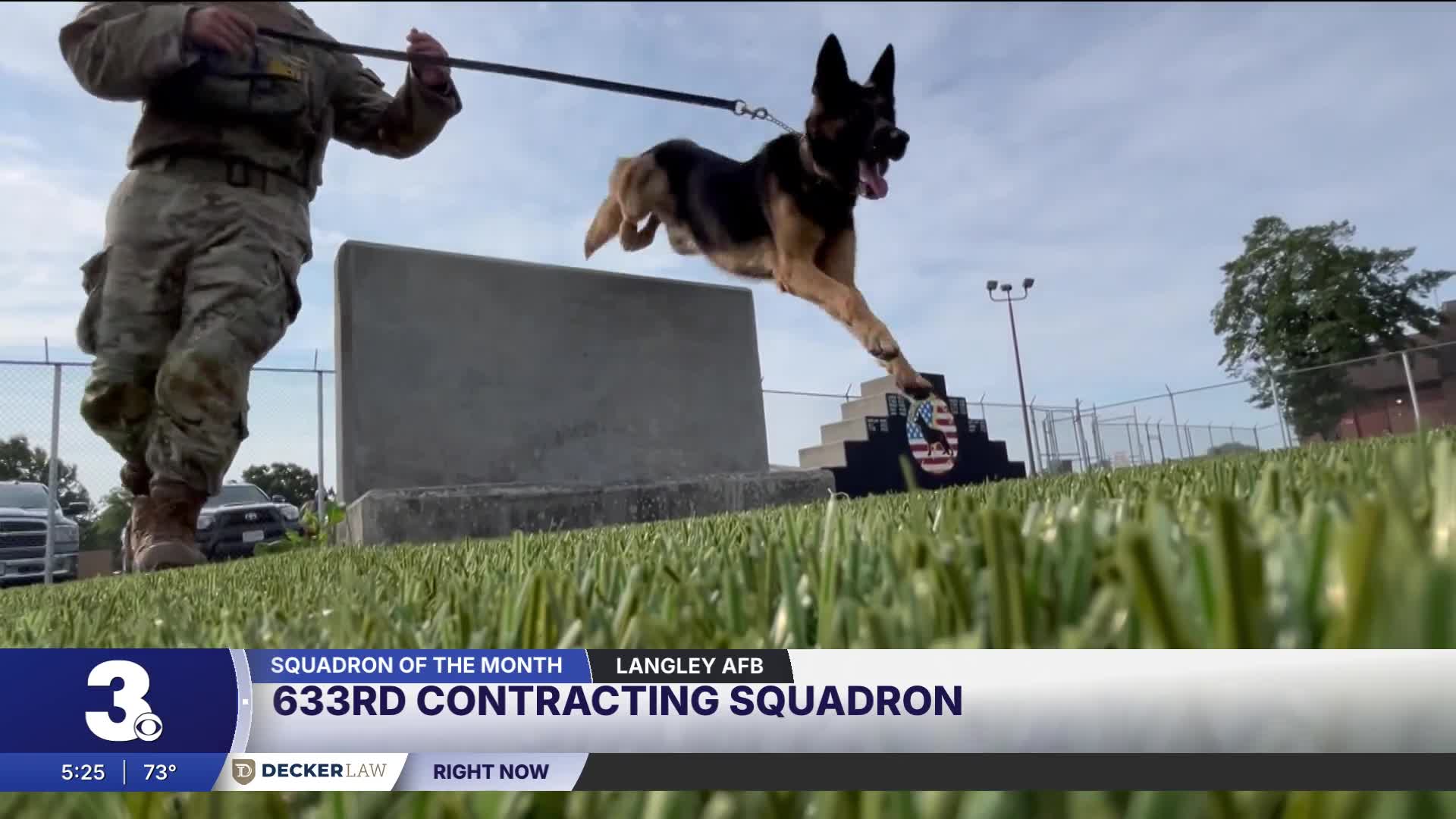
Military working dogs serve as the essential eyes and ears of base security, performing critical detection and patrol duties that technology cannot replicate. However, intense summer weather in Virginia poses a constant threat to these four-legged service members.
"In the Hampton Roads area, you're looking at 95- to 105-degree heat indexes in the summer," said Leeper, a spokesperson for the project. "The humidity is tough. We identified a requirement that would help support their success, their efficiency."
Watch related coverage: Meet the civil engineers who keep Langley Air Force Base mission-ready
To combat the dangerous heat waves, the 633rd Contracting Squadron is managing a massive overhaul of the installation’s aging kennel facilities. Construction crews are currently:
- Gutting old concrete structures.
- Expanding the overall footprint for more space.
- Installing state-of-the-art climate control systems.
"When you have a healthy dog, when you have a happy dog, you have a successful dog," Leeper added. "And these military working dogs are the product of that."
The elements are not just threatening the animals on base; they also jeopardize the flight line. At the east end of the runway, a 110-year battle against rising sea levels is reaching a critical turning point.
The vulnerability of the area is well-documented. During Hurricane Isabel in 2003, the runway was completely submerged under floodwaters. Today, the base is fighting back against the receding shoreline with an innovative new defense system.
Watch related coverage: Airmen at Langley Air Force Base find spiritual support through chaplain corps
"We came up with a project... we call them WADs," Leeper explained. "They're Wave Attenuation Devices. And these pieces of equipment, more or less, are concrete pyramids that are hollow."
How they work:
- Placement — Placed just off the coast in the water.
- Wave Absorption — The hollow concrete pyramids break the energy of incoming waves.
- Sediment Trapping — The design traps sand and silt behind the barriers.
- Natural Growth — Rebuilds the beach naturally by up to a foot each year.
- Habitat Creation — Provides a safe haven and sanctuary for local marine wildlife.
The coastal defense project highlights a unique partnership between military personnel and the local economy. While local small businesses are manufacturing the hollow concrete pyramids, Langley's own Civil Engineer Squadron will physically deploy them into the water.
Watch related coverage: Sundown for Norfolk helicopter squadron marks emotional chapter in Navy history
"When it's all said and done, this will be really an installation-led endeavor that helps the community, helps the environment, and helps our installation—really the warfighter," Leeper said.
From protecting the coastline to safeguarding the K-9 units, Joint Base Langley-Eustis is proving that securing the ultimate military mission starts with securing the base itself.
