

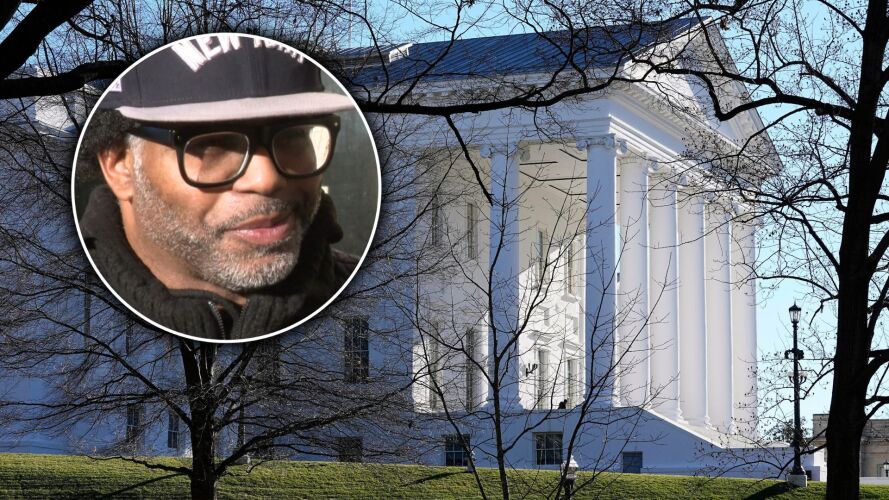


RICHMOND, Va. — A subcommittee within the House of Delegates held a hearing Monday to consider a bill to pay a Norfolk man $1.3 million for over 20 years of wrongful incarceration — during the hearing, lawmakers voted unanimously to move the compensation measure forward.
Messiah Johnson, 52, was convicted of the armed robbery of customers inside Recas Hair Salon on 35th Street in Norfolk back in 1997. He maintained his innocence throughout his incarceration.
No one was killed or injured during the robbery at Recas. There was no DNA evidence linking Johnson to the crime, and three people confirmed he was somewhere else during the robbery. Court records revealed the victims could not describe to police what the robbers looked like.
However, two weeks after the robbery, one of the victims identified Johnson as the robber after seeing him at night from a distance leaving a club.
Watch related coverage: Norfolk man who spent 20 years in prison has record expunged after decades-long fight to prove innocence
In 2018, the work of attorneys with the University of Virginia Innocence Project led to a conditional pardon from then-Governor Terry McAuliffe. McAuliffe wrote that "credible evidence exists that support Mister Johnson's claims of being innocent."
After subsequent governors Ralph Northam and Glenn Youngkin didn't issue an absolute pardon, Johnson's attorneys filed a "writ of actual innocence."
In summer 2025, the Virginia Court of Appeals said Johnson was already "absolutely pardoned of the offenses" because he "satisfied all of his conditions" of his conditional pardon, including completing a re-entry program and three years of supervised release.
Watch previous coverage: Messiah Johnson released from prison
Prosecutors said they supported Johnson's expungement in Dec. 2025, as did Judge David Lannetti.
"Hopefully, this is some minor makeup for this mistake that was done," Lannetti said.
Juliet Hatchett, a director of the UVA Innocence Project, said Johnson's case sets a precedent, but it's too early to know if others who've met the terms of their conditional pardons now also have absolute pardons. An absolute pardon is important because it paves the way for wrongful incarceration compensation from the state.
"Then there [was] a hopelessness. You don't know if anybody's going to be there, to actually hear your voice. And that's an arduous journey," Johnson previously told News 3.
In the meantime, Johnson had been focused on growing the trucking business he built after his former felony record kept him from getting other jobs.
Johnson's record was expunged in Dec. 2025. There will be several additional steps before the General Assembly will have the opportunity to approve the compensation for Johnson.
