

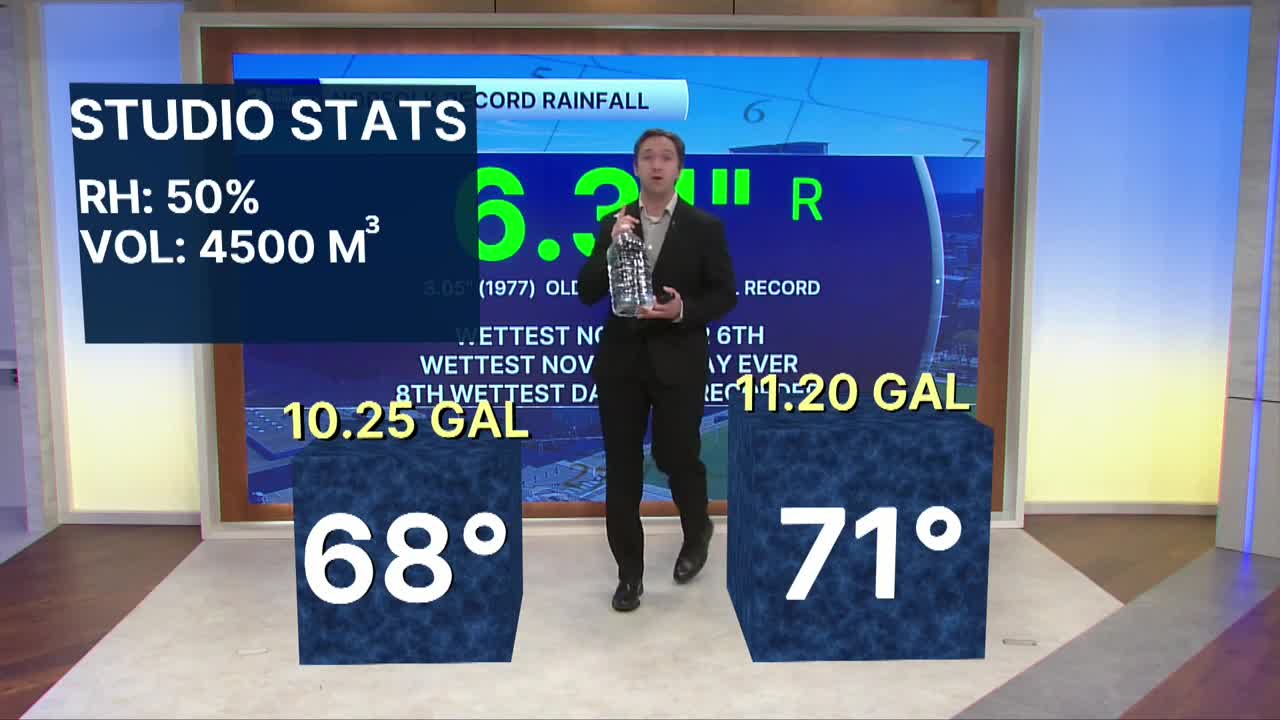


NORFOLK — Around six inches of rain fell in just 12 hours across parts of Norfolk, Portsmouth and Suffolk on Friday, following nearly three weeks without rain.
The downpour cut Norfolk’s 2026 rainfall deficit roughly in half, but it wasn’t enough to end the drought.
A warmer climate can increase the amount of moisture available during storms.
“Our atmosphere and our coastal waters are inarguably higher than they were about forty, fifty years ago,” said Mike Montefusco, lead forecaster with the National Weather Service in Wakefield. “So certainly there is more moisture with which to deal with.”
Climate change did not directly cause Friday’s flooding, but warmer air can hold more moisture, increasing the potential for heavier rainfall.
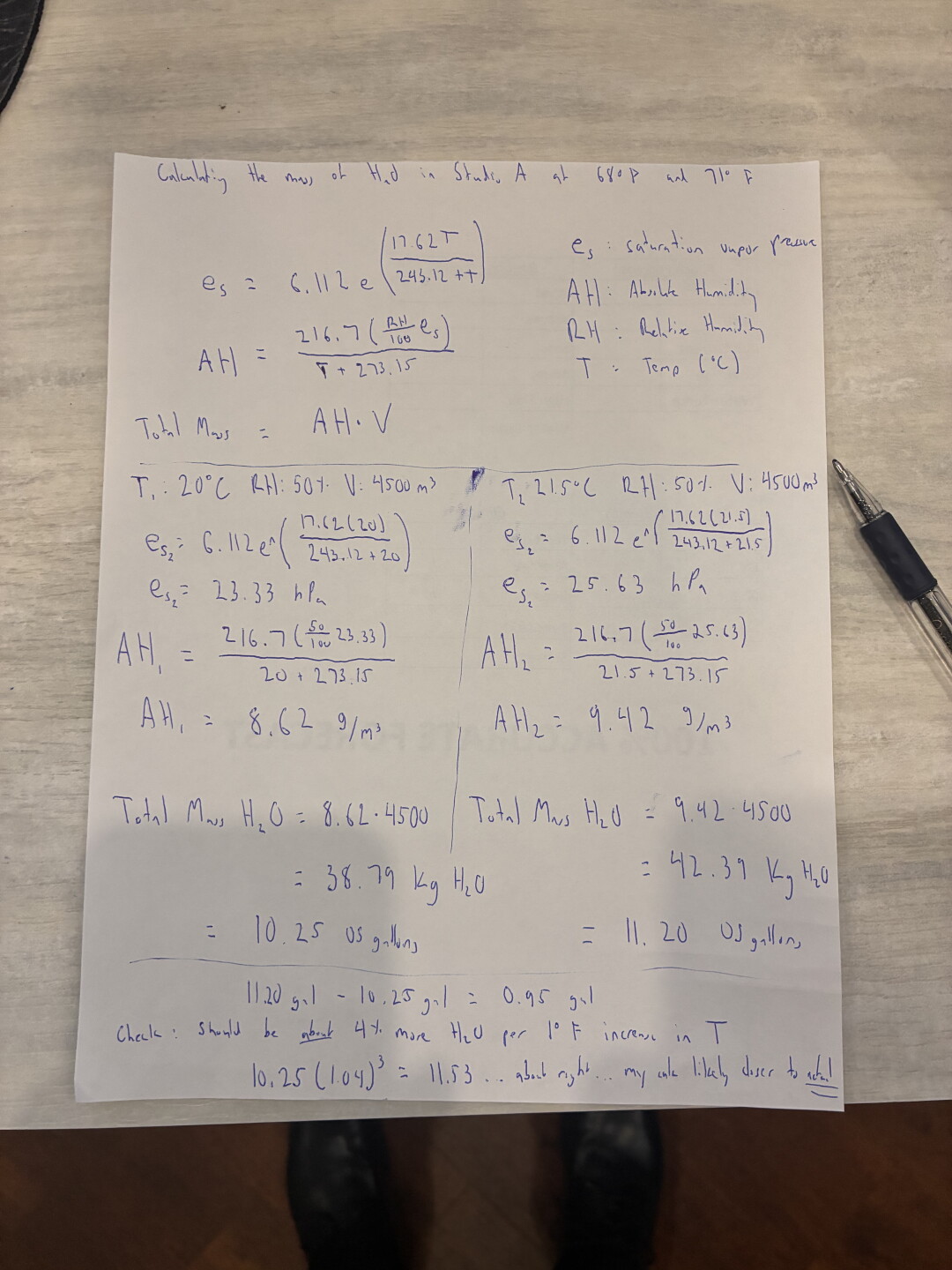
Just a 3 degree temperature increase in our own studio with a relative humidity of 50% means a gallon more water in the air (see calculation below). On an atmospheric scale that means much more moisture. In turn, flooding rains are easier to come by.
Still, one major rain event isn’t enough to erase a drought.
“What we need is those incremental rainfalls, like daylong rainfalls,” Montefusco said.
When several inches fall in only a few hours, much of the water becomes runoff instead of soaking into the ground or replenishing reservoirs.
Despite Friday’s rain, Norfolk remains well below its normal rainfall total for this point in the year, and drought conditions are likely to continue into next week.
Click here to see how we use AI at WTKR News 3.
