



CHESAPEAKE, Va. — Karen Collins was 37 when she woke up from what was supposed to be a routine appendectomy in 2018, only to discover her Richmond gynecologist had removed her only remaining ovary without her consent.
"I am just a statistic at this point," Collins said. "They can't put an ovary back in me."
For years, the Caroline County woman has fought for new legislation in the Virginia General Assembly. Senate Bill 708, introduced by state Sen. Richard Stuart on Jan. 14, would require doctors to obtain both oral and written informed consent before performing hysterectomies or oophorectomies.
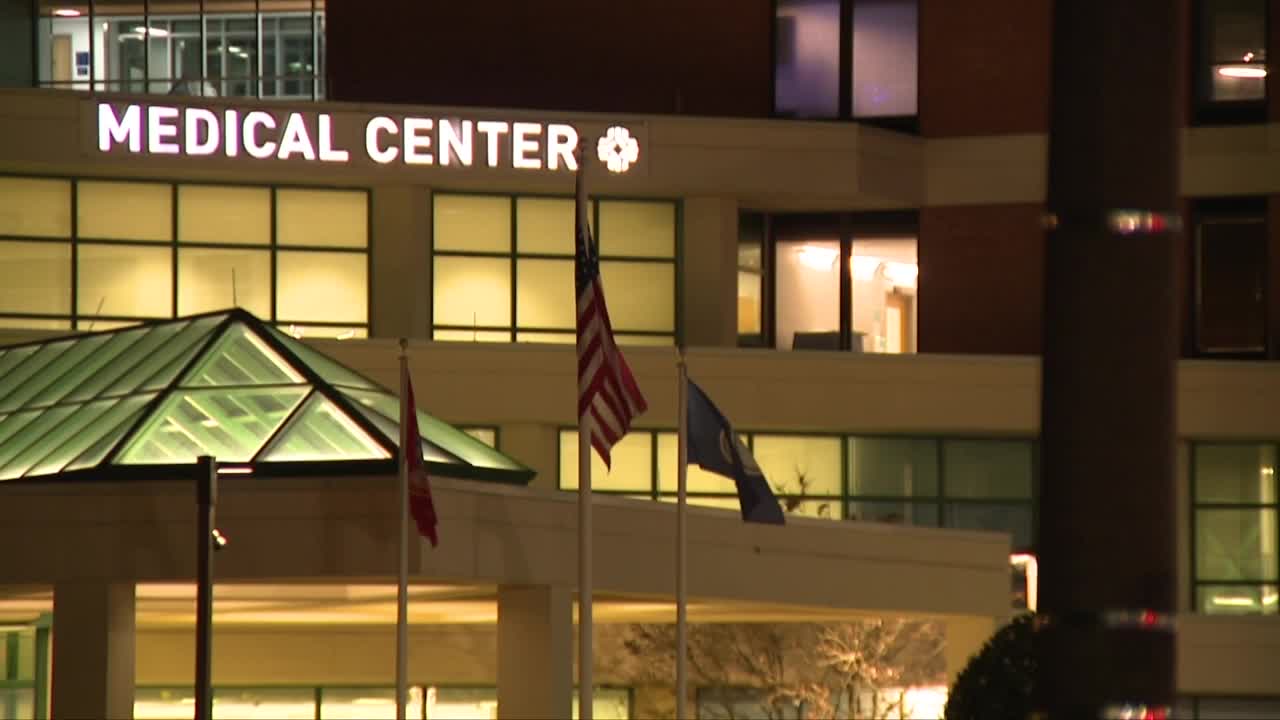
Collins reached out to Chesapeake Neighborhood News Reporter Erin Holly after learning about more than 600 women suing Chesapeake Regional Medical Center over unnecessary and harmful gynecological surgeries performed by former doctor Javaid Perwaiz, who is now in federal prison.
Watch related: Victims share stories as lawsuit against Chesapeake Regional grows to over 600 women seeking $6 billion
Surgery without consent
Collins went to the emergency room in 2018 experiencing severe right-side abdominal pain. ER doctors suspected chronic appendicitis and referred her to a general surgeon for a possible appendectomy.
Her gynecologist requested to be present during the surgery due to Collins' history of endometriosis-related pain. Collins signed separate consent forms - one for the possible appendectomy and another allowing her gynecologist to perform a diagnostic laparoscopy to check for endometriosis.
"I trusted both doctors," Collins said.
The consent form with her gynecologist specified only diagnostic procedures and possible removal of endometriosis adhesions. Collins had explicitly discussed with her doctor that she did not want her left ovary removed.
"At this point, this was my only ovary that I had left, and it was on the left side, completely opposite side of where I was experiencing the pain," Collins said. "My previous discussions at length with my doctor was that I didn't want my ovaries removed because I was in my 30s and I didn't wanna be in menopause."
When Collins woke up in recovery, the general surgeon informed her that her ovary had been removed. Her gynecologist had already left the hospital.
"For lack of a better term, I became kind of hysterical," Collins said. "I was very distraught, and the nurse on call actually had to call my OBGYN on the phone to kind of help calm me down."
Immediate menopause and lasting impact
The removal of Collins' only ovary sent her into immediate, surgically-induced menopause.
"It was immediate, within days of the surgery," Collins said. "What I experienced was astronomically worse than anything I could have imagined."
Collins has been on hormone replacement therapy for several years but says she doesn't feel like she did before the surgery.
The experience has taken a severe toll on her mental health.
"Really, the only way to describe it has been, it's life-altering and it's devastating, especially because this was a doctor that I had been a patient of for many years," Collins said. "I had trusted emphatically."
Collins had undergone a partial hysterectomy in 2016, during which her right ovary was removed. While she wasn't planning to have more children, the removal of her remaining ovary eliminated any future reproductive options, including surrogacy.
"He didn't have my permission to take it, and in doing so, he did essentially permanently sterilize me and send me into surgically-induced menopause while I was in my 30s," Collins said.
Legal battle and systemic issues
Collins sued her doctor in Hanover County court, but a jury found in the doctor's favor in 2023. The doctor continues to practice in Richmond.
During the trial, the defense argued that fine print in hospital consent forms gives doctors permission to perform additional procedures if deemed necessary.
"I've always understood that fine print to mean in emergency situations, if they accidentally nick an artery and they need to repair it, that gives them your consent to proceed with things that would be an emergency situation or a life-saving situation," Collins said. "I would have never imagined that somehow gives permission for a doctor to make decisions about removing completely separate body organs."
The case highlighted problems with informed consent requirements, which currently don't have to be documented in writing.
"When it gets to court, it becomes, when there's no medical documentation, it's essentially the patient's word against the doctor's word," Collins said. "Statistically speaking, in medical malpractice cases, the doctors almost always are successful in court."
Proposed legislation
SB 708 aims to address these consent issues by requiring detailed written consent for hysterectomies and oophorectomies, with exceptions only for life-threatening emergencies.
"What I'm hoping with this bill is that anytime that there's going to be a surgery that involves removing a woman's reproductive organs, there needs to be detailed written consent given," Collins said.
The bill would also standardize the information provided to women before these surgeries across Virginia.
"I didn't give consent, and what the bill does is makes it so that there has to be a written consent given, even if there's a possibility, the rarest of possibilities that an ovary or a uterus is going to be removed," Collins said.
Connection to broader pattern
Collins' story emerged as hundreds of women are pursuing legal action against Chesapeake Regional Medical Center over unnecessary surgeries performed by Javaid Perwaiz, who was sentenced to federal prison for healthcare fraud.
"Throughout my trial, I think I thought that what happened to me was just a terrible anomaly," Collins said. "I couldn't imagine it happening to other women. I would have never imagined that it was happening on that great of a scale."
After learning about the Perwaiz case, Collins realized the problem was more widespread than she initially thought.
"Even if there's just a few bad doctors out there that are doing this, the number of victims could be much larger than we now know," Collins said.
What's next
SB 708 is currently in a Senate committee and is expected to be referred to a subcommittee. Collins encourages women who have had similar experiences to provide testimony in person during subcommittee meetings or send written comments to individual committee members.
"My focus is making sure that it doesn't happen to other women," Collins said. "I don't want another woman to basically be ignored because somebody doesn't think that her ovary has value."
Collins hopes her story, combined with the experiences of Perwaiz's victims, will demonstrate to legislators that stronger consent protections are needed. If you would like to submit a testimony, you can do so by emailing committeeoperations@senate.virginia.gov prior to the day of the meeting. For updates on Senate Committee meeting days and times, click here.
"Consenting to one surgery doesn't give a doctor a free pass to do surgeries years later that essentially make a decision about a woman and her reproductive organs that should only be her decision," Collins said.
This story was reported on-air by a journalist and has been converted to this platform with the assistance of AI. Our editorial team verifies all reporting on all platforms for fairness and accuracy.
