

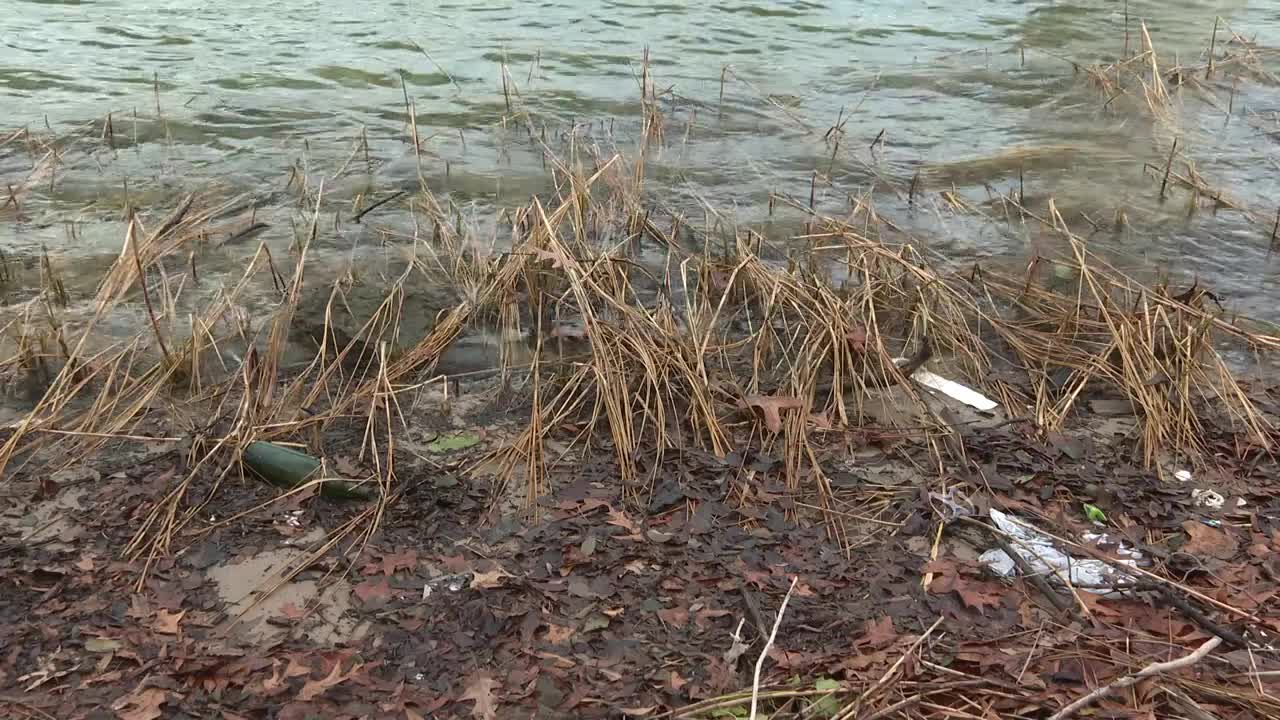


HAMPTON, Va. — In the near future, the shoreline along the Hampton River near the Hampton University Marina could look a lot different.
Dr. Deidre Gibson chairs Hampton University’s Marine and Environmental Science Department and will be teaching students how to turn the area into a living shoreline.
Watch: Hampton oyster shell recycling, building living shorelines combat 'D+' State of the Bay grade
“I know that we have student interest, and it’ll be an opportunity that they can do research right on campus," said Gibson. "Our students have, it’s a requirement, that they complete a senior thesis. My plan is that the senior thesis will revolve around this shoreline."
Living shorelines help stabilize shorelines and prevent erosion. They typically include a protective barrier in the water and wetlands built on the land behind it. The new course is funded by a grant and is a continuation of work the Chesapeake Bay Foundation has been doing with Gibson's department to study the Hampton River.
Watch: Elizabeth River Project receives $2M grant to build living shorelines in Norfolk
“The students will actually design this particular shoreline for how Hampton University wants to do their research," Chesapeake Bay Foundation Hampton Roads Urban Restoration Coordinator Kati Grigsby said. “Wetlands are the kidneys of the environment. They’re the last line of defense before stormwater runoff and everything like goes into our river systems.”
The course will be based on a program designed by Wetlands Watch, a nonprofit in Norfolk.
Watch: Hampton University expanding workforce development program
“We were trying to increase the supply of contractors who were qualified to do smaller scale, low energy living shorelines to meet the demand from nonprofits and citizens," said Wetlands Watch Operations Director Stacie McGraw.
As of March 24, Hampton University was scheduled to start the class in the fall. Gibson planned to submit paperwork to make it an official course after the fall semester.
