

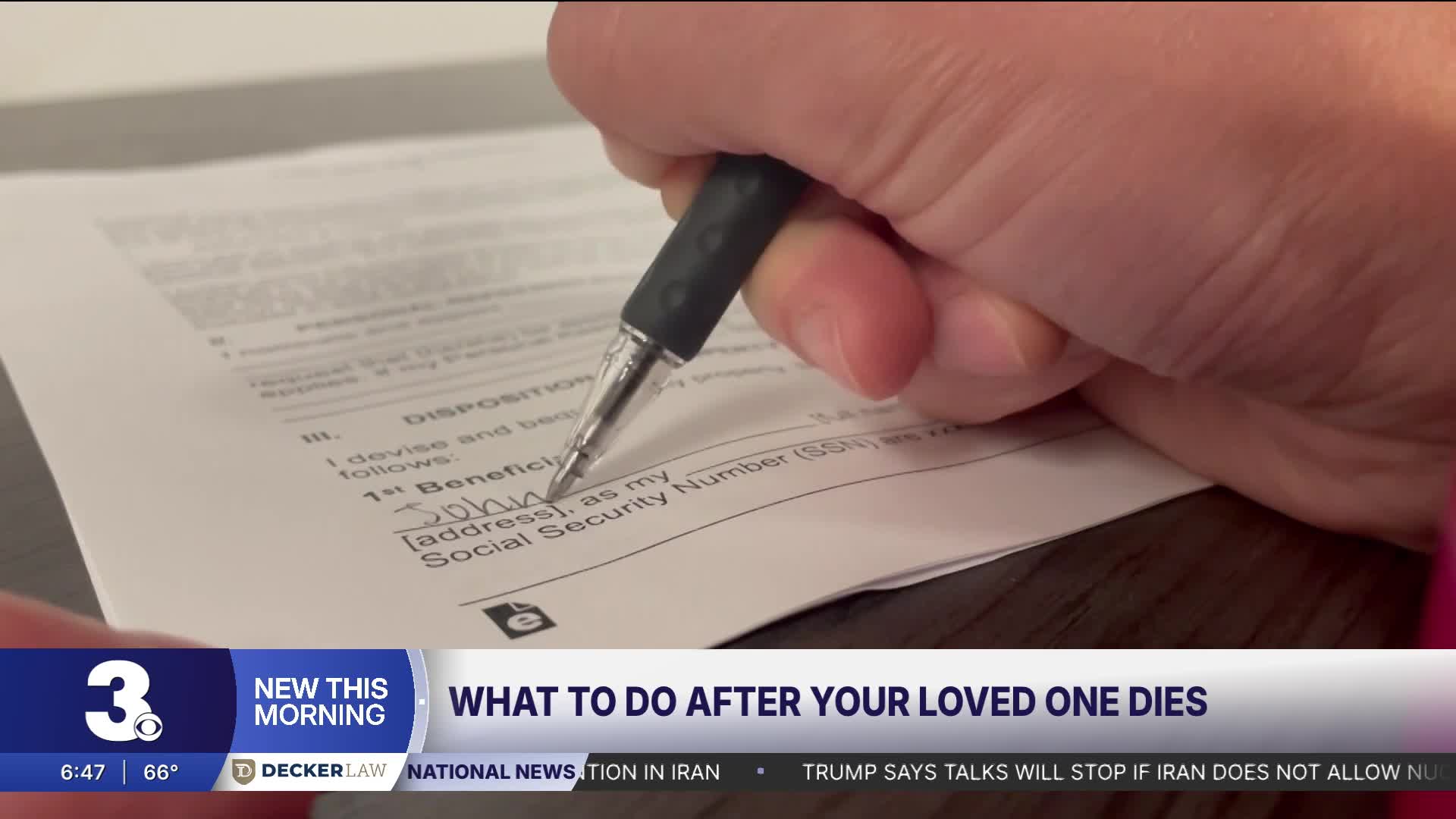


NORFOLK, Va. — Losing a loved one is overwhelming — and the administrative tasks that follow can make grief even harder to bear.
Emily Roberts, a Chesapeake resident, knows that firsthand. Her father died unexpectedly, leaving her and her siblings to sort through their dad’s estate.
"My brother and sister and I over the past year have felt kind of ebbs and peaks of how overwhelmed we are based on kind of what's going on and where we've been in the process," Roberts said.
The process began with identifying her father's assets — bank accounts, insurance policies, and retirement plans.
"I think the very first thing we did was pull out the binder that his estate attorney had given him that, you know, had a list of his assets," she said.
Even though he had a will and a trust, the family still ended up in probate court.
"Though he had a trust and a will not everything was titled properly, so we ultimately still had to go through probate," Roberts said.
Stephanie Himel-Nelson, an estate planning attorney at Jennifer Porter Law in Norfolk, said probate is a court-overseen process of transferring assets from the deceased to their loved ones — and it can be both cumbersome and expensive.
To help families avoid unnecessary complications, Himel-Nelson recommends asking yourself three questions immediately after a loved one dies.
"Do I have a copy of the death certificate? And that seems pretty harsh like right away, but that's an important document to have. You're going to need at least 10 certified copies of that because everyone wants an original, " she said. "Next, you want to ask yourself, is there a will? Is there a trust? And importantly, do I know where to find it? Then last, ask yourself, who do I need to notify right now?"
Himel-Nelson said the Social Security Administration should be at the top of the notification list, so you don’t have to refund payments down the road.
She also recommends pulling a credit report for the deceased to uncover accounts that may not be immediately known. Executors and legal representatives of an estate can request that report directly from the credit bureaus.
Himel-Nelson said there are some things that catch families off guard.
"I think the number one thing that shocks people is Medicaid recovery," she said. "If you have a loved one who's receiving Medicaid care right now for maybe long-term care or something like that, after death, Medicaid will recover those assets from the estate, and a lot of people are shocked at that."
Himel-Nelson said clients are also surprised by beneficiary designations.
"Anything you have as a direct beneficiary on your bank account, on your real estate, on your retirement account, overrides whatever you have in your will. And so sometimes family members can be a little surprised at that because they're like, but I'm named in the will, but I didn't get any of the life insurance or the retirement accounts."
Roberts said her family discovered that assets like airline miles and credit card points can be transferred back to the estate. They also found that using artificial intelligence to draft initial documents — before having an attorney review them — saved both time and money.
"We found AI to be very helpful in terms of drafting initial copies of documents and then letting the lawyer review them, that I think has saved us some billable hours and has been pretty successful," Roberts said.
Her advice to others facing the same situation: prepare now and make sure beneficiary designations are current.
"Just try to be as prepared as you can and make sure that you've got the beneficiaries listed correctly so that you can avoid probate if at all possible," Roberts said.
Click here for more information from the Virginia Court Clerks’ Association about probate in Virginia.
This story was reported on-air by a journalist and has been converted to this platform with the assistance of AI. Our editorial team verifies all reporting on all platforms for fairness and accuracy.
Click here to see how we use AI at WTKR News 3.
