



NORFOLK, Va. — Artificial intelligence is changing how doctors detect heart disease, and a new platform at Sentara Health is helping physicians identify dangerous blockages before they become life-threatening.
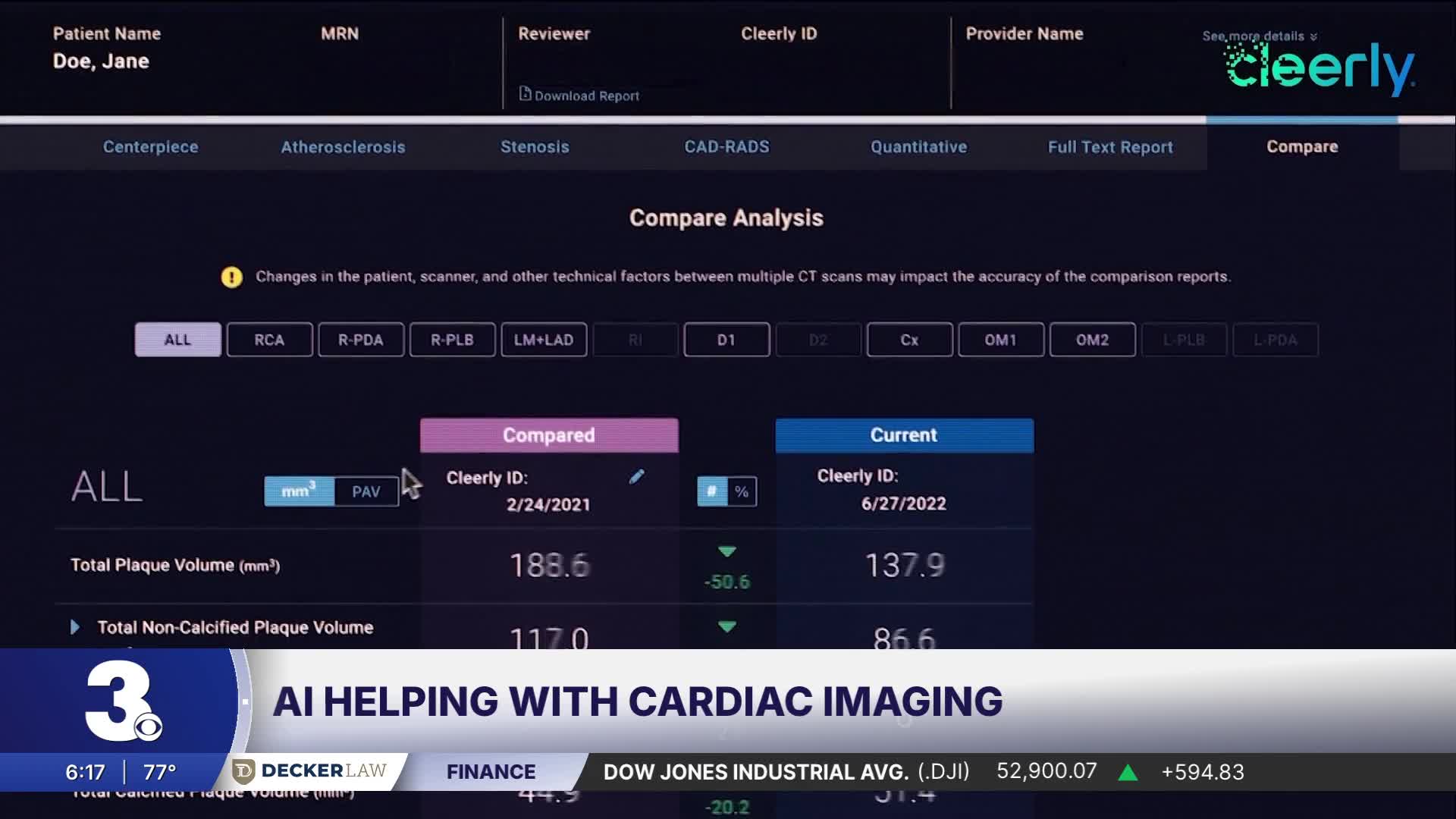
The technology, called Cleerly, analyzes CT scans and gives cardiac specialists a detailed picture of what is happening inside a patient's heart — including how much plaque is present and where.
Dr. Manik Veer, a cardiac imaging specialist at Sentara Health, said the AI platform processes the scan and returns critical data to his team.
"When we send [Cleerly] this picture, they give us back a percentage of stenosis," Veer said.
The AI determines whether a blockage is serious enough to cut off blood flow to the heart. Veer said the tool adds an important layer of information to the diagnostic process.
"On our end, we're able to see a model of the heart that the AI produces, and we're able to click on each individual vessel to look at whether what we saw on the CT is really what we see over here," Veer said.
"This is one more data point that helps us decide if the disease could be the cause of the chest pain that [a patient is] having," Veer said.
The best candidates for the scan are patients who are already experiencing symptoms, Veer said.
Jennifer Roland, director of patient care services for imaging at Norfolk General Hospital, helped bring the technology to the facility, and in turn other Sentara hospitals.
"Our goal was to find something that could help us distinguish between patients that would go for immediate intervention and those that needed medical management," Roland said.
A peer-reviewed study published in the European Heart Journal – Cardiovascular Imaging found that adding AI plaque analysis reduced the need for additional invasive testing by 37% and use of preventive medications by about 28%.
Roland said the technology reflects what patients are increasingly expecting from their care teams.
"This is what patients are asking for. They're really looking for those that are using the most advanced tools to give them the best clinical outcome," Roland said.
Veer said many patients do not realize they could have underlying heart disease, even without obvious symptoms, and encouraged people to speak with their doctors.
"Just because we're not having that conversation does not mean something is not real. Those things are real. They're happening in the background. Go to a physician, have that conversation," Veer said.
Roland said Sentara is working toward offering the scan in a self-pay model by 2027 for patients who want it but do not qualify under insurance.
This story was reported on-air by a journalist and has been converted to this platform with the assistance of AI. Our editorial team verifies all reporting on all platforms for fairness and accuracy.
Click here to see how we use AI at WTKR News 3.
