

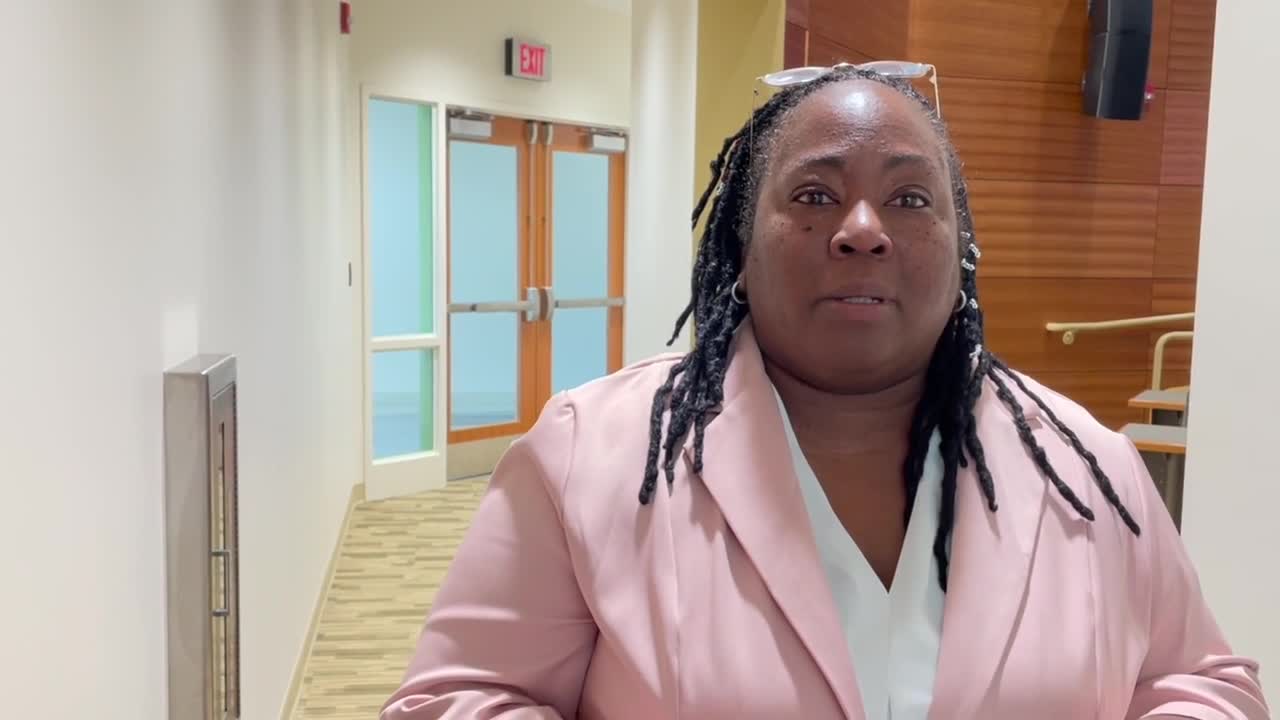


NORFOLK, Va. — Health professionals and advocates gathered for the second annual Black Maternal Health Equity Action Conference this week, using the observance of Black Maternal Health Week to spotlight disparities and push for solutions to improve outcomes for Black and Brown mothers.
Held as part of the national awareness week from April 11 to 17, the conference brought together doctors, nurses, social workers, and midwife advocates to address inequities in maternal health care and outcomes.
Sessions covered a wide range of topics, including the history of midwives and doulas, prenatal mental health, infertility, and the importance of support systems during pregnancy and beyond. A key focus was the role of partners and community support, often referred to as a “village,” in improving maternal health experiences and outcomes.
Teresita Hammond, a labor and delivery nurse and patient experience and community outreach coordinator at Sentara Norfolk General Hospital, said the event emphasized both education and action.
“What happened today was an amazing conference that talked about our bodies, our rights, our minds, our birth, and it really connected with our past, future, and present,” Hammond said.
Hammond said discussions also highlighted data showing persistent disparities in maternal health, particularly for Black women.
“This week is important because it highlights Black maternal health and the crisis that is happening throughout the United States,” she said. “It puts a spotlight on the health inequity gaps that are there for Black women everywhere.”
According to Hammond, Black women in the United States are dying at significantly higher rates during pregnancy and childbirth compared to white women, a disparity she says must be addressed before broader progress can be made.
“Black women are dying two to three times more than white women,” she said. “Until we fix those that are hurting the most, we cannot move on as a society.”
The conference also explored ways healthcare providers can better support patients, including improving communication and building trust. Hammond said it is critical that patients feel heard, safe, and believed, especially when providers may not share the same lived experiences.
“You can’t walk in their shoes, but you can walk beside them,” she said. “You can be an advocate for them, and that is important.”
Another key takeaway focused on infertility, with experts noting that challenges are not solely tied to women. Hammond said discussions emphasized that both partners should be evaluated, pointing to data suggesting male factors contribute to infertility in a significant number of cases.
Organizers say events like this are designed to spark conversations, share resources, and ultimately close the gap in maternal health outcomes.
Several activities and community events are scheduled throughout the week to continue raising awareness and connecting families with support.
- April 14: Birthing Monologues at ODU and the CINCH Community Awards
- April 16: Sentara VIP Cocktail Event at Norfolk Botanical Gardens
- April 18: Sentara Community Day at Norfolk Botanical Gardens
This story was reported on-air by a journalist and has been converted to this platform with the assistance of AI. Our editorial team verifies all reporting on all platforms for fairness and accuracy.
Click here to see how we use AI at WTKR News 3.
