



NORFOLK, Va. — A January 1776 issue of the Virginia Gazette told a gripping story: British warships bombarding one of the largest cities in colonial North America, flames consuming it and defiant patriots holding their ground.
"Notwithstanding this heavy firing, and the town in flames around them, our men had the resolution to maintain their posts..." the January 6 issue read of the scene five days prior.
It was a powerful image of the destruction of Norfolk — and, for the most part, a carefully crafted one.
A passage in the Declaration of Independence — signed 250 years ago this week — references towns 'burnt' by the British, which many people is a reference to Norfolk.
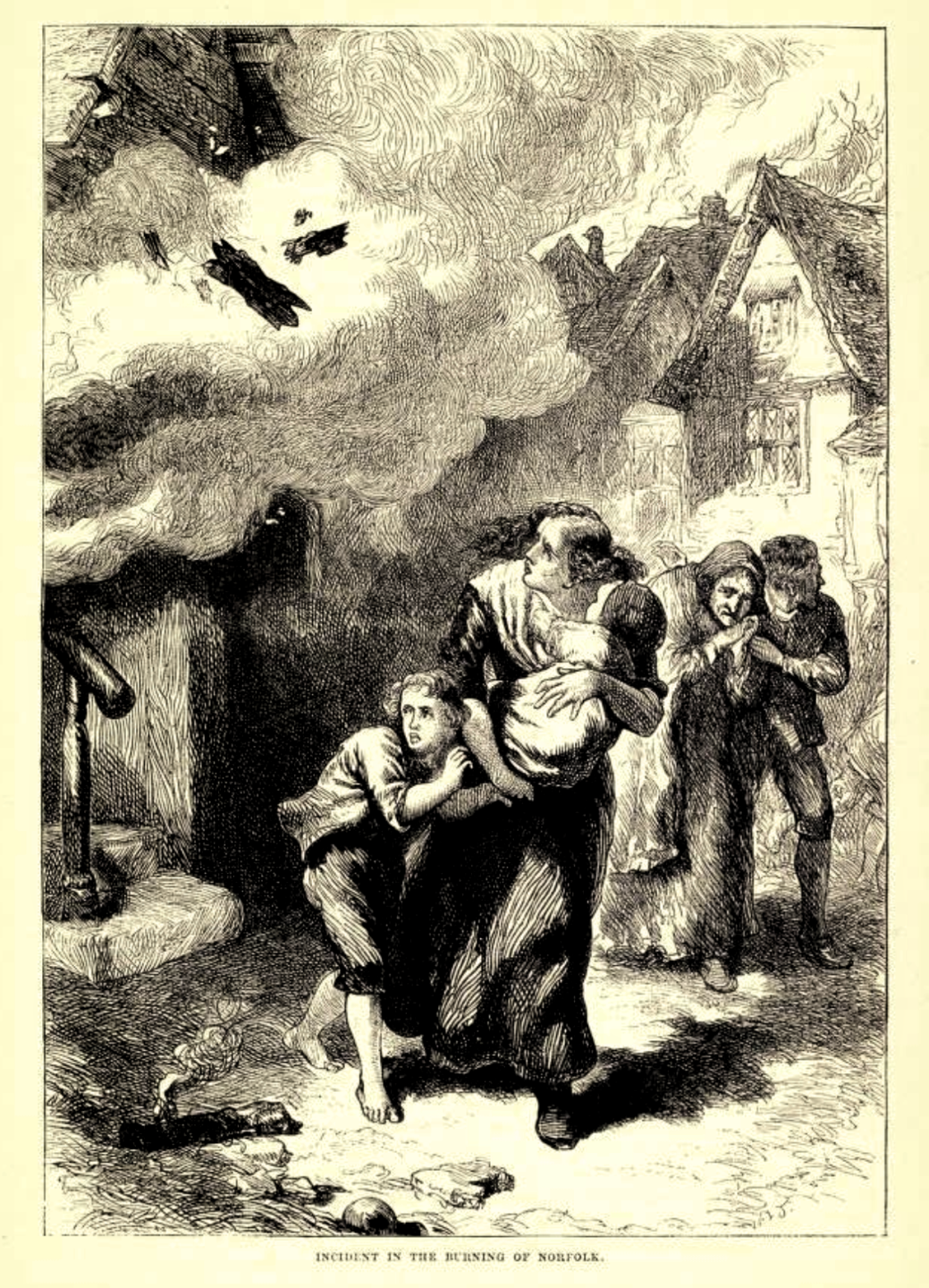
An 1777 investigation would later find that 96% of Norfolk was burned by Patriot action, not British forces. What the Virginia Gazette framed as an act of British tyranny was, in large part, a calculated military decision made by American commanders and the Patriot government of Virginia.
"The story of the burning of Norfolk is really part of a larger story of the campaign to liberate Virginia from royal colonial governance," said Patrick Hannum, a retired Marine and retired professor from National Defense University's Joint Forces Staff College in Norfolk.
Hannum, whose ancestors fought in the American Revolution, has spent decades studying the burning of Norfolk and the strategy behind it.
At the time, he says Norfolk was Virginia's largest city, home to an estimated 6,250 people and 1,333 structures. It was a commercial hub supporting Virginia's economy and much of the trade flowing through the Chesapeake Bay — and a prize that would have given the British a significant military advantage.
"It provided the infrastructure to allow a large British force, probably 5,000 or more troops," Hannum said.
After British Lord Dunmore's forces were defeated at the Battle of Great Bridge in 1775, his warships turned their guns on Norfolk. Hannum said Patriot commanders recognized what was at stake.
The city's harbor made it especially valuable. With no navy, the Americans wouldn't have been able to hold it, but the British navy was a world superpower that would have a major advantage if able to use it.
"(It was) an important site for the British, and of course the patriots understood that. And the decision was ultimately made by the Patriot commanders and the government of Virginia at the time, the Patriot government, to burn the city and destroy it to prevent the British from using it as a base of operations," Hannum said.
Norfolk began burning on Jan. 1, 1776, and was mostly gone within days. The British shifted their attention elsewhere, while Patriot-aligned newspapers pinned the destruction on Dunmore's bombardment.
"Patriot-supporting propaganda, really," Hannum said.
In the meantime, what was once Virginia's largest city had to start over.
One of the few structures to survive was St. Paul's Episcopal Church in downtown Norfolk. A cannonball from Lord Dunmore's bombardment remains lodged in its exterior wall — a rare physical remnant of the night the city burned.
Other remnants aren't so easy to spot, but Troy Valos, who manages the Sergeant Memorial Collection at Norfolk Public Library, said the historical record reflects the gap.
"I guess you could say maybe it partly as a result of the burnings that sometimes Norfolk doesn't really have as much of its colonial records," Valos said.
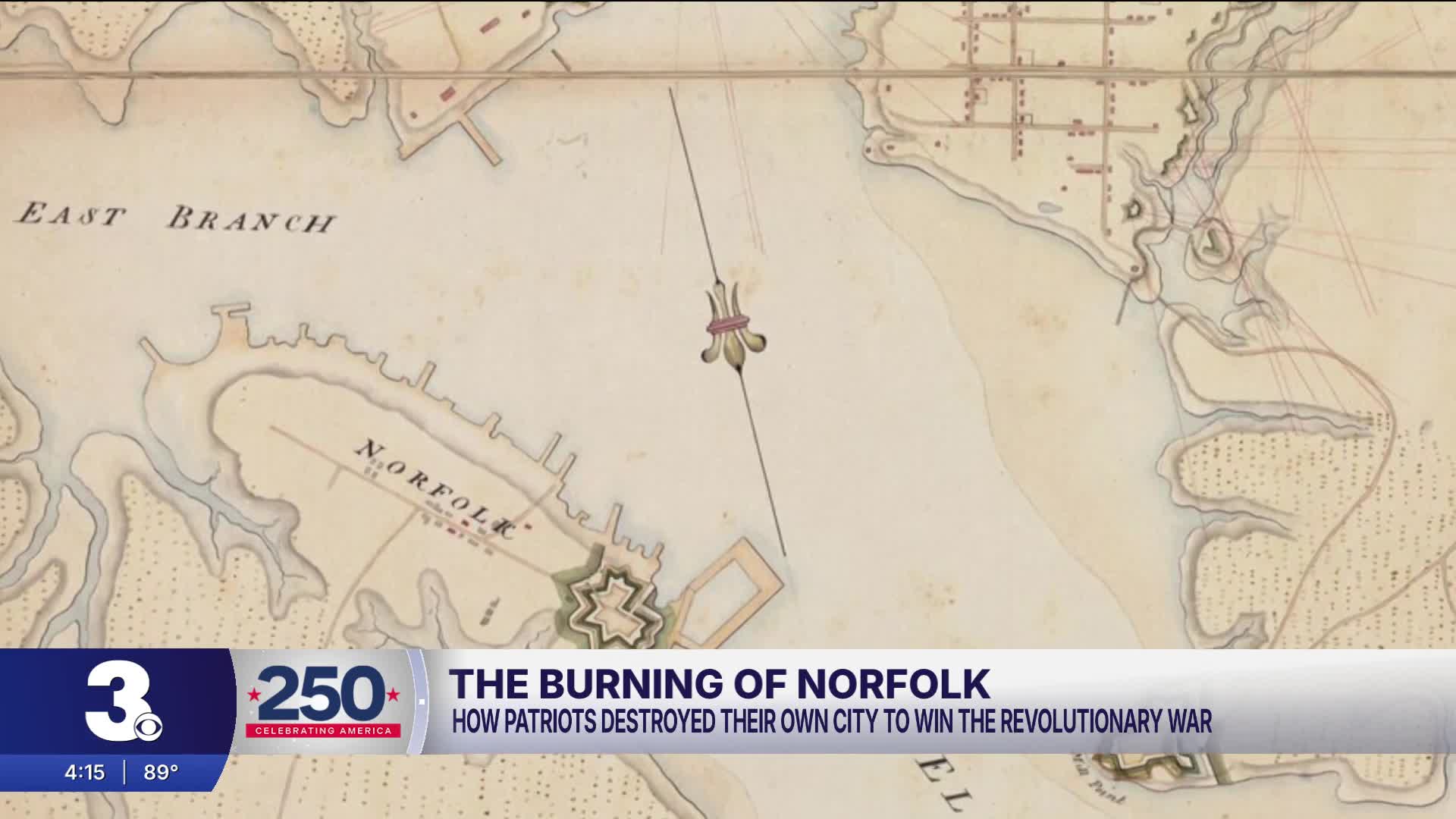
Among the collection's holdings is an 18th-century city council minute book with four years missing. A map from 1781 offers a rare visual snapshot of just how much had been lost.
"What we have here is basically a 1781 map," Valos said. "So this is obviously Norfolk is burned at this point, but it does give you an idea of just how big — or I should say how small — Norfolk was."
Valos said some historians believe the destruction had lasting consequences for the city's development.
"Some historians have said that it really deterred our growth as a city, that maybe if we hadn't burned that bad that we would probably actually be a Baltimore or Boston in terms of our wealth and traffic," Valos said.
The burning kept the British out of Hampton Roads for several years. By the time they returned, Hannum says it was too late to influence the outcome at Yorktown.
"Too little, too late," Hannum said.
The 1781 American victory at Yorktown effectively secured U.S. independence.
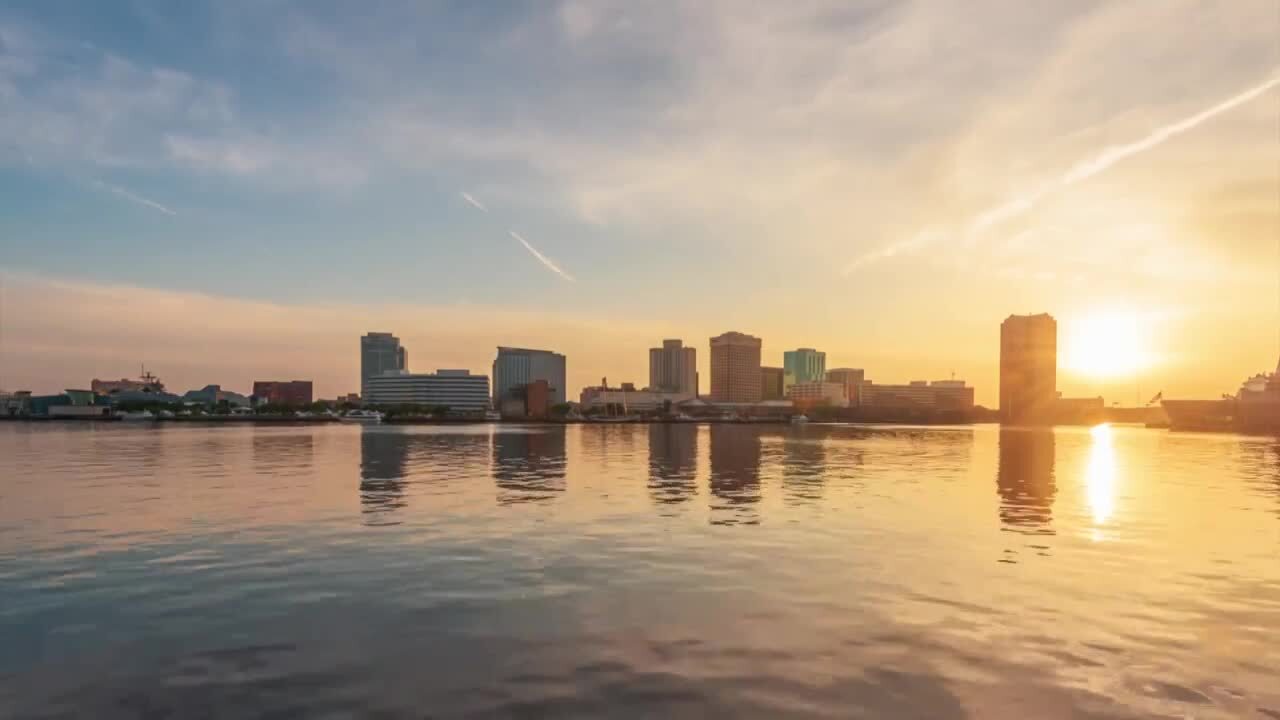
Norfolk, rebuilt in the years that followed, eventually became the naval hub its geography had always suggested it could be — a destiny deferred, but not denied.
Click here to see how we use AI at WTKR News 3.
