

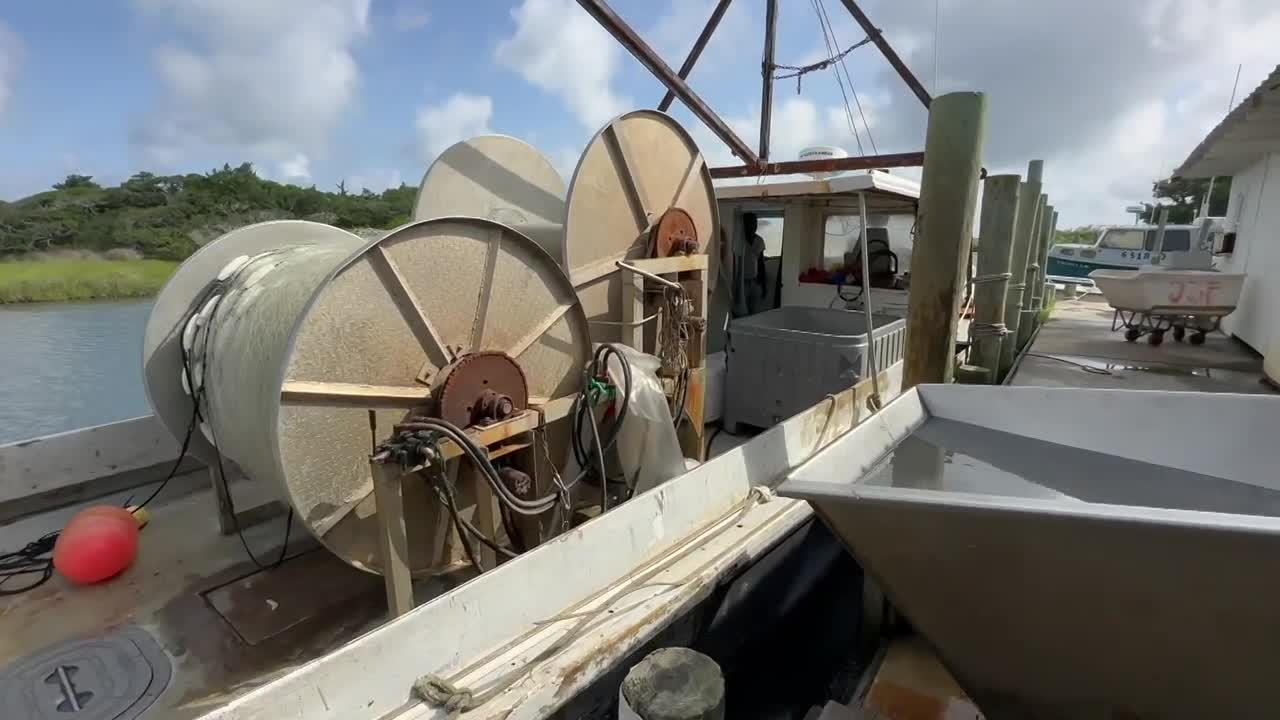


WANCHESE, N.C. — In August 2025, the North Carolina Coastal Counties Fisheries Coalition became a reality. It was formed after a bill that would have banned shrimp trawling in the state ultimately failed in the General Assembly, after large push back from coastal communities like the Outer Banks. Five months since the organization has been up and running, it's already seeing success in its efforts.
"We have had overwhelming support from the community. Those that sell seafood, citizens who purchase local catch, that correspondence has just been overwhelming and totally respectful and really encouraging for us that we have their back and we're looking after the industry," said Bob Woodard, chairman of the coalition and the Dare County Board of Commissioners.
Woodard led the efforts to make the coalition a reality, which includes representatives from nearly 20 coastal counties in eastern North Carolina.
"Each one of these counties has their own resources that are totally separate from what our association or other groups have, so we can just pull those resources and all work together," said Glenn Skinner, a consultant with the coalition and the executive director of the North Carolina Fisheries Association.
Skinner has been on the water his entire life and has been heavily involved in advocating for fishermen for years.
"Most of my life I've made the majority, if not all, income from commercial fish," said Skinner.
The coalition's efforts were on display in November when the Marine Fisheries Commission prepared to vote on new regulations on blue crab catches. The vote was ultimately pulled from the agenda.
"We talked about that at the coalition and we did a resolution in opposition to that and then each of the counties followed suit, and they pulled that," said Woodard.
"Absolutely, it helped. And again, we had a chance to educate these folks and explain to them that the blue crab stock assessment failed peer review," said Skinner.
Education and conversations with elected and state leaders remain a key part of the coalition's efforts.
"I really think we can go to Raleigh make statutory changes. We can all go with the same voice to the Marine Fisheries Commission and push for better management for both recreational and commercial fishermen, instead of having that one sided conversation that generally happens there," said Skinner.
"We want to educate the rest of the state representatives as well as senators of how important the fishing industry is here on the coast," said Woodard.
A lot of positives are on display so far, that each person involved are hoping continues.
"If we can keep the fires going and keep everybody getting together, I think it'll be really productive down the road," said Skinner.
"We want to eat fresh local seafood and protect our citizens as well as visitors and protect the livelihood of those families that do so," said Woodard.
So far, most efforts have been focused on the commercial fishing industry, but Woodard would like to bring recreational fishing collaboration into their focus in the new year.
The next meeting of the coalition will be Feb. 4, 2026.
