

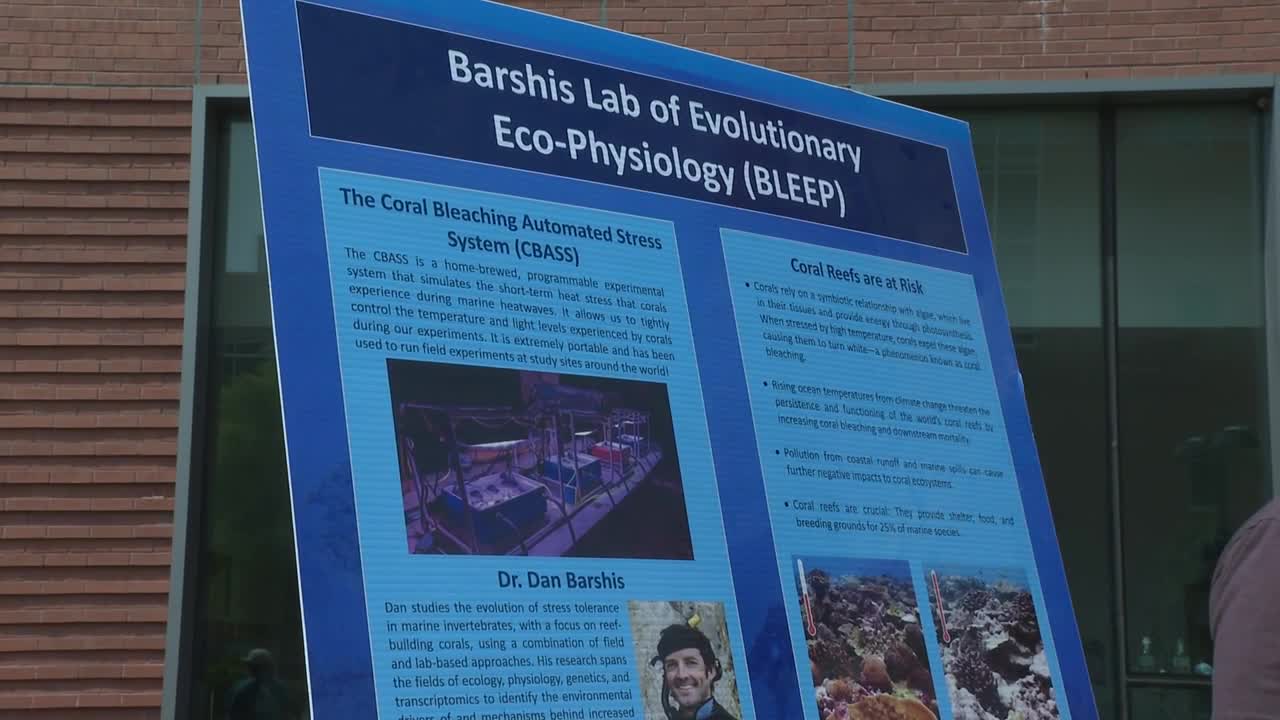


NORFOLK, Va. — Human-caused climate change has heated our oceans, putting one of the sea’s most delicate creatures at risk. Meteorologist Tony Nargi spoke with Katherine Parker, a PhD candidate at Old Dominion University, who is studying how corals can become more resistant to warmer waters.
Our planet’s oceans have absorbed about 90% of the excess heat added to the atmosphere by increased greenhouse gases, a shift that’s driving coral bleaching and the decline of reef ecosystems.
“The corals that actually have algae living inside of them, and they have a really great relationship with this algae, the algae provide them a lot of food. When it gets too warm, the corals get stressed, and then they can't maintain that relationship anymore, and the algae are expelled out of the coral,” Parker explained.
Parker is researching corals in American Samoa, where some specimens already show higher heat tolerance. She notes that certain corals live in tidal estuaries where temperatures fluctuate, potentially revealing resilience traits that could be harnessed more broadly.
“But the research isn’t just about finding these unique corals,” Parker said. “to figure out this heat tolerance, dynamic, and figure out how to make it more almost accessible to other corals or create other corals that have this higher heat tolerance.”
Her work aims to translate these findings into practical approaches that could help more coral species survive warming oceans and reduce the risk of extinction.
Click here to see how we use AI at WTKR News 3.
